Words & Nonsense Deep Dive
11 pumpkin-portmanteaus to politely rate strangers' jack-o'-lanterns
A sharable lexicon—Glowergloom, Smirkspice, Creepsquash—eleven invented words to caption photos, deliver compliment-slash-critique and escalate your Halloween group chat with perfectly absurd vocabulary. Use these single-word judgments to signal admiration, mild alarm or ceremonial condolence without becoming the neighborhood menace in a judged pumpkin contest.
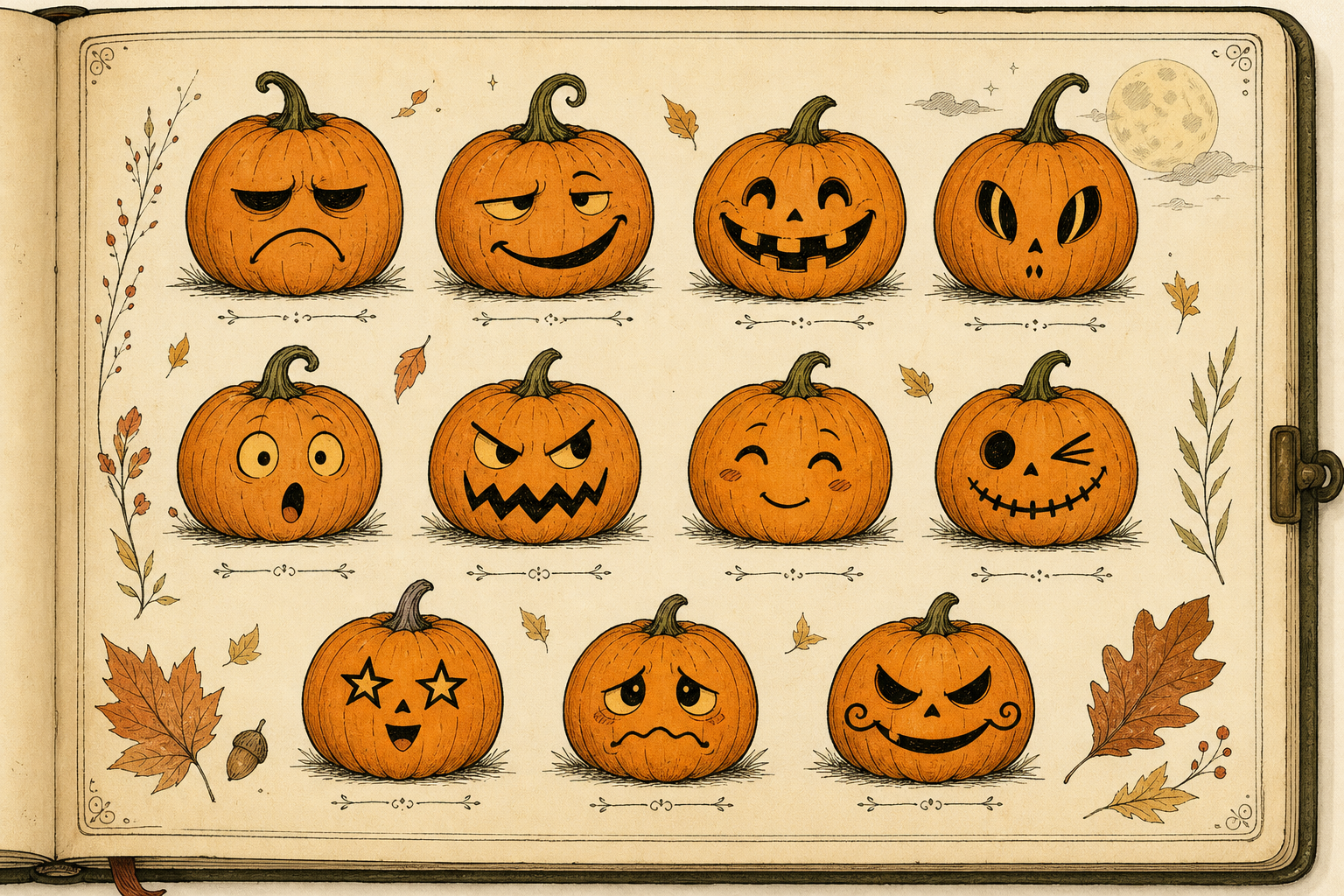
What this lexicon is, and why you should care
Halloween invites two incompatible impulses: the urge to lavish praise and the urge to whisper unsparing funny things about a stranger's mouth carved into squash. This lexicon exists to reconcile those impulses with the social equivalent of a napkin folded into a polite bow—a set of single-word portmanteaus meant to caption a jack-o'-lantern so you can signal delight, concern or faux-moral superiority without hosting a doorbell ambush.
Use these words like small ceremonial nods. A one-word tag is less escalatory than a paragraph of critique and louder than a thumbs-up emoji; it lets your chat be theatrical without making a neighbour cry. Pick a single word and send it. The whole point is brevity, theatricality and the illusion of an editorial department that exclusively rates gourds.
Anatomy of a pumpkin-portmanteau
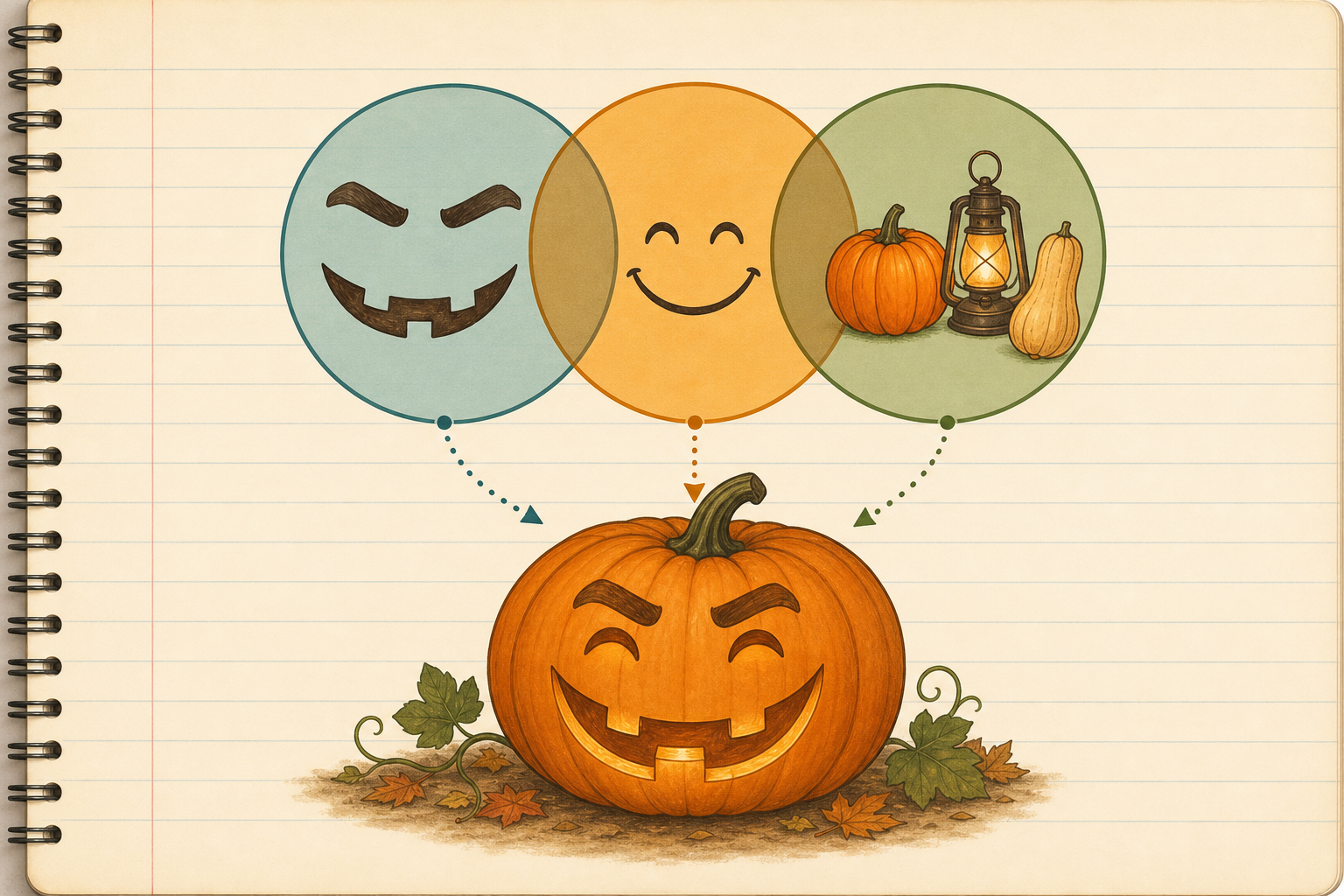
A pumpkin-portmanteau is a linguistic sandwich: one half describes a visual attribute (glower, smirk, flicker) and the other half supplies seasonal flavor, object class or emotional register (gloom, spice, squash). The result is a single compact label that carries mood and objecthood at once.
The formula is flexible. You can graft a verb onto a squash synonym (Creepsquash), attach a texture or reaction to lantern imagery (Lanternlisp), or invent an emotional adjective fused to a seasonal noun (Smirkspice). The point is recognizability: the reader should feel the face before they parse the word. Blend sight and sentiment.
The eleven portmanteaus, with definitions and usage
Glowergloom — A broody, too-serious face carved with heavy brows and a bottom lip of pessimism. Use when the pumpkin looks like it just remembered an expired library book. Example: “Sent the photo—Glowergloom.”
Smirkspice — A playful, asymmetrical grin that smells faintly of cinnamon and smugness. Use when the sculptor aimed for charm and hit millennial sass. Example: “Smirkspice energy, 10/10.”
Creepsquash — A deliberately eerie, thin-eyed visage that intends to unsettle passerby. Use when the pumpkin wants to be in a horror movie. Example: “That front step is full Creepsquash.”
Candleguffaw — An overbright, gap-toothed grin that reads like laughter from within. Use when the candlelight makes the whole thing look inappropriately delighted. Example: “Late-night walk: two windows, one Candleguffaw.”
Patchpout — A small, disappointed face as if the pumpkin was promised a parade and got a stray scarecrow. Use for tiny, perfectly sad carvings. Example: “Patchpout on Elm Street.”
Lanternlisp — A carving whose teeth or mouth shape makes the expression feel mildly mispronounced, charming in a slightly lisped way. Use it when the mouth is lopsided and you are inexplicably endeared. Example: “Lanternlisp—gift it to the oatmeal.”
Ragereap — An aggressively carved, toothy, dramatic scowl that looks like it harvests anger. Use when the design is ferocious, maybe too earnest. Example: “Ragereap cathedral at number 42.”
Worrywedge — A triangular-eyed, anxious-looking jack-o'-lantern with a mouth that tilts toward nervousness. Use when you sense caretaking may be required. Example: “Worrywedge outside the florist.”
Flickerflinch — A pumpkin whose candle placement causes unsettling shadow-blinks, giving the face a startle every few seconds. Use when the flame does all the dramatic work. Example: “Flickerflinch in motion—watch the eyebrow.”
Mirthmangle — An overambitious mash of features that somehow reads jubilant despite the chaos. Use when the carver tried for anatomy and delivered a confetti accident. Example: “Mirthmangle, child of glue gun and optimism.”
Dreadgourd — A competent but genuinely intimidating jack-o'-lantern that looks like it could give a TED Talk about entropy. Use this when the pumpkin commands respect. Example: “Dreadgourd guarding the cul-de-sac.”

How to grade, escalate and respond without becoming the porch bully
Treat the portmanteau as a first contact. A single-word tag is a calibrated social signal: admiration, mild alarm, or performative condemnation. If the sculptor is a friend, follow the tag with a private compliment or an offer of pumpkin-soup diplomacy. If they’re a stranger, resist the urge to layer in sarcasm; the point is communal fun, not public brandishing.
If a jack-o'-lantern genuinely seems the product of cruelty or danger (candles left next to dry fabric, structural instability), act practically: a direct message or a polite note beats public mockery. When escalating in chat, move from single-word label to offered context—photo, lighting comment, or a one-line joke—never to a graduated roast. Escalate only with consent.
Using these words in the wild: chat etiquette and civic considerations
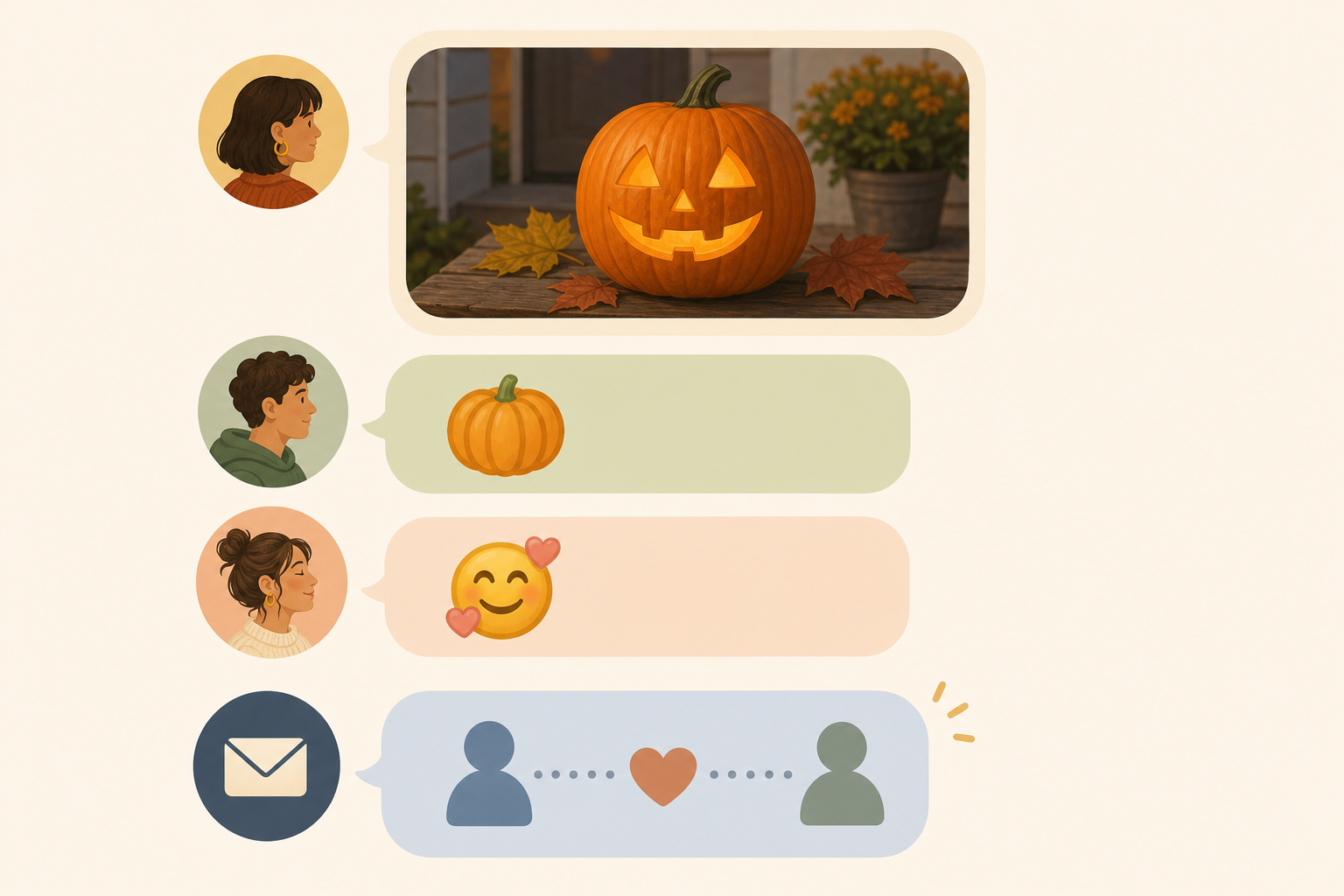
In group chats, treat a portmanteau like a sticker: send it early in a thread, then wait to see if others join with their own labels. These words are shareable shorthand for mood, and they work best when everyone treats them as part of the game. If someone asks for honest feedback, provide it gently, using specifics rather than sarcasm.
Remember that public photos of private property can be sensitive. If you plan to post a labeled photo beyond your chat—on a neighborhood forum or social feed—crop to the pumpkin, avoid identifying houses, and consider the time of day: people are more likely to laugh at their own patch in daylight. The lexicon is ceremonial mischief, not harassment; the social goal is playful amplification, not humiliation.
End of the rabbit hole.
You know too much now.
If this was useful
Try one of these next

Words & Nonsense Listicle
11 portmanteaus for Reform UK promises you’ll want to say aloud
A gleefully specific ranking of invented words — from mild PR trickery to outright legislative prestidigitation — with definitions, mock headlines and a sneering one-liner so you can name a claim faster than it can spin. Ranked by how theatrically useless the promise feels (our obviously scientific editorial judgement).
Read article
Words & Nonsense Listicle
5 Foods That Secretly Demand Portmanteau Nicknames
Five dishes (with quick recipe tweaks) that beg for new mash names, the exact host-mood to unveil them, and a one-sentence backstory to sell it at dinner (example: croissant + donut = the crullu—recipe included). Ranked by how loudly each hybrid insists it already has a name.
Read article
Words & Nonsense Listicle
5 dessert portmanteaus to name a pastry that can't decide its life path
Five dessert hybrids (Brownie + Éclair = Brownclair) with a one-paragraph origin myth, a quick assembly cheat-sheet and plating advice so the pastry's identity crisis looks intentional.
Read article
Words & Nonsense Listicle
7 Celebrity Portmanteaus That Actually Deserve Statues
A ranked tour of seven famous name-mashups (origin note included) that get a theatrical monument idea: pose, plaque copy, and the exact scandalous accessory each bronze should clutch.
Read article