Food & Drink Deep Dive
7 desserts to serve at the ‘php2shell betrayed me’ apology party
Seven theatrical desserts — shell‑shaped macarons, “404” checkerboard cake, mousse domes labeled with filenames — ranked by how dramatically they communicate betrayal. Includes plating ideas and one‑pan recipes you can actually make.
The party that says "I was betrayed by a script, but the apology is theatrical"
An apology party is theatrical by design: it stages contrition so everyone can watch feelings transmogrify into petit fours. The “php2shell betrayed me” theme doubles down on that spectacle by treating a technical betrayal—an ugly little exploit, a logfile stabbing—as a personal drama that deserves mise-en-scène, props and dessert as catharsis.
This guide frames seven desserts as a vocabulary of betrayal: each one speaks a different register, from smug passive-aggression to operatic confession. Choose desserts that match the tone—guilty, chastened, performatively outraged—and the menu becomes a script that tells guests precisely how wounded the host feels without a single awkward sentence.
Why food is the language of apologies (and why pastry is especially reliable)
Across cultures, food softens friction; a shared plate smooths edges and gives anxiety somewhere to go other than conversation. Pastry is especially good at this because it combines showy finishes—glaze, gilding, piping—with the comforting engineering of sugar and butter, which means an apology can look ornate while still being reliably edible.
Desserts also allow tiny, theatrical details: a cracked meringue shard that reads as “fractured trust,” a checkerboard revealing an inside pattern that suggests hidden complexity. Let the mise-en-place be literal drama—small gestures like edible wafer labels or a staggered dessert order create a narrative arc without needing a speech.
Seven desserts and what they loudly announce
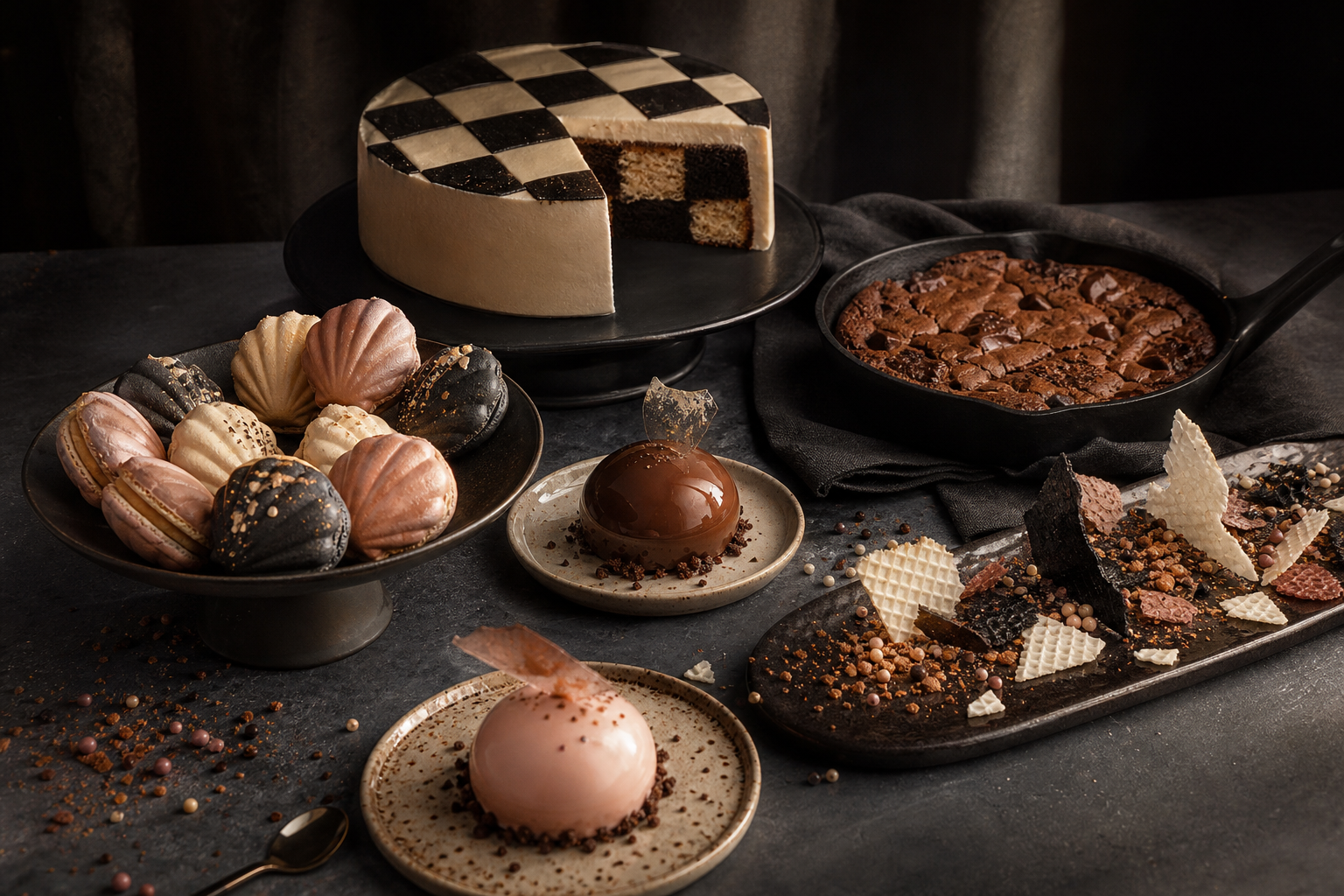
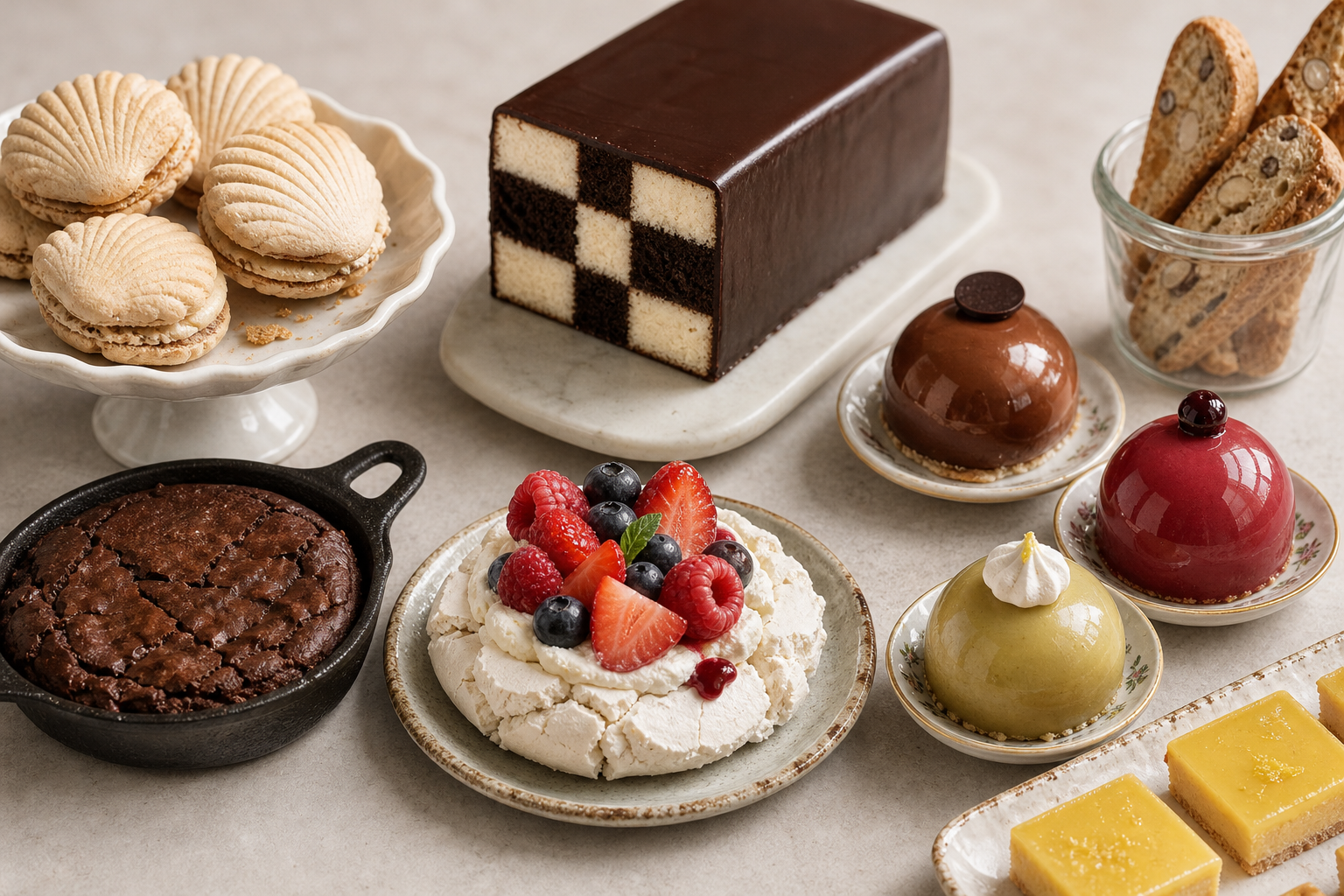
Shell-shaped macarons (theatrical elegance): these tidy domes whisper social etiquette and scream curated hurt; fill them with a salted caramel that oozes slowly when bitten so the betrayal looks like it has texture. Plate them in an arc around a broken sugar shard to dramatize fracture, or serve on a small slate with a tiny spoon of jam for contrast; for a simpler one-pan shortcut, bake a tray of almond cookie drop biscuits spiked with finely ground almond flour and a caramel drizzle as a macaron-suggestion that won’t need a piping bag. Use contrasting textures—crisp shell, yielding center—to dramatize emotional layers.
“404” checkerboard cake (literal error message): a two-tone checkerboard cake cuts into a perfectly groomed surface that reveals an internal pattern of discord; the message is visual and undeniable. Instead of assembling dozens of rounds, use a sheet cake with two batters swirled and a grid score on top to simulate the checkerboard in one bake, then frost thinly to keep the reveal sharp. Serve slices on stark white plates to make the interior pattern feel accusatory rather than apologetic.
Mousse domes labeled with filenames (clinical specificity): mirror-glazed mousse domes feel modern and distant, and a tiny edible wafer named like a logfile—implied, not printed in the pastry—turns the dessert into a dossier. Arrange domes on a mirrored tray so each reflection multiplies the offense; for a home-equivalent, spoon a simple chocolate mousse into small cups and top with a crisp tuile to nod to the glaze. Let the plating feel forensic—small, precise, and slightly chilly.
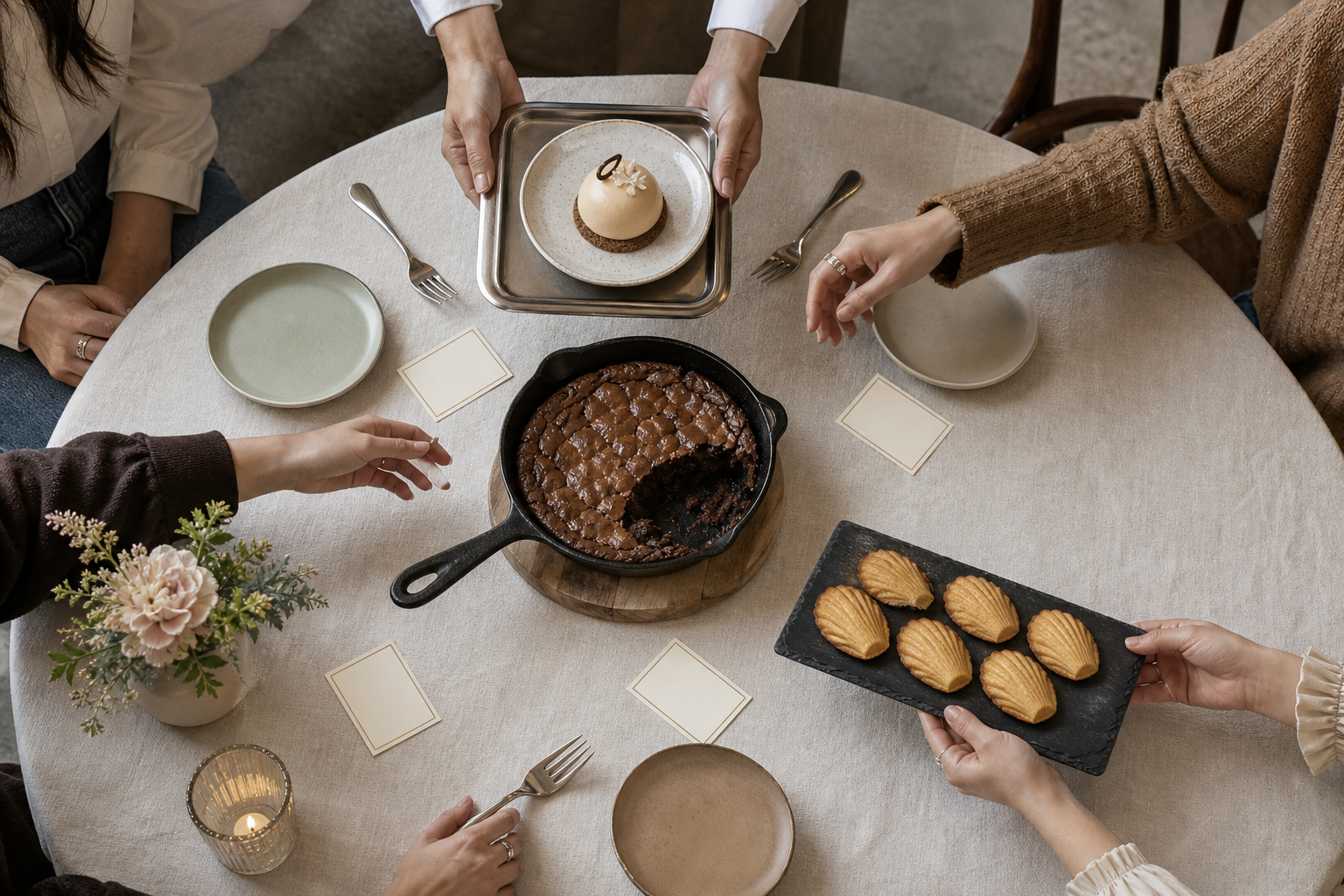
Skillet brownie called “single-thread rollback” (raw honesty): a one-pan skillet brownie is loud comfort: hot, messy, and forgiving of mistakes, an emotional reset in a spoonable form. Serve straight from the pan with ice cream and a floured apology card perched on the handle, or bake blondie bars in a sheet pan if you prefer portion control; the one-pan approach keeps cleanup low and sincerity high. The message here is simple: I ruined it, but here is something warm.
Pavlova “I believed your promises” (fragile trust): a glossy meringue shell that cracks on the tongue is a great metaphor for misplaced faith; top with tart fruit to cut the sweetness like truth cuts falsehood. Pavlova can be assembled from Swiss or French meringue baked on a single sheet; the topping is modular, letting you amplify bitterness or brightness depending on your tone. Let the fruit be the punctuation—sharp berries read like clarifying statements.
Biscotti “log archive” with dipped ends (long memory): biscotti are the dessert version of a dossier you can dunk; they keep, they look archival, and the dipped end suggests a stain of guilt. Bake on a half-sheet and slice, dip one end in chocolate, and arrange tied with twine for guests to take home as evidence. The practicality of biscotti—portable, durable—says the hurt will linger but be compartmentalized.
Petite lemon tarts labeled “still sour” (the resigned aftertaste): a bright, bracing citrus tart finishes the meal like an exasperated sigh—sharp, clean, and slightly chastening. Use tart shells baked en masse in a shallow tray and cut into squares for an easier one-pan approximation, then dust with powdered sugar or scatter tiny candied zest for a finishing note. The tart says you’re sorry, and you also mean it just enough to be suspiciously concise.
Staging the menu: who eats what, and when the note is placed on the plate
Order matters because desserts are punctuation: a cold mousse dome first sets a clinical tone, a skillet brownie mid-course allows recovery, and a lemon tart last leaves a crisp afterimage. Plan three moments—entrance, midpoint, exit—so guests can experience the arc of betrayal, contrition, and reconciliation without a single forced sentence.
Consider using small cards that explain the dessert’s “meaning” as part of the theater, but keep them wry rather than preachy; an apology party wants performance, not interrogation. Space the servers—don’t put everything down at once; let a dessert arrive like a line in a play so guests can react and gossip between acts.
Kitchen reality: one-pan shortcuts, timing and scaling for actual humans
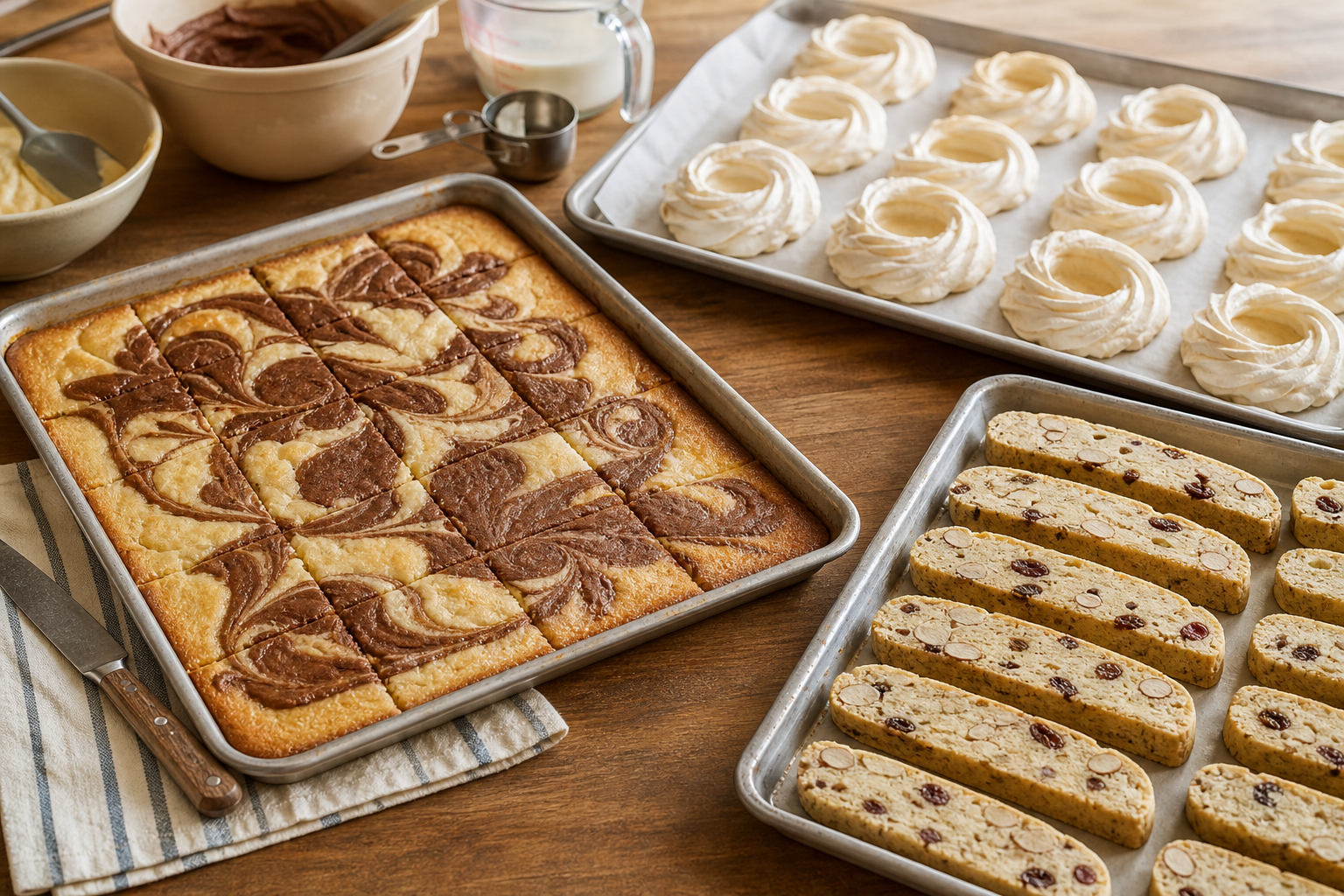
Most of these theatrical ideas can be simplified so your oven does the drama and you do the assembly. Convert layered or shaped items into sheet-baked equivalents—checkerboard becomes slashed sheet cake, pavlova can be piped into two larger nests instead of many tiny ones, and macarons can be translated into almond drop cookies with a caramel dollop for the same impression. Favor technique over gadgets—temperature control, chilling, and careful glazing will sell the spectacle more than rare tools.
Timing is about overlap: while a pavlova cools you can whip mousse; while the brownie rests you can dip biscotti. One-pan or sheet substitutes mean fewer simultaneous tasks and a much more pleasant host experience. If you are short on time, pick two high-drama items and one comforting one-pan dessert so the meal feels curated rather than frantic.
Misreadings, etiquette and the eventual reconciliation (or delicious burn)
Guests may misinterpret theatrical desserts as mockery rather than apology; avoid being so on-the-nose that people feel roasted. If your intent is reconciliation, balance accusatory visuals with genuinely generous bites—rich textures, approachable flavors, and a warm offering like the skillet brownie create a bridge back to conviviality. Prioritize edible generosity—no matter how theatrical, the food must taste like an invitation.
Finally, let the desserts be a scaffolding for conversation rather than the conversation itself: serve, step back, and let crumbs do their work. An apology party is a contraption—part ceremony, part meal, and entirely about making a mess look intentional—and dessert is the stage where the messy feelings can coagulate into something sticky and memorable.
End of the rabbit hole.
You know too much now.
If this was useful
Try one of these next

Food & Drink Deep Dive
7 cocktails an AI will invent to ruin a tasteful dinner party
Seven outrageously specific, theme-ready drink concepts (including garnish instructions and a scandalous backstory each) so you can pour something gloriously inappropriate and watch the guests pretend elegance while their tastebuds file an
Read article
Food & Drink Deep Dive
The snack bribe: edible diplomacy and emergency rations for unavoidable social obligations
Explores the anthropology of pocket food—single-serving sweets, portable diplomacy recipes and snack etiquette—teaching which morsels to carry, how to offer them theatrically, and how they buy minutes of social grace.
Read article
Food & Drink Deep Dive
7 unglamorous pumpkin-gut repurposes that are better than 'compost later'
Seven concrete afterlives for your pulp and seeds: thickening stock, breakfast bake-ins, firestarter pellets, bird-scatter, seed roasting, papier-mâché and quick dye—each with one-line prep and why it beats the trash bin.
Read article
Words & Nonsense Listicle
5 dessert portmanteaus to name a pastry that can't decide its life path
Five dessert hybrids (Brownie + Éclair = Brownclair) with a one-paragraph origin myth, a quick assembly cheat-sheet and plating advice so the pastry's identity crisis looks intentional.
Read article