Domestic Chaos Deep Dive
9 pumpkin tricks to stop your kitchen from becoming a pulp crime scene
Nine field-tested hacks—peelable table liners, a seed-skim ring, a one-bucket pulp command, zipper bag cut-extract and a napkin mortar—to keep carving contained and your tablecloth untraumatised.
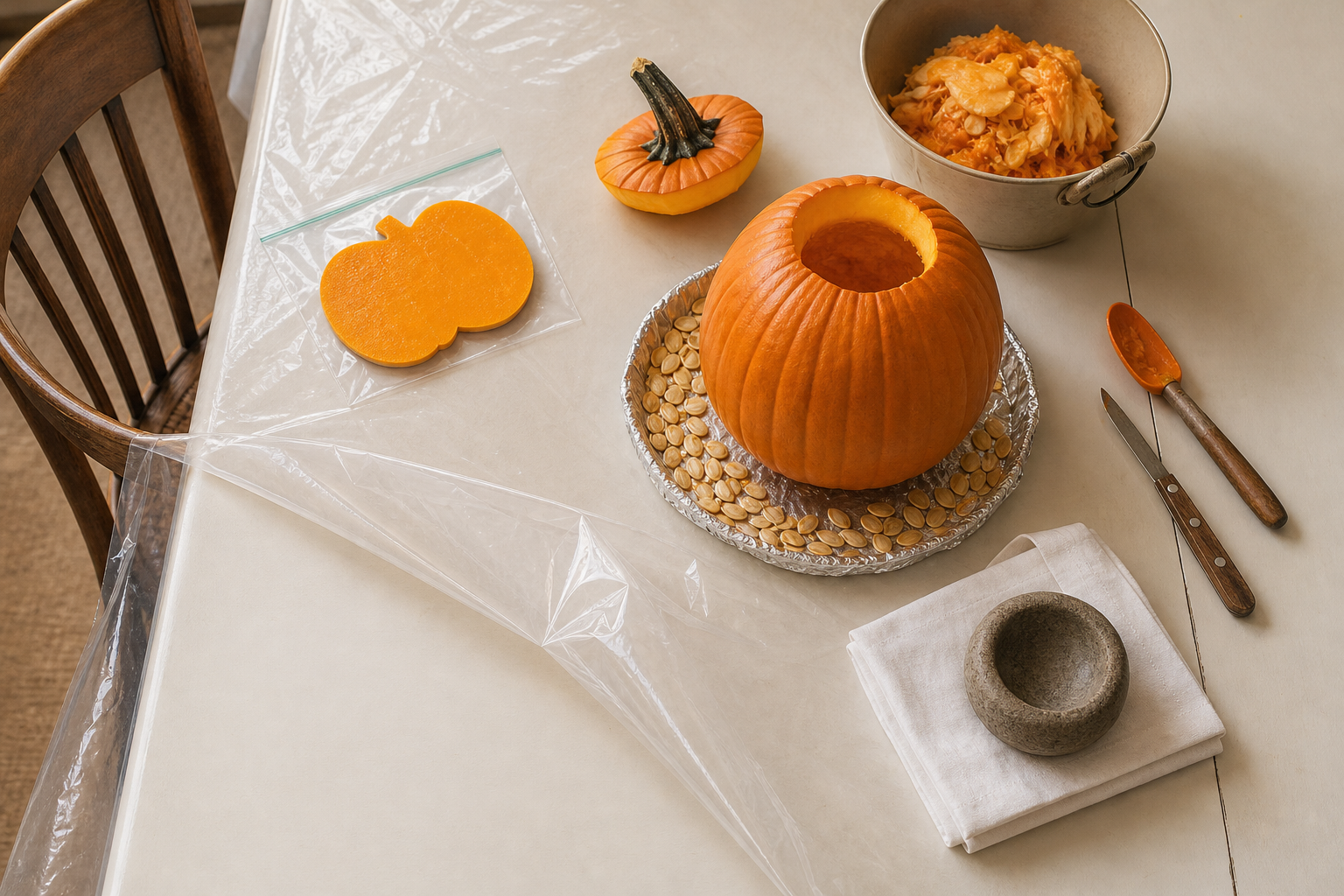
Why pumpkin carving so often escalates into a forensic cleanup
Pumpkins are theatrically committed to making a mess. Their flesh is watery, the fibers cling like stretched rubber, and the seeds live in a slick membrane that insists on relocating itself into every crevice of the tablecloth.
The problem is a marriage of texture and momentum: once a scooping ritual starts, goo and seeds travel in unpredictable parades—down knife handles, into lap folds, and ceremonially under the cat. The only realistic solution is not better mops, but containment at source: keep the pulp where it belongs and admit to nothing else. Contain the pulp.
Peelable battlegrounds: liners, mats and the peel-off table protector
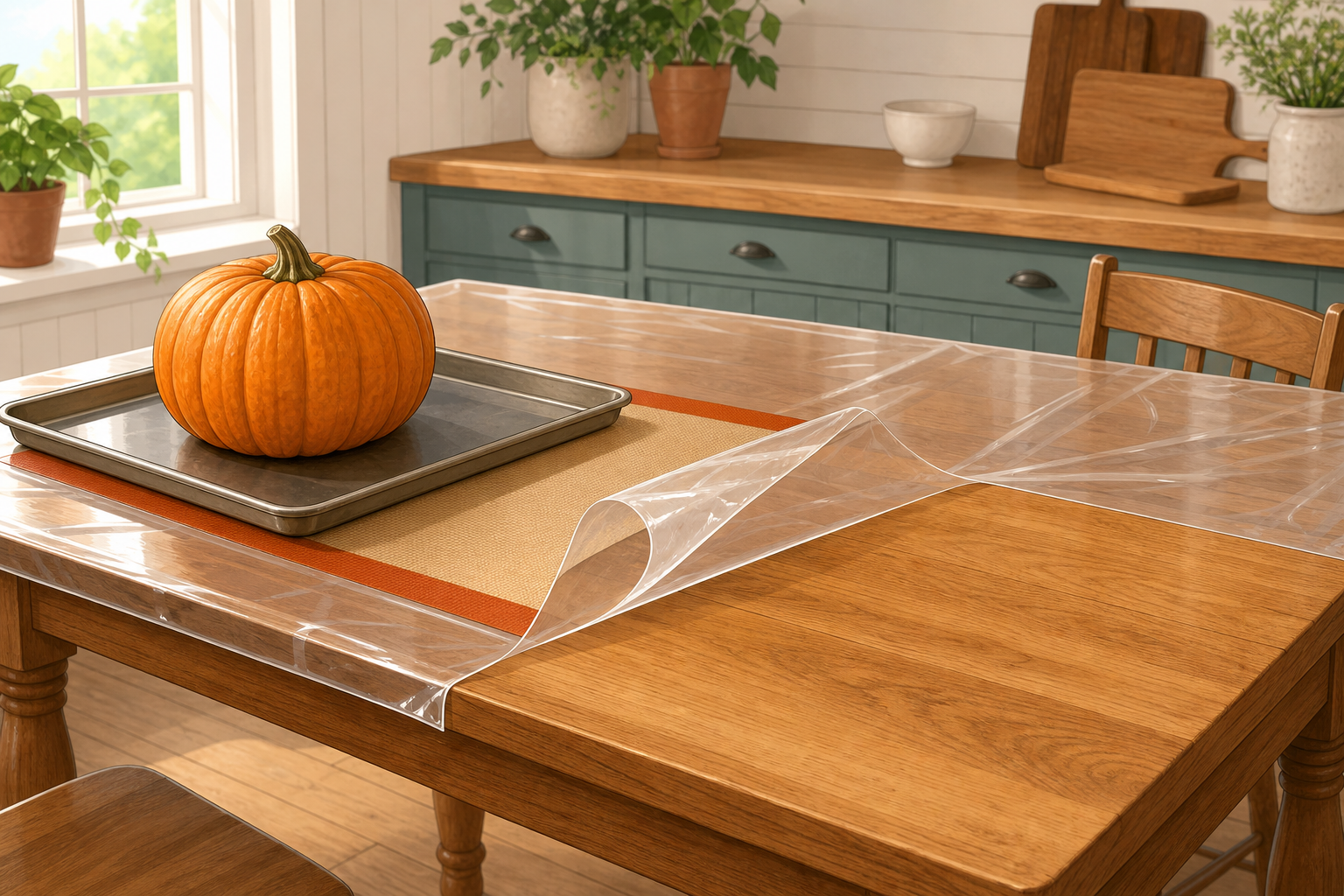
A peelable liner is the simplest way to make a carving session vanish: tape down a wide roll of craft paper or use a disposable plastic tablecloth designed to peel off in one piece. If you want to be extra theatrical, place a silicone baking mat between table and liner so any stubborn ooze collects in one smooth, disposable slab.
The point is not moralistic single-use panic but practicality: a single peel saves time and laundry. Plan the liner so it covers chair thighs where rogue seeds like to nest. Line before you carve.
Seed-skim rings and lip engineering: how to keep seeds from becoming fugitives
Seeds love to leave the scene of the crime. The seed-skim ring is a shallow rim—made from a bundt pan, trimmed foil, or the lid of a large yogurt container—that sits flush around your pumpkin’s opening and catches seeds as they fall. The ring works by creating an immediate moat: seeds drop into the rim instead of flinging themselves onto the nearest sock.
Another variation is a rimmed baking tray under the pumpkin; the slightly raised lip prevents a single enthusiastic scoop from spilling a meteor shower of seeds. Skim where seeds land.
The one-bucket pulp command and zipper-bag cut-extract
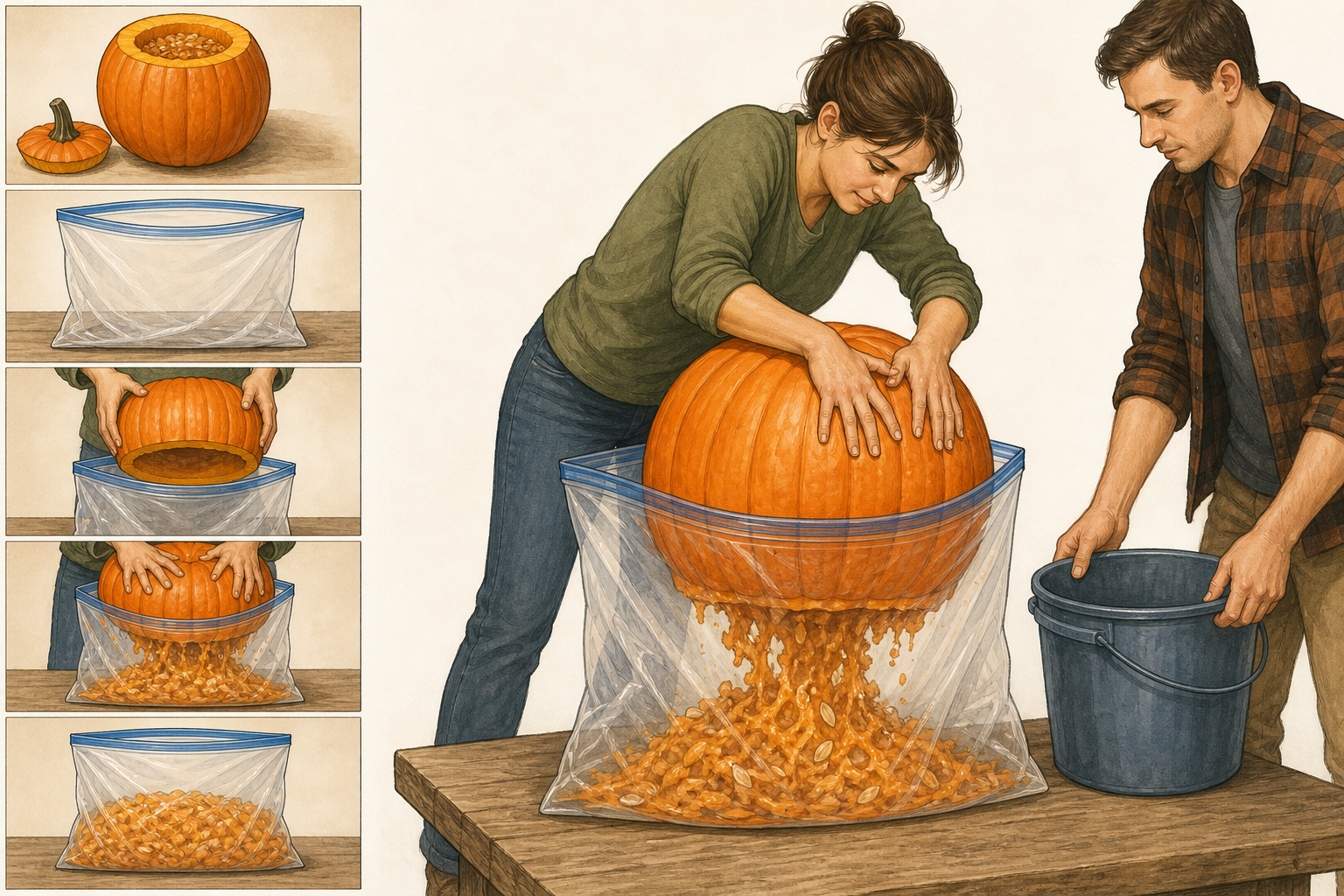
A large bucket or salad bowl becomes a mobile waste unit: scrape the pumpkin directly into it and carry the whole filthy thing to compost or trash in one trip. For scenes requiring even less hands-on theater, set a heavy-duty zipper bag beneath the pumpkin’s cut edge, open the bag mouth, cut your lid, then invert the pumpkin into the bag to press out pulp. The bag seals the mess and can be snipped away for immediate disposal.
Both methods reduce surface transfers—the chief cause of sticky countertops and future forensic stains. Bucket first, drama later.
Napkin mortar, spoon swap and the gentle scrape
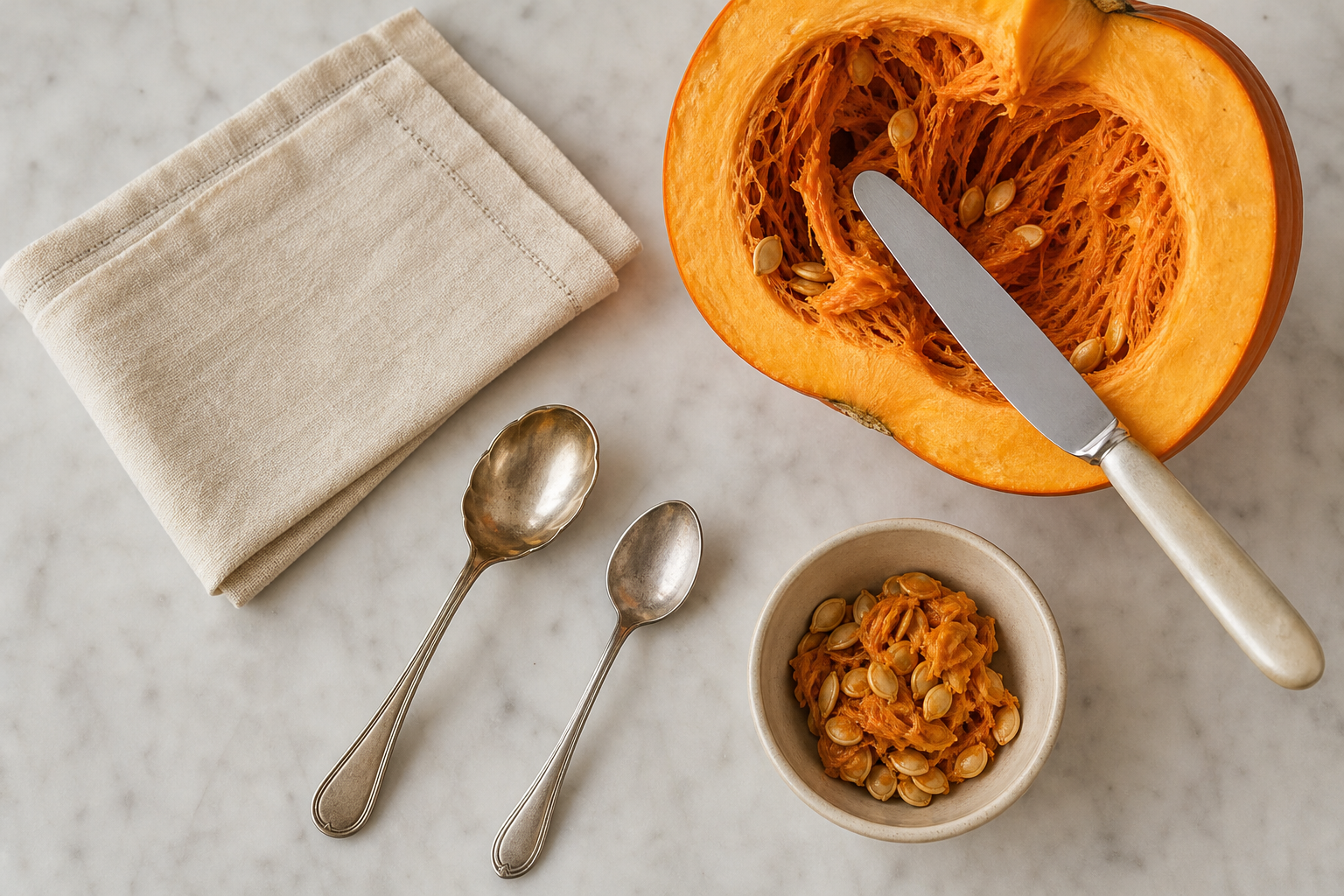
The napkin mortar is a tidy little ritual: place a thick folded paper towel or washable cloth next to your scooping hand and use it as a temporary receptacle for seeds as you free them from the membrane. Transfer them to a bowl with a quick spoon-swap—one spoon to pull seeds, another to push them into the bowl—so you never wave a pulp-coated implement across a clean surface.
For stubborn inner walls, a butter knife used flat to scrape along the curve reduces splatter compared with forceful troweling. These modest adjustments stop oil and grit spreading like an incriminating leaf pattern. Scoop, then scrape.
Staging, roles and cleanup choreography: your five-minute debrief
Treat carving like a small scale military operation. Assign one person to cut, one to scoop into the bucket or bag, one to man the seed-skimming station, and one to stand ready with the peelable liner’s leading edge. This prevents the theatrical overlapping that produces half a dozen 'I’ll just move this' accidents.
When the carving ends, fold the liner inward on itself, twist-seal any zipper bags, and dump or compost without a secondary transfer step. This ritual makes the cleanup feel like a victory procession instead of a frantic mop opera. Chain of custody.
What often goes wrong and how to save a ruined tablecloth
People assume oil-based pumpkin stains behave like any other food spot; they do not. The oils in pumpkin can set into fabric fibers if left to dry. If a stain hits a washable cloth, blot immediately, rinse under cold water, pre-treat with a gentle detergent and launder promptly; avoid hot water until the stain is gone because heat can set pigments.
If the tablecloth is nonwashable or the stain looks terminal, peel back the liner (if you used one) and admit the damage with theatrical resignation. Sometimes the best cleanup is a good story and the donation of the cloth to a dumpster of brave textiles. Act fast on stains.
End of the rabbit hole.
You know too much now.
If this was useful
Try one of these next

Domestic Chaos Deep Dive
The apartment audit: a forensic guide to making your home 'respectably Capricorn'
Room-by-room deep dive: which chair choices imply tenure, cleaning cadences, plant pairings and a printable inspection checklist to make a Capricorn inhale approval—plus two annotated room diagrams. This is a domestic forensics manual and ceremonial etiquette guide for anyone who wants their apartment to read like a long-term lease and an unspoken promotion letter.
Read article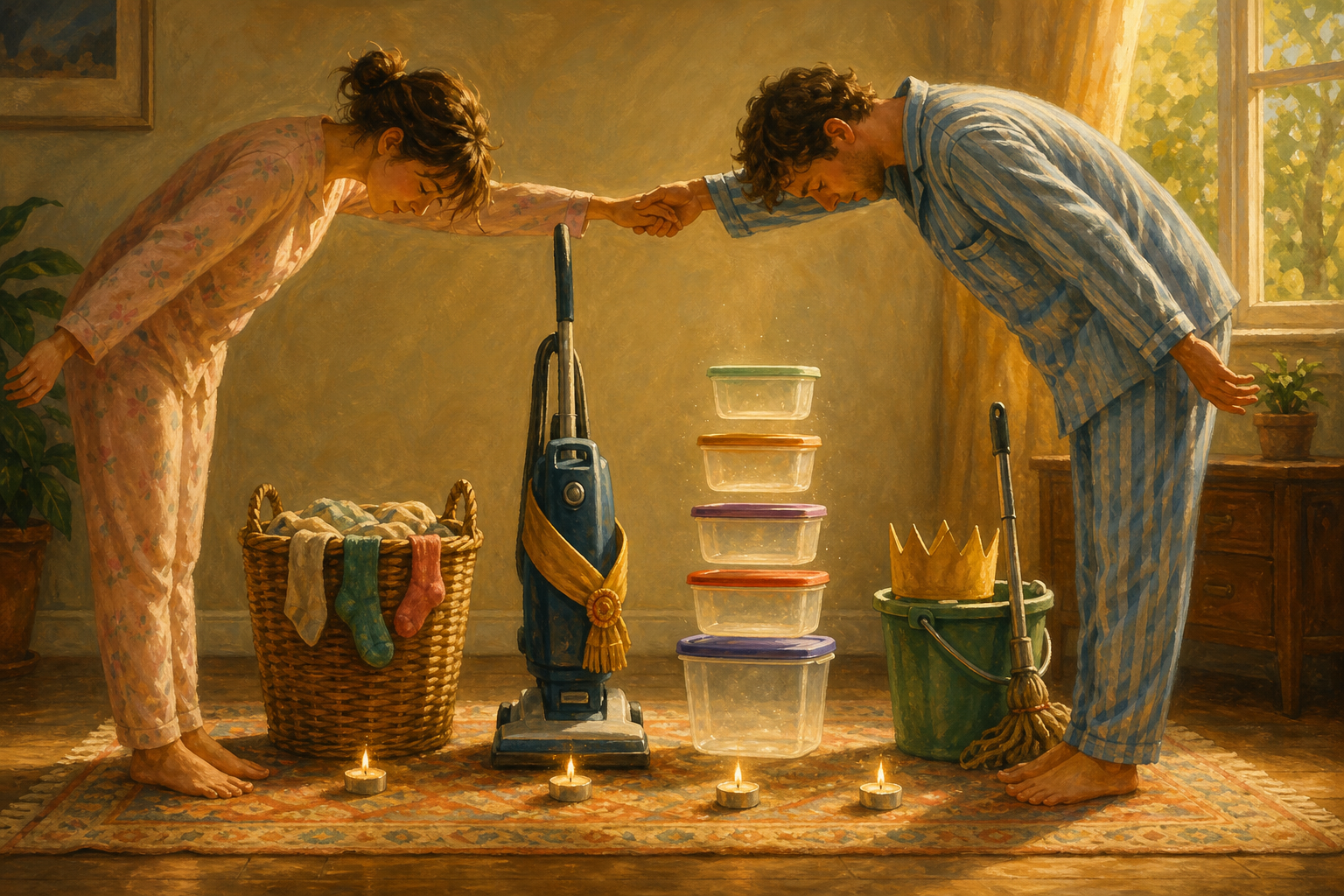
Domestic Chaos Listicle
8 household objects you should whisper a pep talk to before starting a shared chore
An absurd ranked list (laundry basket, vacuum, cursed Tupperware) with one-line pep talks and choreography so chores feel ceremonial, not punitive—perfect for mutual motivation rituals.
Read article
Domestic Chaos Deep Dive
The calendar altar: worship, sacrifice and sticker diplomacy for ADHD timekeepers
Investigates planners as miniature temples—color rites, buffer-zone sacrifices, alarm liturgies and sticker economies—showing how to turn a calendar into a forgiving deity that forgives missed starts.
Read article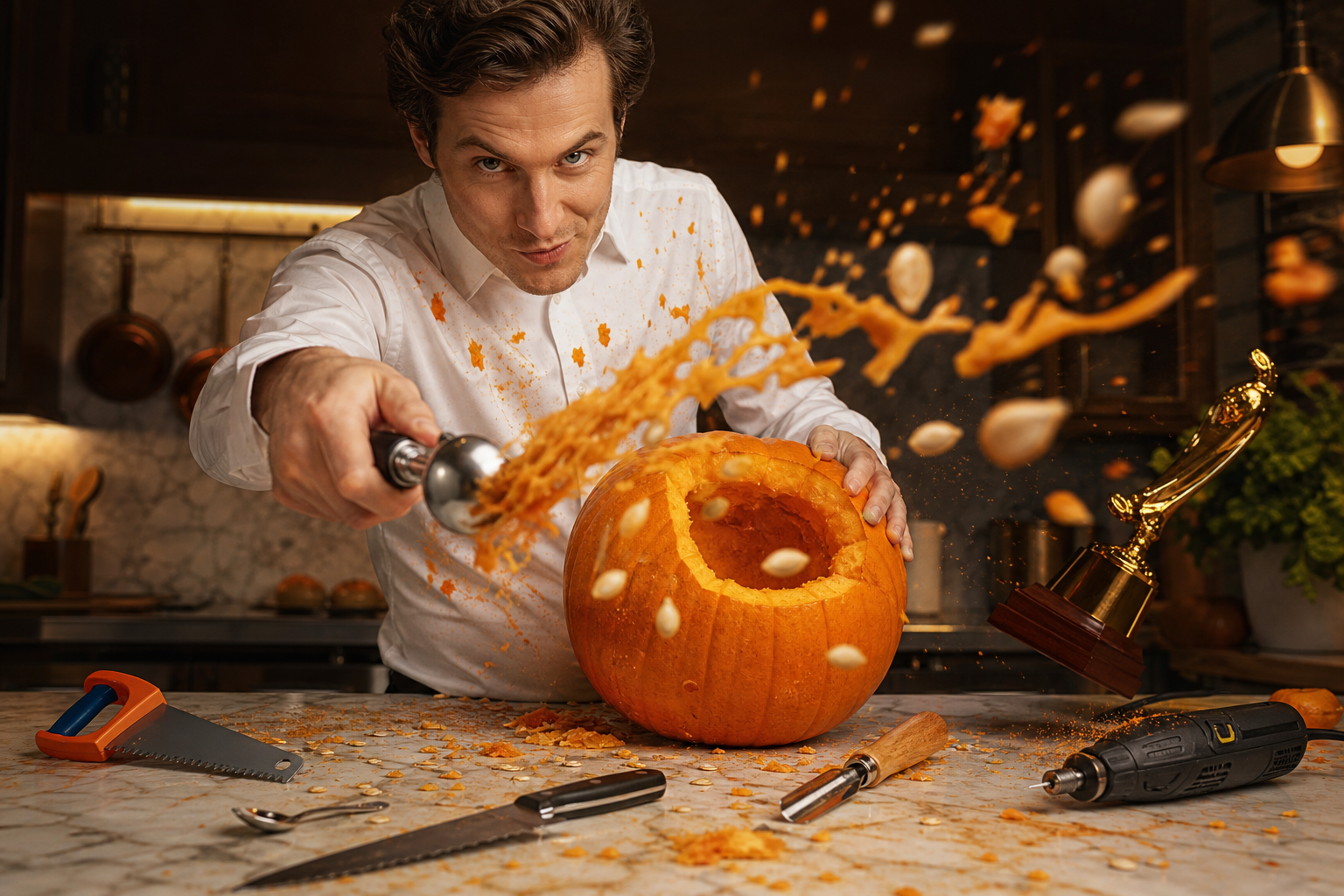
Making & Mischief Listicle
7 carving tools ranked by how dramatically they will ruin your shirt
A hilarious, honest ranking of seven tools — from pumpkin saws to spoons — grading mess, dignity lost, safety, and the exact theatrical flourish each tool adds to your carving montage.
Read article