Social Survival Deep Dive
The Fibometer: a clear guide to what body language can — and can’t — tell you
Body language is a seductive detective: a raised eyebrow, a clipped sentence, a flash of a smile feel like evidence. This deep dive separates the usable behavioural red flags from theatrical guesswork. We cover microgestures, vocal cues, the need for baselines and clusters, and the cognitive traps that turn ordinary signals into a courtroom in your head.
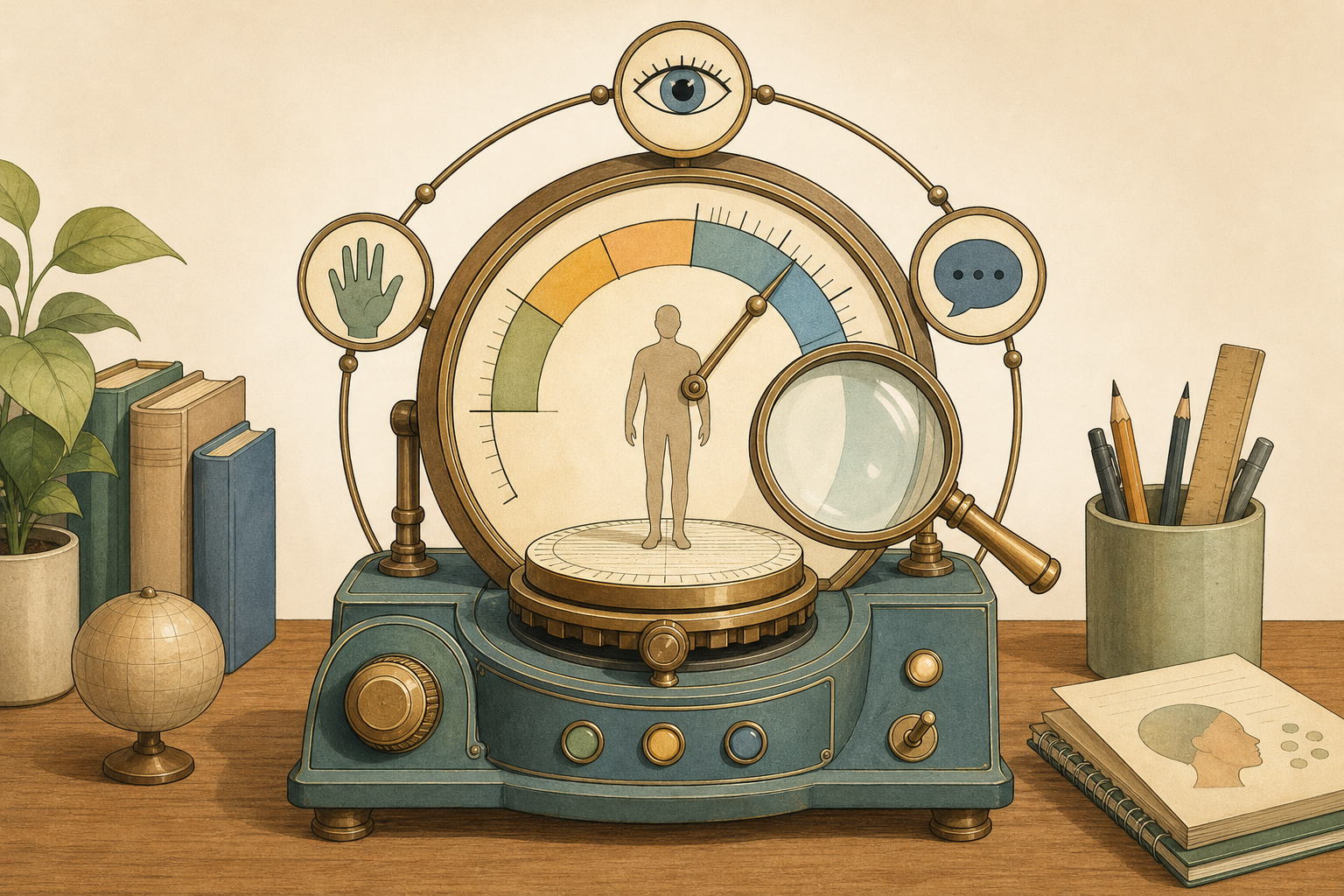
The Fibometer as metaphor: why a machine for truth is a lie
Treat body language as a clue, not a conviction.
The Fibometer is our ridiculous imaginary device that promises to read the soul by watching somebody tap their foot. It’s a useful absurdity: people want a single gadget that translates gestures into truth or falsehood, and that hunger is exactly the problem. Nonverbal behaviour signals emotions, physical state and social strategy — not neatly labelled facts.
So this guide treats the Fibometer as a cautionary emblem. Body language can point you to things worth asking about, but it is not diagnostic. If you want to be less gullible than your instincts, the first step is to stop looking for a single indicator that separates liars from honest people.
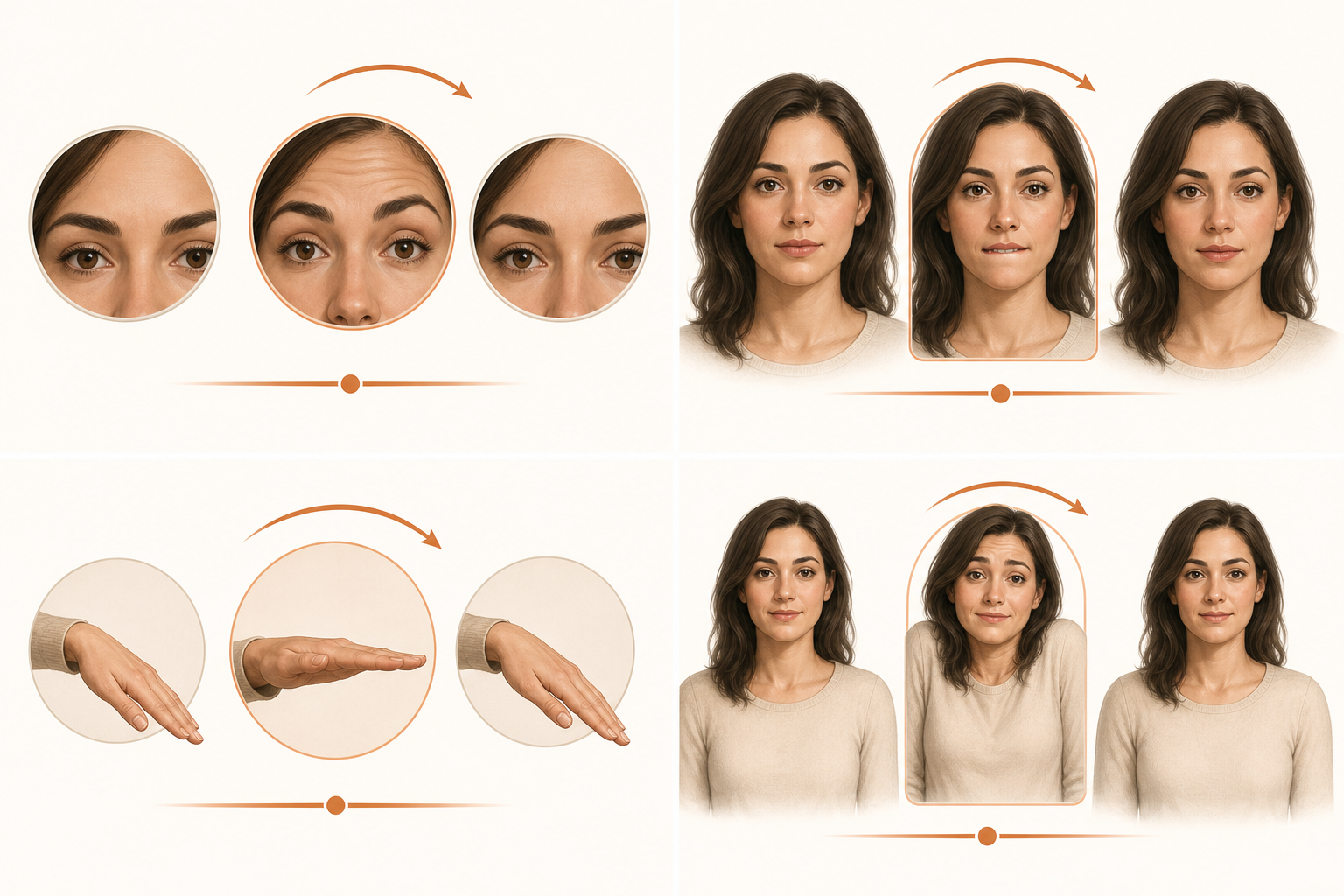
Microgestures and microfables: what tiny movements actually say
Notice pattern, not a single twitch.
Microgestures — brief facial changes, small hand movements, a lip bite — are real phenomena. They can reflect fleeting emotions or automatic responses. But those emotional flashes do not come labeled ‘deception’ and they can be caused by embarrassment, physical discomfort or thinking hard.
Culture, personality and situation shape tiny movements. A smile can be polite, nervous, sincere or strategic depending on context. The key practical move is to look for consistency: does the facial expression, tone and content all point in the same direction over time?
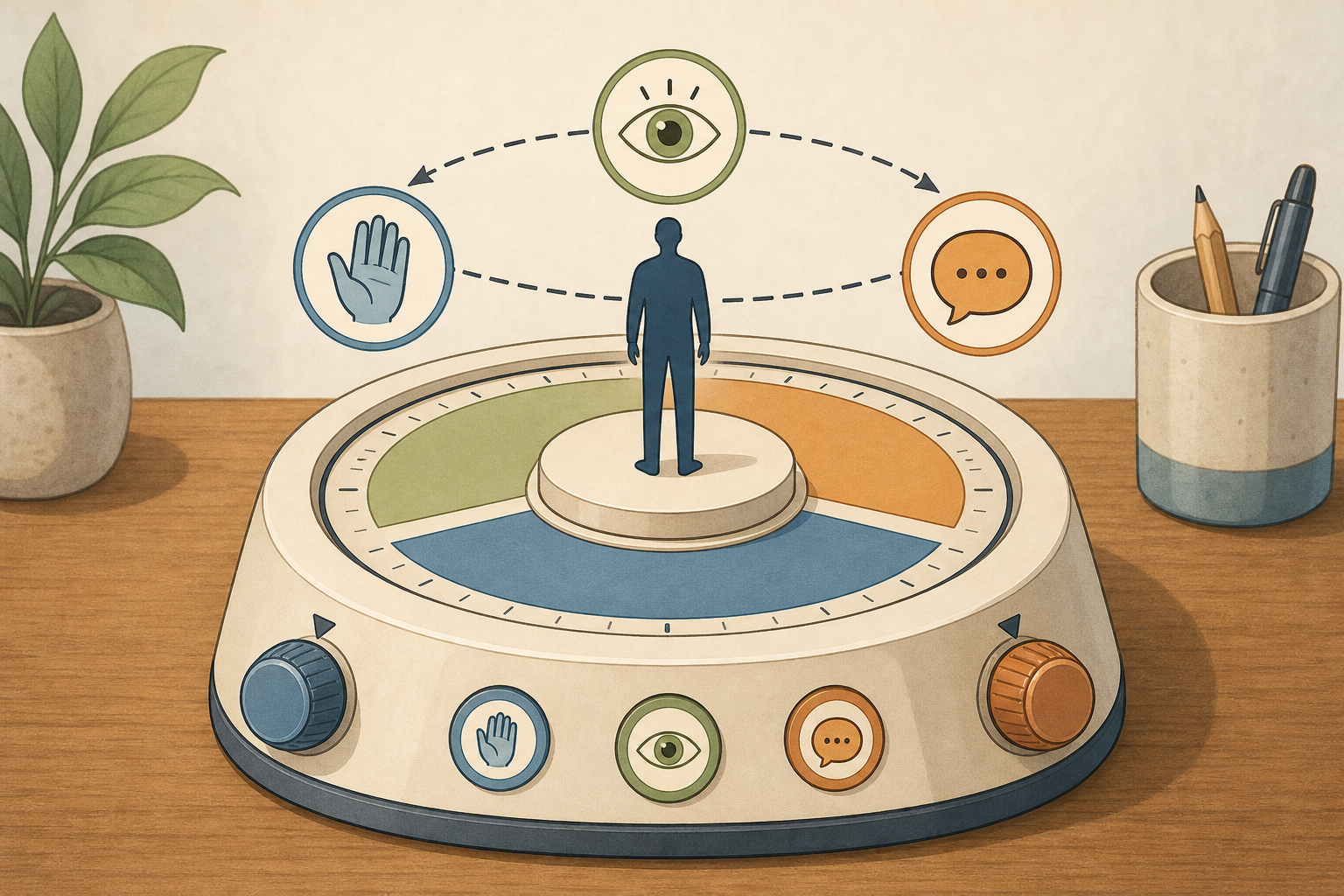
Voice and timing: the theatrical tricks that mislead us
Don’t conflate performance with proof.
Changes in pitch, speech rate, pitch-and-hesitation patterns and word choice are tempting to interpret. A rapid answer might be rehearsed, a long pause might be thought-through, and both can be read as signs of guilt or craftiness. But voice is shaped by nerves, mood and conversational role just as much as by truthfulness.
Listen for clusters: an elevated pitch plus contradicting content and a sudden change from a person’s normal tempo is more interesting than any single awkward pause. Above all, preserve humility: vocal quirks are a flag for follow-up questions, not for headlines in your head.
Clusters, baselines and the tyranny of a single signal
Compare to baseline behaviour before you villainise a glance.
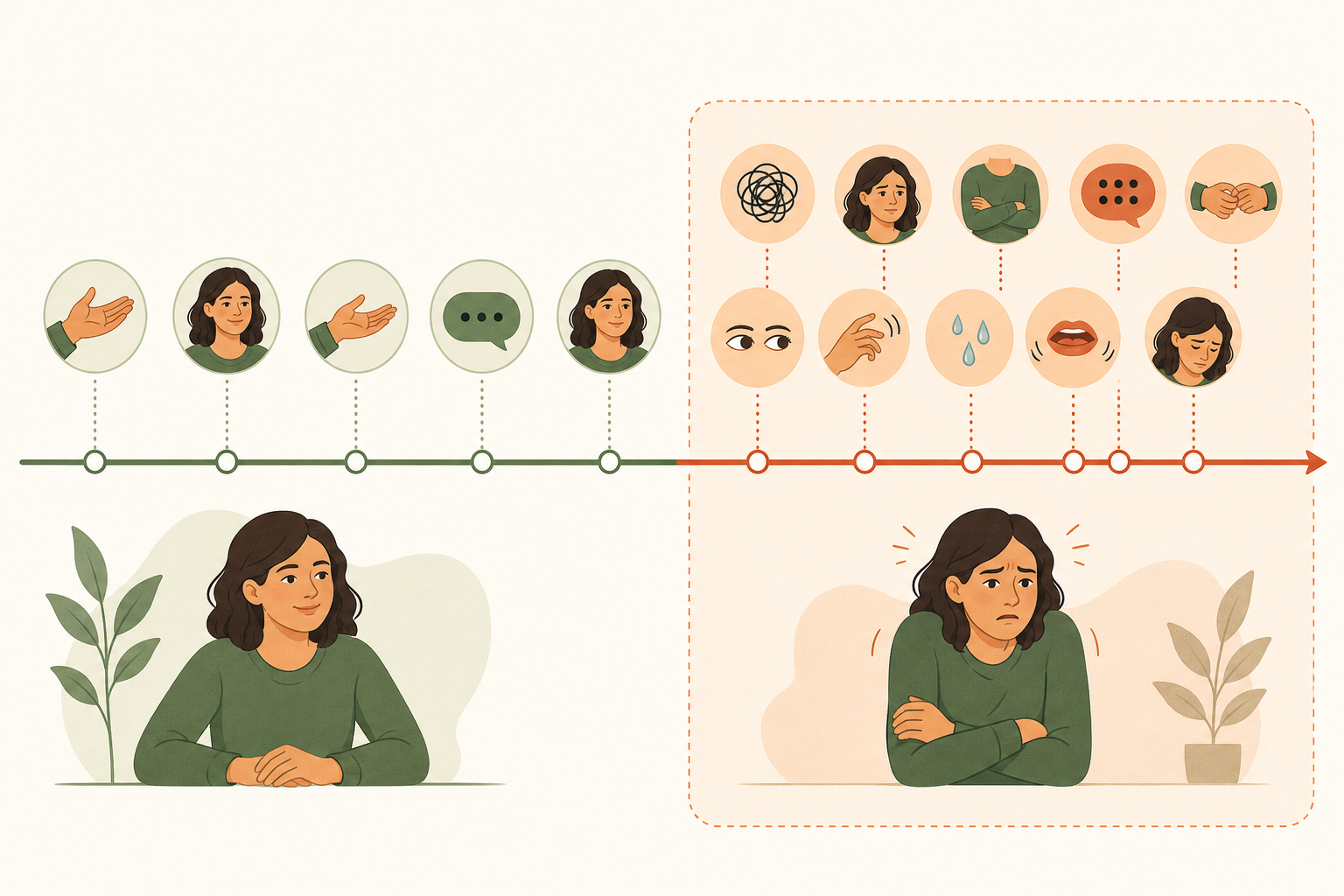
The most reliable use of nonverbal cues is comparative. A ‘baseline’ — how someone behaves in neutral conversation — lets you spot real deviations. A person who usually avoids eye contact and suddenly looks you straight in the eye is different from one who rarely looks at people at all.
Equally important is clustering: a defensive posture plus evasive language plus a brief microexpression creates a pattern worth exploring. Single signals are seductive because our brains love tidy stories, but they are also where most mistakes start.
Cognitive traps and ethical checks: when your Fibometer is a lie detector for your ego
Make suspicion accountable.
Humans are narrative animals; we fit events into stories and then search for confirming signs. Confirmation bias turns any ambiguous gesture into proof of the tale you already prefer. The social cost is real: misreading gestures can harm relationships, careers and reputations.
So put organised guardrails around your guesses. Ask open questions, seek corroborating facts, and give people room to explain. If your Fibometer lights up, treat that illumination as permission to inquire gently — not to convict loudly.
A responsible recipe for suspicion and closing the Fibometer
Act like an investigator, not an executioner.
If nonverbal cues make you uneasy, follow a short, practical sequence: (1) note the cluster and baseline, (2) ask a clarifying open question, (3) watch for consistent answers and behaviour over time, and (4) corroborate with external facts where possible. Keep records if the stakes are high: time, context and verbatim phrasing matter.
The Fibometer’s final lesson is humility: body language is a useful signal system when used carefully, but it’s also an engine of imaginative overreach. Use nonverbal cues to refine your curiosity, not to replace it — and never weaponise a raised eyebrow as a verdict.
End of the rabbit hole.
You know too much now.
If this was useful
Try one of these next

Social Survival How-to
How to host a Fact‑Tea: dunk claims, read sources and embarrass a manifesto politely
Turn a viewing party into a live fact-checking salon: five simple steps to prepare claim cards, brew suspicious tea, time answers, compare sources and award polite biscuit-based verdicts so every dubious Reform UK line gets a proper dunking
Read article
Words & Nonsense Deep Dive
The Promise: an unauthorised lexicon of Reform UK’s favourite claim types
A deep-dive glossary that names and explains recurring claim shapes — the ‘We’ll Fix Everything’ fold, the ‘Victimless Cost’ clause — with origins, example language and a cheat sheet so you can spot each genre on sight
Read article
Social Survival Deep Dive
5 funeral rites for outdated group chats you should perform with an LLM
Five theatrically different ceremonies (the Quiet Archive, the Flame Emoji Burial, the Roast & Release) with exact AI prompts and a script so you can ceremonially retire group threads nobody replies to anymore.
Read article
Social Survival Deep Dive
The stair-by-stair compliment: an anatomy of praise that persuades a Capricorn
Compliments are not spontaneous confetti; they are tiny negotiations. This deep dive breaks praise into three rehearsable treads—validation, utility, forecast—and explains why that architecture persuades a pragmatic, status-conscious person (the Capricorn archetype). Readable theory, timing maps, sample scripts and a single illustrated “compliment choreography” show how to make praise feel earned instead of gratuitous.
Read article