Social Survival How-to
How to host a Fact‑Tea: dunk claims, read sources and embarrass a manifesto politely
Turn a viewing party into a live fact-checking salon: five simple steps to prepare claim cards, brew suspicious tea, time answers, compare sources and award polite biscuit-based verdicts so every dubious Reform UK line gets a proper dunking

- 01
Invites, capacity and a cheeky rule sheet
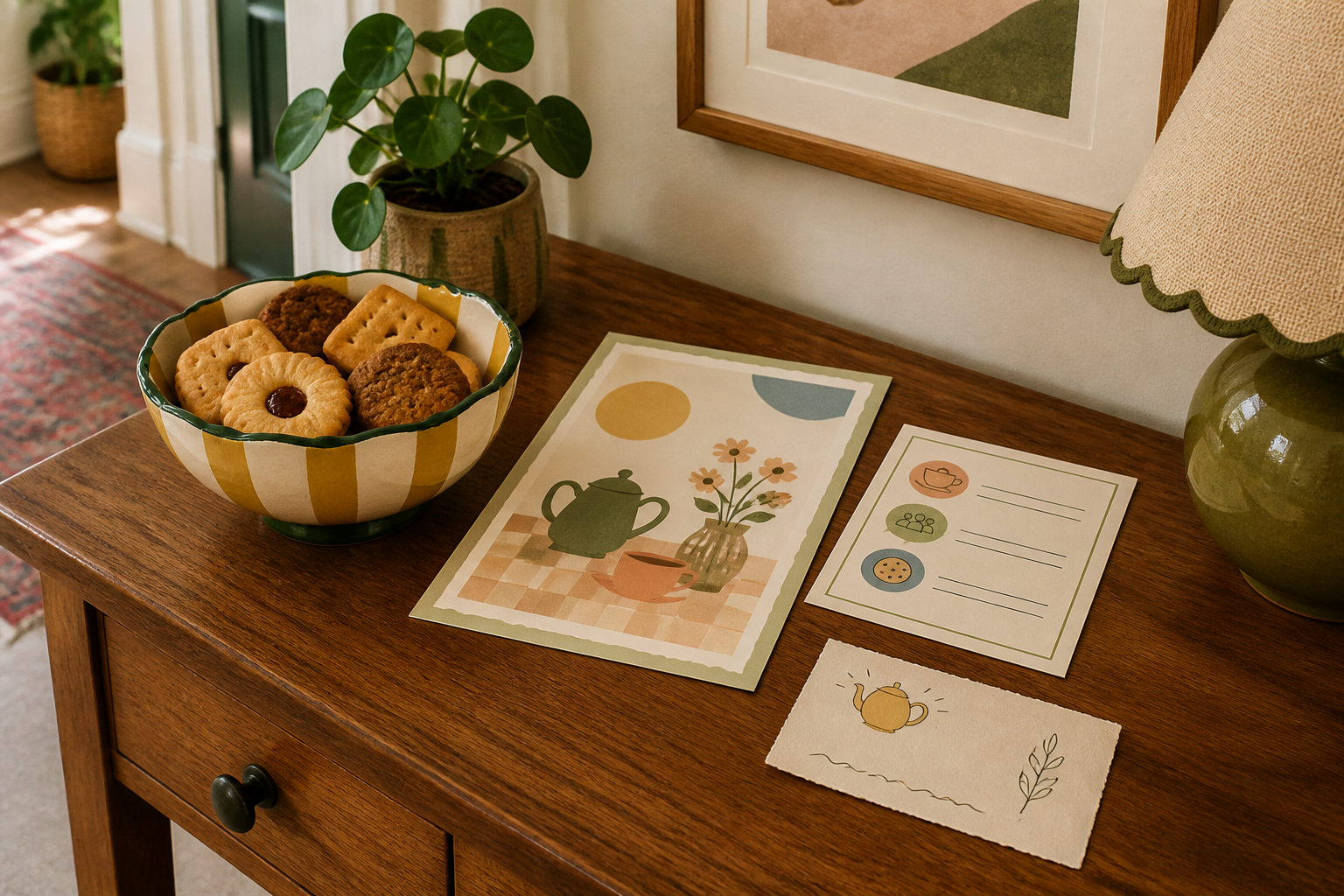
Decide the guest number and the tenor of the evening. Limit to four to eight people so everyone gets to dunk and speak; schedule 90–120 minutes and ask each guest to bring one claim or two credible sources on their phone.
Place a short printed rule sheet by the front door that says: be civil, bring evidence, no yelling across biscuits and keep cameras optional.
- 02
Make tidy claim cards
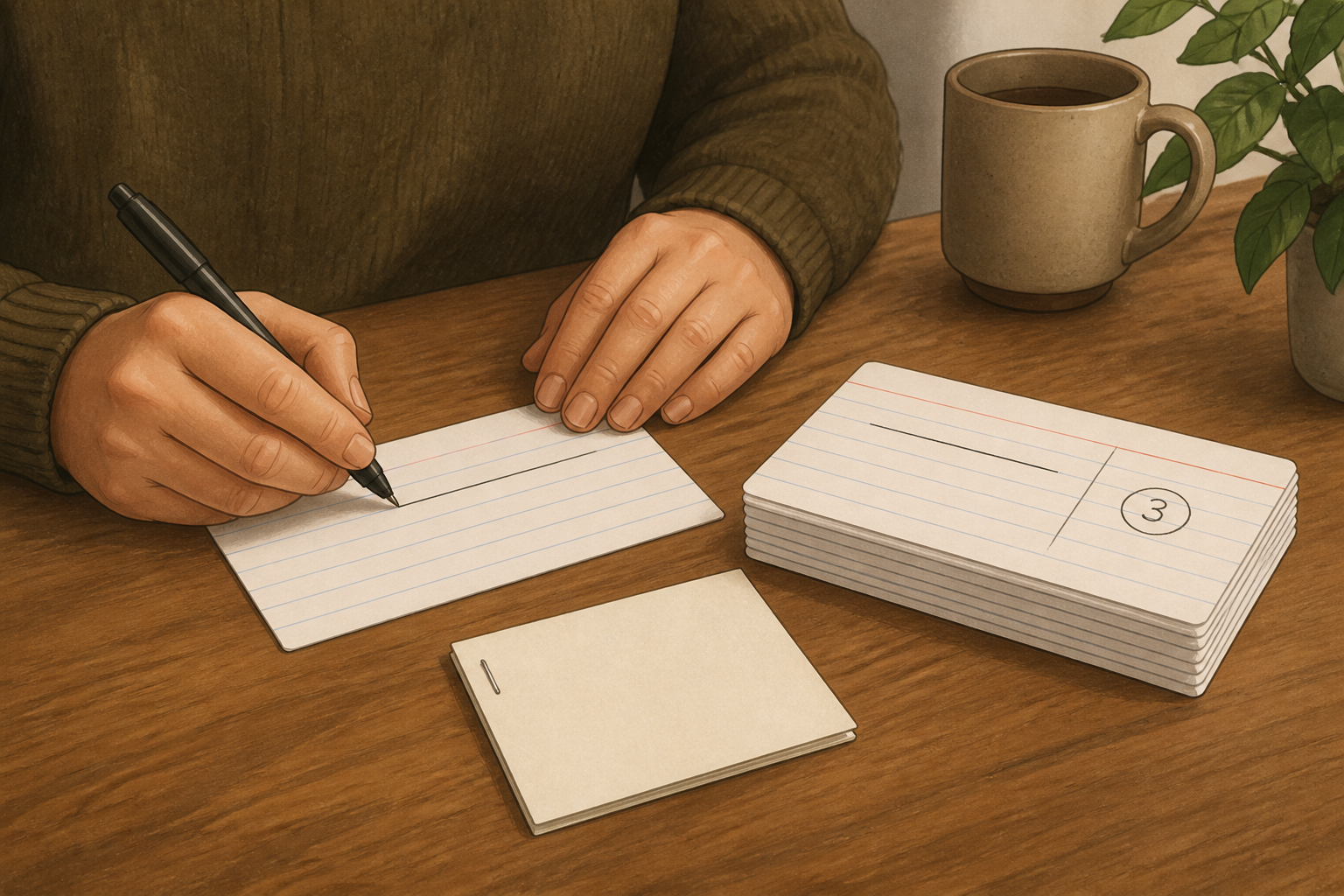
Write each claim verbatim on one side of an index card and the cited URL or source note on the back. Keep cards short: the full quoted claim (as you would read it aloud), the source name and one-line context (time/place). Number cards and limit the stack to eight for one party.
Add a quick 'confidence' score 1–5 in the corner so guests know how dangerous the claim feels before research.
- 03
Brew a pot of 'suspicious' tea
Brew a strong pot of black tea to fuel the research. Use about 2 g loose leaf or one tea bag per 200 ml water, boil and steep 4 minutes for normal strength, 6 minutes for 'suspicious' strength; offer milk and lemon on the side and a decaf alternative.
Label the teapot 'SUSPICION' with a sticky note for ceremony and place two cups for dunk-tests at every seat.

- 04
Assemble a quick-source shelf
Collect at least three source types for rapid checks. Ready one device with a search tab open, print or bookmark the original claim's source, a major national outlet or parliamentary record, and one independent fact-check like an established fact-checking organisation or official data page.
Label a small 'source shelf' area on the table so every round someone can put their printouts or phone for group inspection.

- 05
Assign roles and set timers
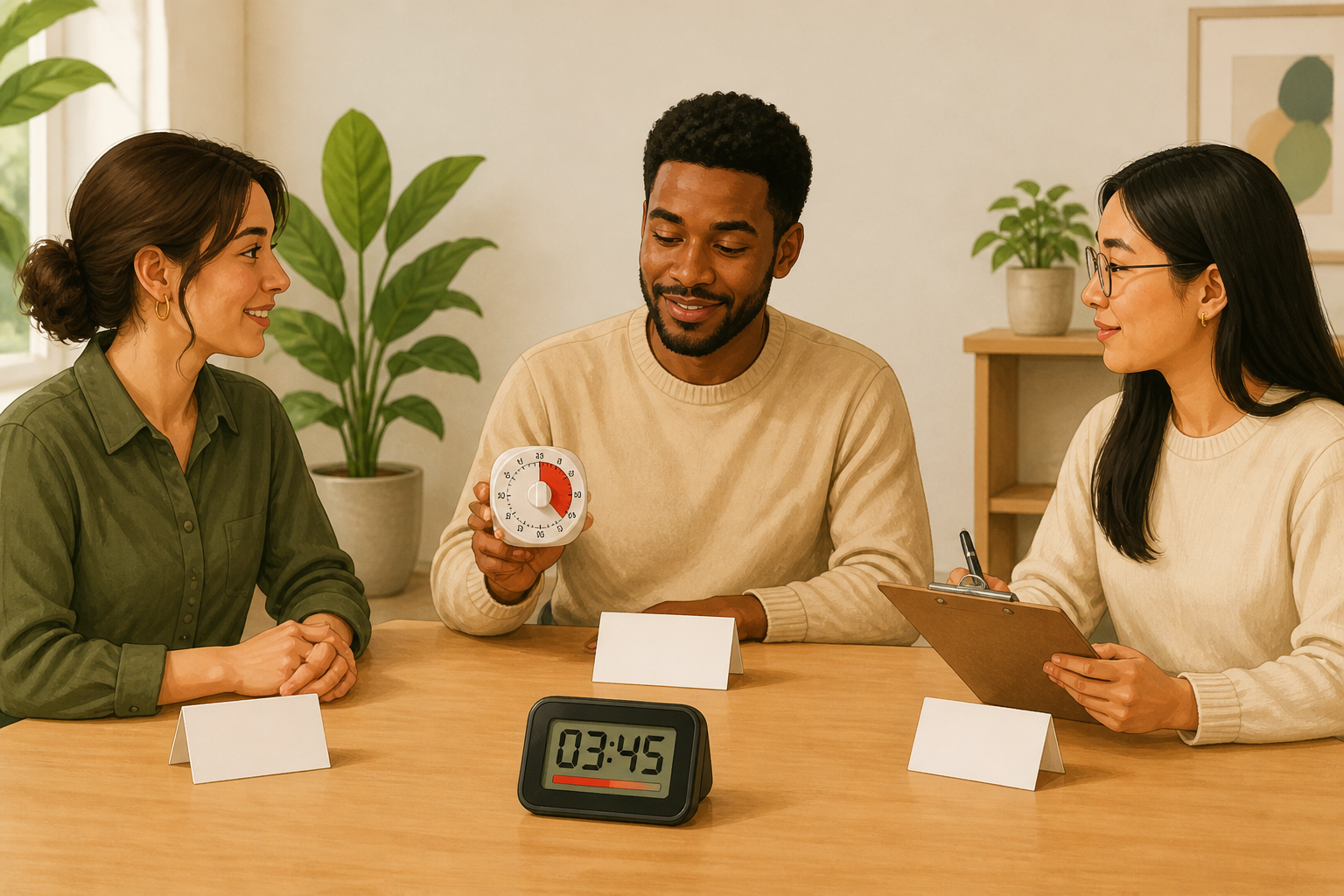
Name a moderator, a timekeeper and a recorder before you begin. Use a 3‑minute research window, a 90‑second summary to the group, and a 60‑second rebuttal window; the timekeeper enforces these with a visible timer.
The recorder writes claim, verdict and two supporting source links onto the card back so the 'Dunked' archive grows visibly during the night.
- 06
Run a round: read, dunk and research
The moderator reads a claim aloud and then the ceremonial dunk begins. One invited audience member performs a brief theatrical dunk of a biscuit into their tea to mark 'initial reaction' while the research window begins—this is symbolic, not decisive.
Teams or individuals use the 3 minutes to find the original wording, supporting or contradicting sources and any primary documents that settle the claim.

- 07
Compare sources and check phrasing
Line up the three sources and ask one simple question: does the original source actually support the precise wording? Compare direct quotes, dates and context; look for missing qualifiers (like 'could' vs 'will') or data misreads.
If the claim rests on a press release or social post, prioritise the original wording over second‑hand summaries.

- 08
Award a biscuit verdict
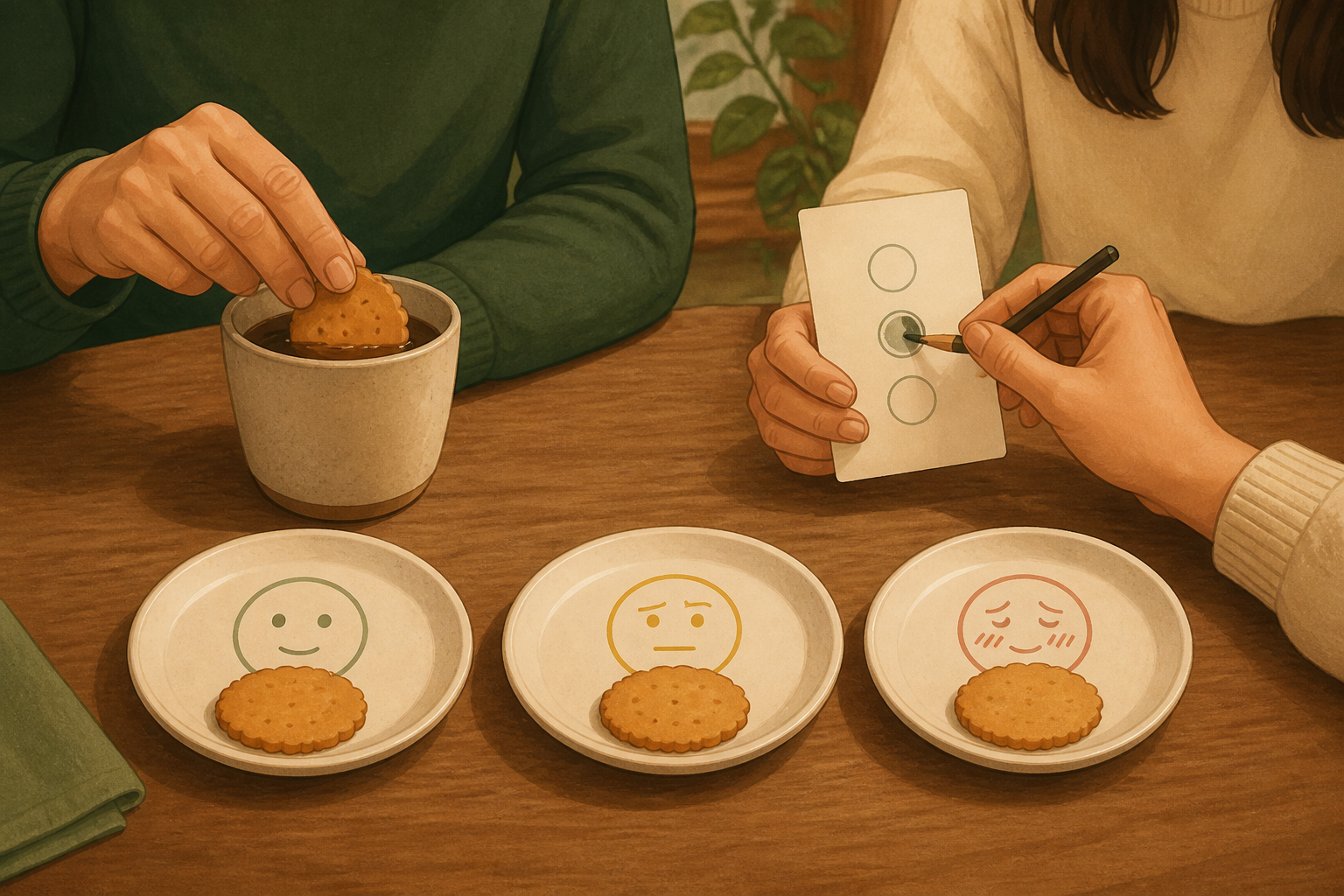
Translate the adjudication into a polite biscuit ceremony. 'Polite' verdict (substantiated): light dunk for 2 seconds and applause; 'Skeptical' (unproven/needs more evidence): long dunk 6–8 seconds and a curt nod; 'Embarrassed' (wrong/misleading): remove a biscuit from the plate, dunk the card briefly into the tea as a symbolic soak, then place the biscuit on the 'Remedial' plate.
Recorder notes the final verdict and the two best URLs on the card back for the archive.
- 09
Archive results and consider polite outreach
File each dunked card into a 'Dunked Claims' box with the recorded sources and a one‑sentence correction. After the party, compile a short, civil summary PDF of findings and sources—this is your evidence pack for 'embarrassed' claims.
If you choose outreach, draft a respectful, factual note linking your evidence and invite clarification; avoid railings, insults or coordinated pressure—this is meant to be polite embarrassment, not harassment.

- 10
Finish with a debrief and biscuit awards
Close with a 'digestive debrief' where guests name the round that changed their mind and crown the 'Most Relentless Biscuit'—a small prize. Share the compiled PDF with attendees and an optional public-friendly correction post if you agreed to do so as a group.
End ceremonially by putting the cards into a visible archive on a bookshelf so your next Fact‑Tea begins with a history of victorious dunkings.

If this was useful
Try one of these next

Social Survival Deep Dive
The Fibometer: a clear guide to what body language can — and can’t — tell you
Body language is a seductive detective: a raised eyebrow, a clipped sentence, a flash of a smile feel like evidence. This deep dive separates the usable behavioural red flags from theatrical guesswork. We cover microgestures, vocal cues, the need for baselines and clusters, and the cognitive traps that turn ordinary signals into a courtroom in your head.
Read article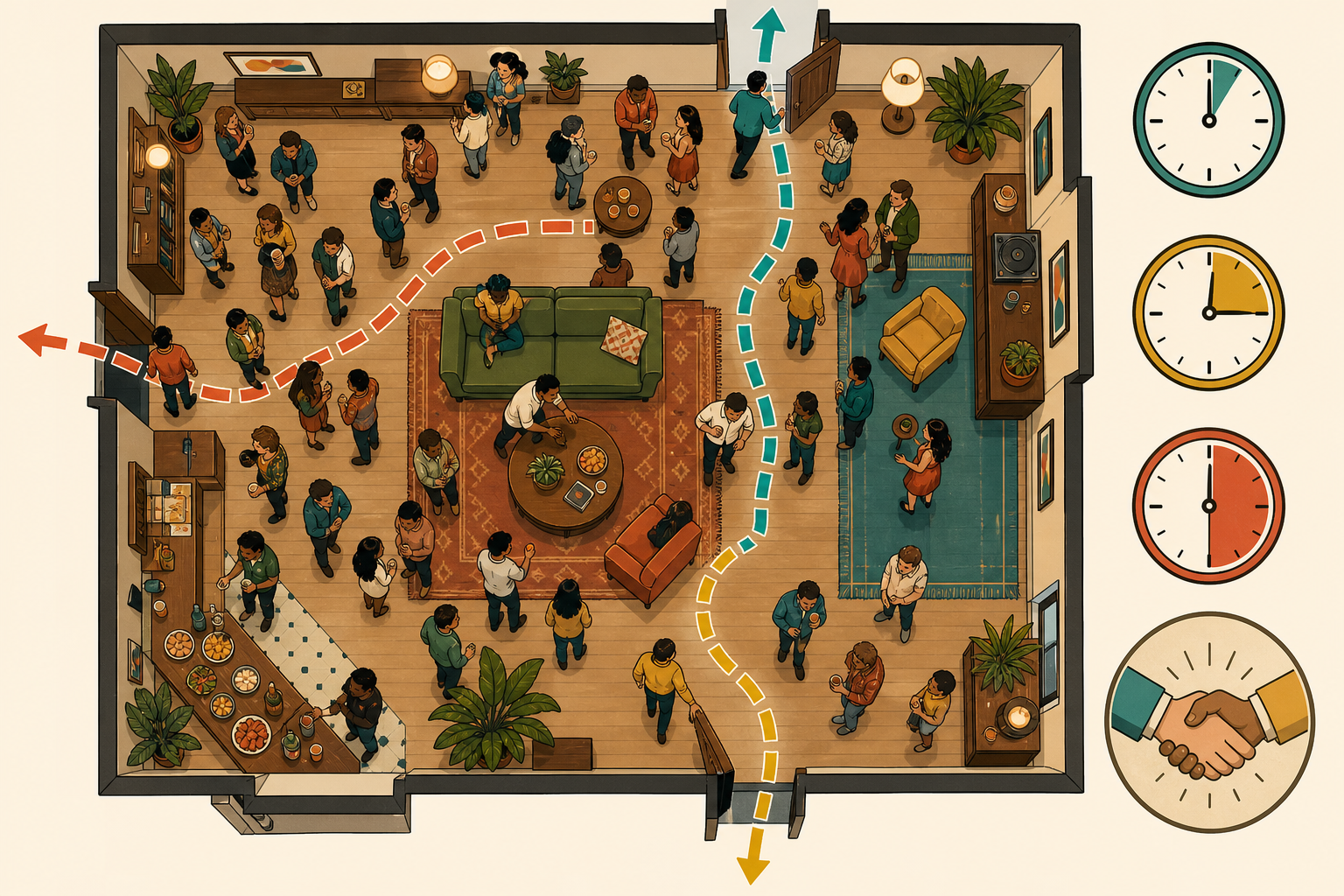
Social Survival Deep Dive
The exit: an unauthorised biography of leaving rooms, parties and conversations with zero collateral
An anatomy of departures—sighting lanes, decoy conversations, timed goodbyes and the ceremonial handshake—so you can evacuate public spaces with dignity (and an escape route mapped to your brain’s attention span).
Read article
Food & Drink Deep Dive
The snack bribe: edible diplomacy and emergency rations for unavoidable social obligations
Explores the anthropology of pocket food—single-serving sweets, portable diplomacy recipes and snack etiquette—teaching which morsels to carry, how to offer them theatrically, and how they buy minutes of social grace.
Read article
Social Survival Listicle
7 theatrical micro‑exits to deploy when small talk becomes a hostage situation
Ranked, stage‑ready escape moves you can perform in under 12 seconds—from the genteel 'subtle bookmark close' to the operatic 'Oscar curtain drop.' Each entry gives the exact words to say, the single prop you need, and the exit timing so you leave without emotional collateral. The ranking is a knowingly ridiculous editorial judgement based on theatrical flair, plausible deniability, and how dramatically you can fold a handkerchief while promising to 'catch up later.'
Read article