Domestic Chaos Deep Dive
The fidget’s manifesto: how tiny objects staged a coup in boardrooms and living rooms
An illustrated history of fidgets as behavioral theatre: why certain textures soothe, the etiquette of silent spinning, and how to assemble a household fidget cabinet that converts anxiety into plausible productivity.
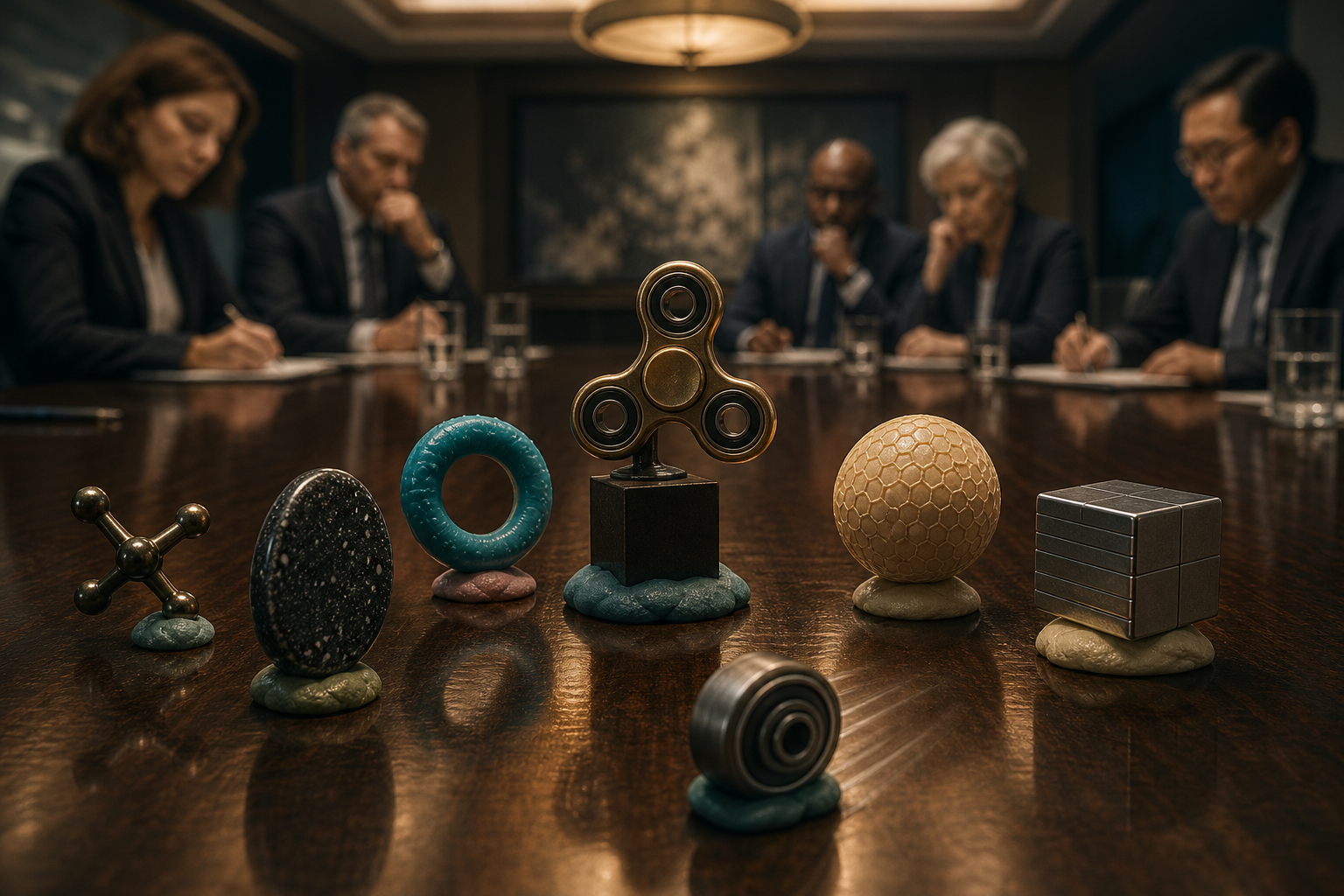
What counts as a fidget (and why it isn’t just a toy)
Fidgets are small handheld objects people manipulate with their fingers or palms to occupy nervous energy, focus attention, or simply pass time. They span a surprising taxonomy: spinners and rollers that provide momentum, squishables and putties that change shape, tactile stones and beads for stroking, and constructed gadgets—cubes, pens, rings—with discrete actions.
Calling something a fidget emphasizes function over form: the point is not decoration but a self-directed, low-stakes motor activity. They behave like micro-rituals—simple, repeatable gestures that can be looped for minutes, sometimes to the point of theatricality. Test an object’s feel before you commit to it; comfort is an intrinsic part of its effect.
Textures, weight and the physics of calm
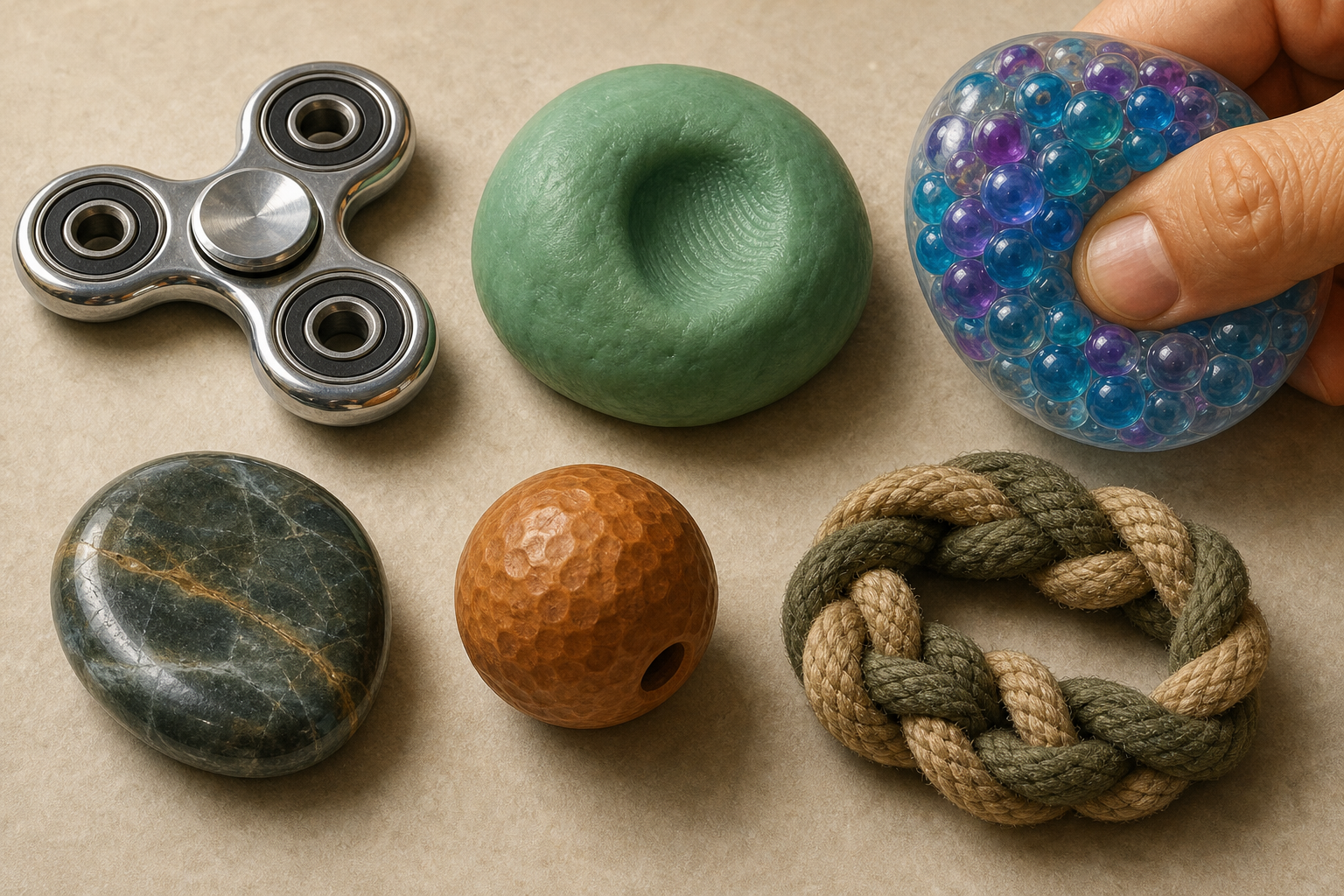
The sensory logic of fidgets rests mostly on two axes: tactile texture and proprioceptive feedback. Smooth metal spinners reward centrifugal motion; dense, rubbery putty resists and then yields; a carved stone is cool and unchanging, perfect for repetitive stroking. Weight, inertia and subtle vibration all alter how attention is engaged.
Different people prefer different inputs because nervousness and attention recruit different sensory systems. Some need soft resistance—the sort that slow-squeezes tension out of a hand—while others depend on relentless, noiseless motion to occupy the reptilian urge to fidget. Choose contrasting textures in a small set to cover more moods.
How tiny objects climbed into workplaces and living rooms
Fidgets entered public awareness as personal curiosities and novelty gadgets, but their social life grew when teachers, parents and managers noticed a pattern: certain small manipulations sometimes correlated with calmer behavior or better attention. That observation turned into a cultural trend, and then into etiquette debates about attention and professionalism.
Their adoption in offices and homes is as much theatrical as practical. A quietly spinning object on the corner of a desk signals a practiced calm; a visible stash of squishy toys in a living room announces that nervous energy is accommodated here. The result is a new domestic and corporate choreography where tactile props grease the wheels of social interaction.
The etiquette of the secret spinner: meeting‑safe manoeuvres
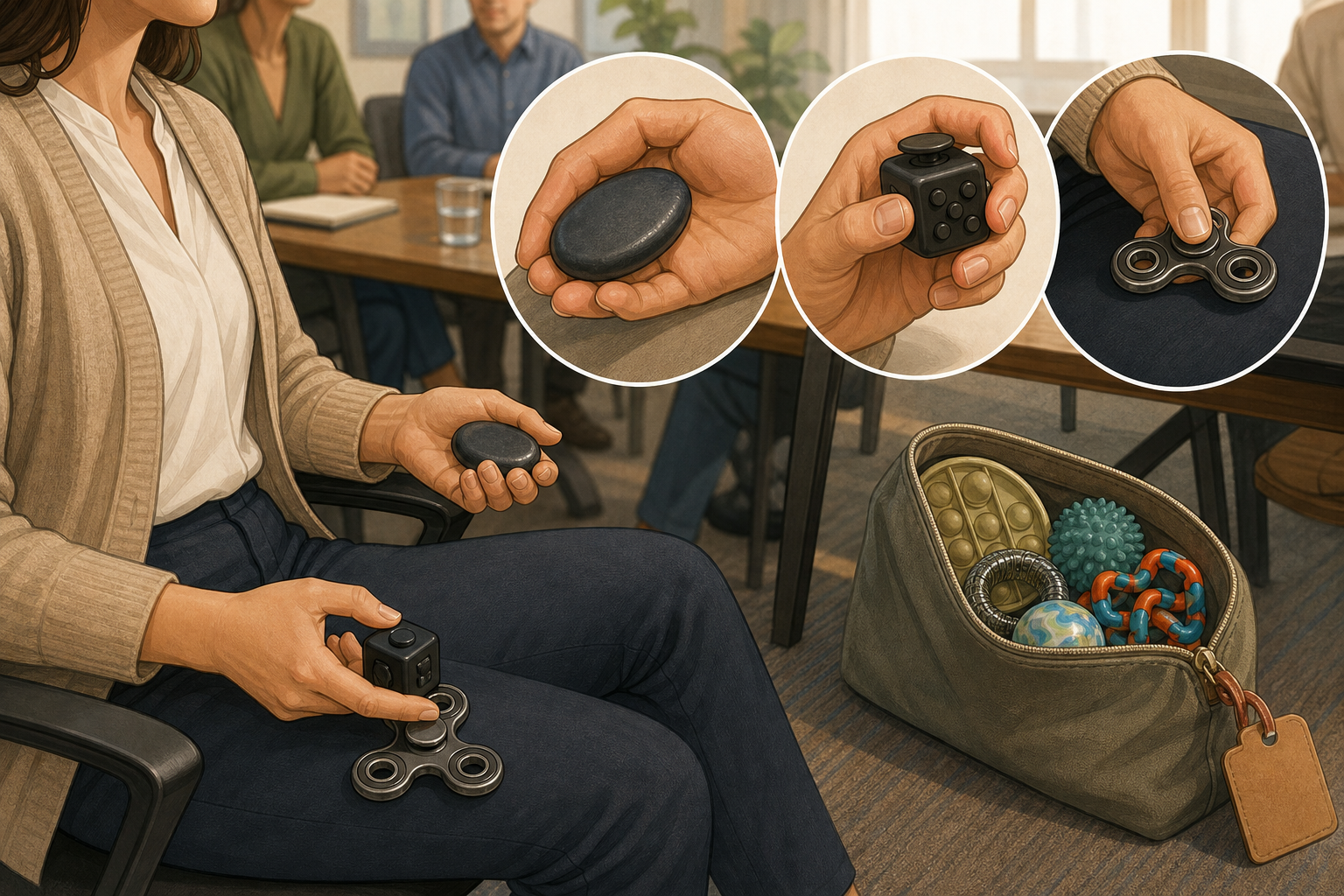
Using a fidget in a meeting is an act of social theatre and needs its own rules. The baseline is simple: avoid noise, obvious distraction and ostentatious performance. A palm-clutched worry stone or a silent cube is a diplomatic choice; loud clicking, visible flourishes or juggling a spinner are not.
Beyond noise, there’s signalling to consider. The wrong object in view can read as impatience or disengagement, while an appropriately discreet toy can read as professional self-management. Ask permission for communal fidgets—leaving shared items out without consent can turn benevolent ergonomics into passive-aggressive décor.
Building the household fidget cabinet (ritual optional, but dramatic)
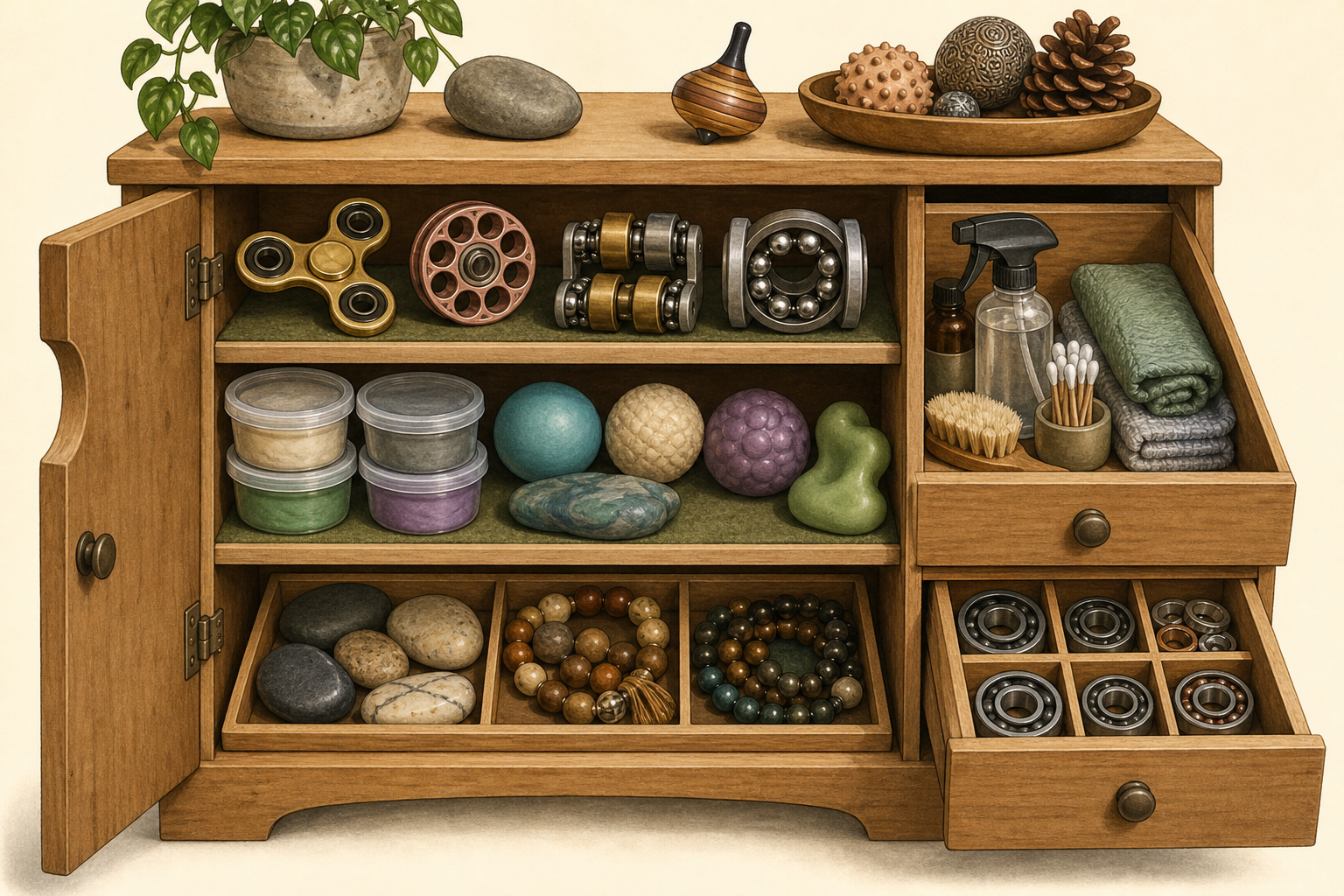
Treating your fidgets like a curated cabinet turns small anxieties into an organized practice. Divide the cabinet into categories: ‘silent motion’ (spinners, rollers), ‘tactile resistance’ (putty, stress balls), ‘stroking tools’ (stones, beads), and ‘performative props’ (larger, noisier items reserved for private spaces). Keep a small cleaning kit and a list of any known allergies or material sensitivities.
Rotation matters: make a weekly ritual where items are inspected, wiped, and moved between the living-room shelf and the ‘work-ready’ pouch. The ceremonial bit is optional but makes the experience delightfully absurd—anointing a new spinner with a practiced flick is more theatrical than functional, but it helps cement a calm habit. Rotate your set weekly to prevent novelty fatigue and to keep the household cabinet feeling like an intentional resource rather than a junk drawer.
End of the rabbit hole.
You know too much now.
If this was useful
Try one of these next

Social Survival Deep Dive
5 funeral rites for outdated group chats you should perform with an LLM
Five theatrically different ceremonies (the Quiet Archive, the Flame Emoji Burial, the Roast & Release) with exact AI prompts and a script so you can ceremonially retire group threads nobody replies to anymore.
Read article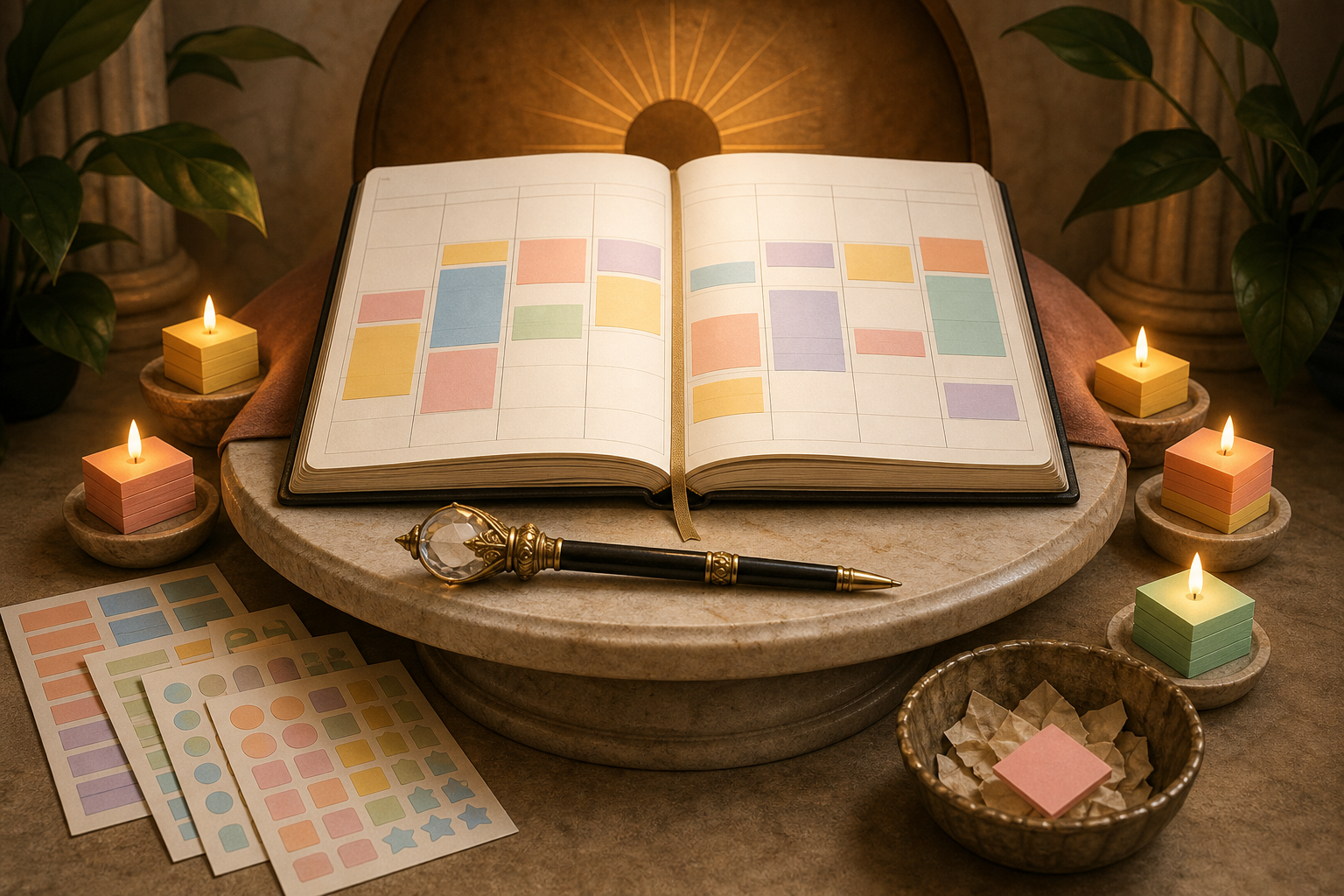
Domestic Chaos Deep Dive
The calendar altar: worship, sacrifice and sticker diplomacy for ADHD timekeepers
Investigates planners as miniature temples—color rites, buffer-zone sacrifices, alarm liturgies and sticker economies—showing how to turn a calendar into a forgiving deity that forgives missed starts.
Read article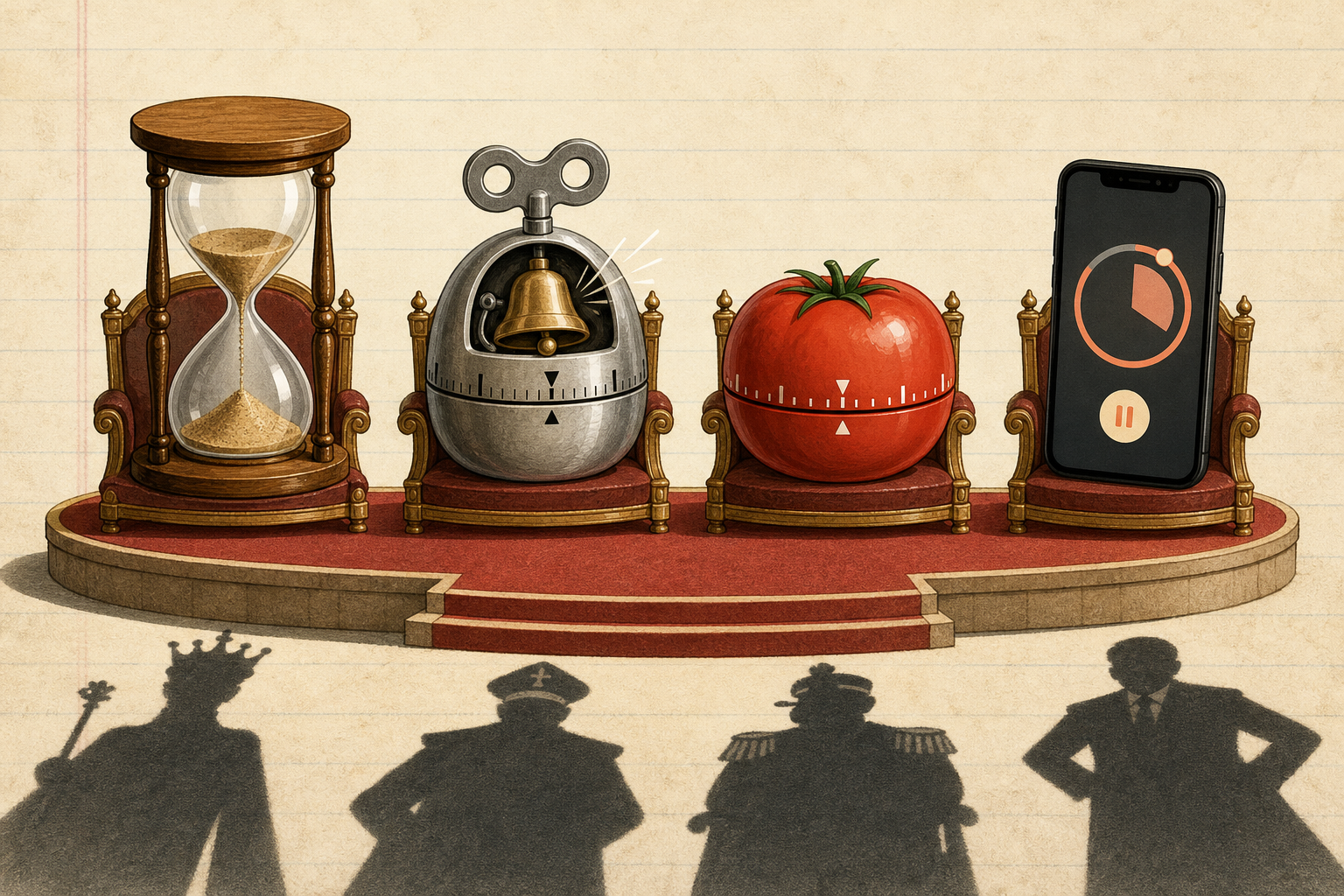
Domestic Chaos Deep Dive
Timers: A Short History of Tiny Tyrants That Make Projects Finishable
Deep-dive: an illustrated, readable history of mechanical and visual timers, Pomodoro culture, and how different timers change hobby behaviour. Includes key facts, a three-panel timer chooser and two supporting illustrations.
Read article
Social Survival Listicle
7 theatrical micro‑exits to deploy when small talk becomes a hostage situation
Ranked, stage‑ready escape moves you can perform in under 12 seconds—from the genteel 'subtle bookmark close' to the operatic 'Oscar curtain drop.' Each entry gives the exact words to say, the single prop you need, and the exit timing so you leave without emotional collateral. The ranking is a knowingly ridiculous editorial judgement based on theatrical flair, plausible deniability, and how dramatically you can fold a handkerchief while promising to 'catch up later.'
Read article