Food & drink How-to
How to build a Spooky Low‑Carb Charcuterie Board (visual tricks, real keto options)
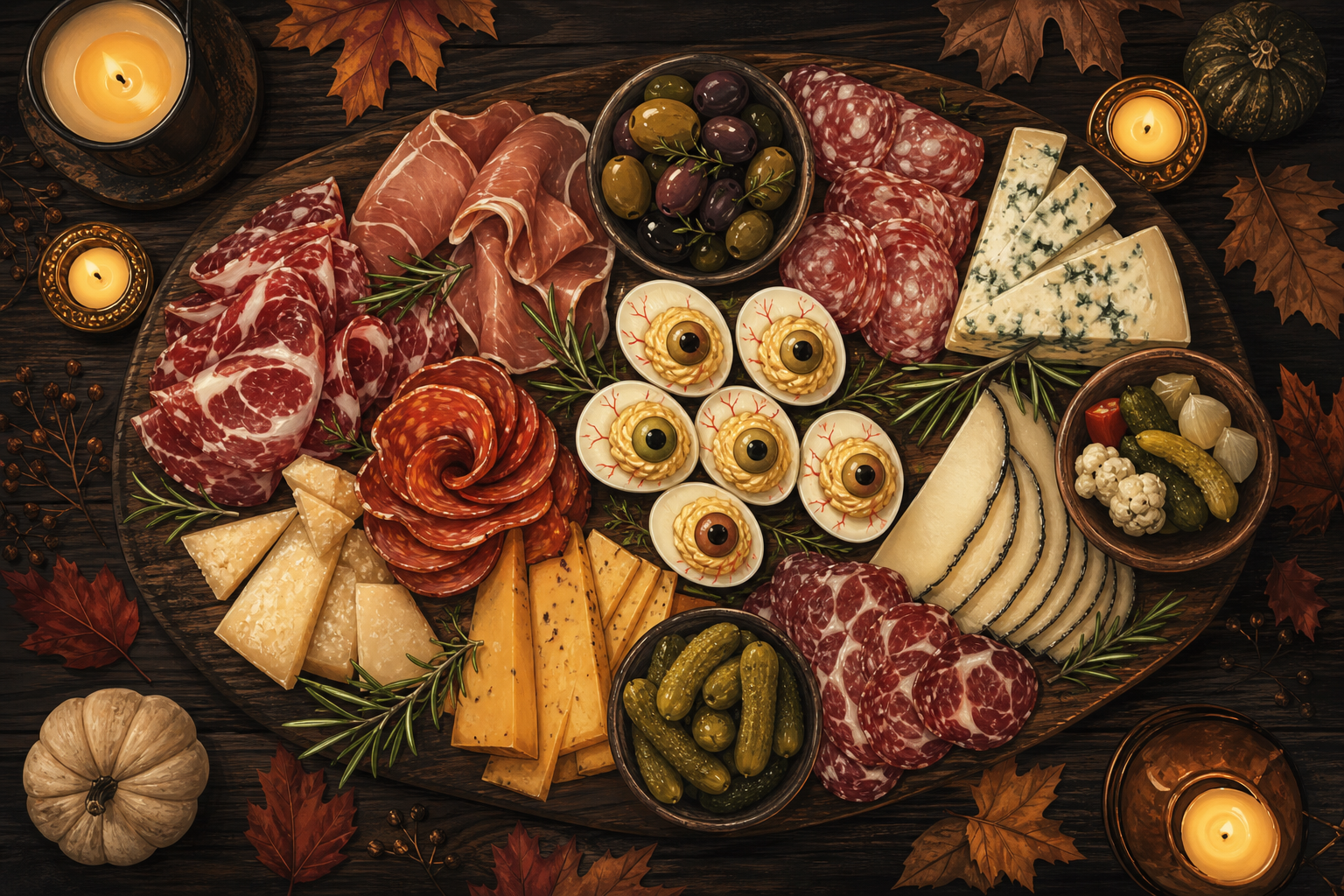
Assemble a Halloween‑ready charcuterie board that reads scary and stays low in carbs: cured meats, cheeses, olives, pickles, and low‑carb garnishes arranged for effect. Clear placement, proportion, and storage tips keep it photo‑ready and h
- 01
Decide size and portions
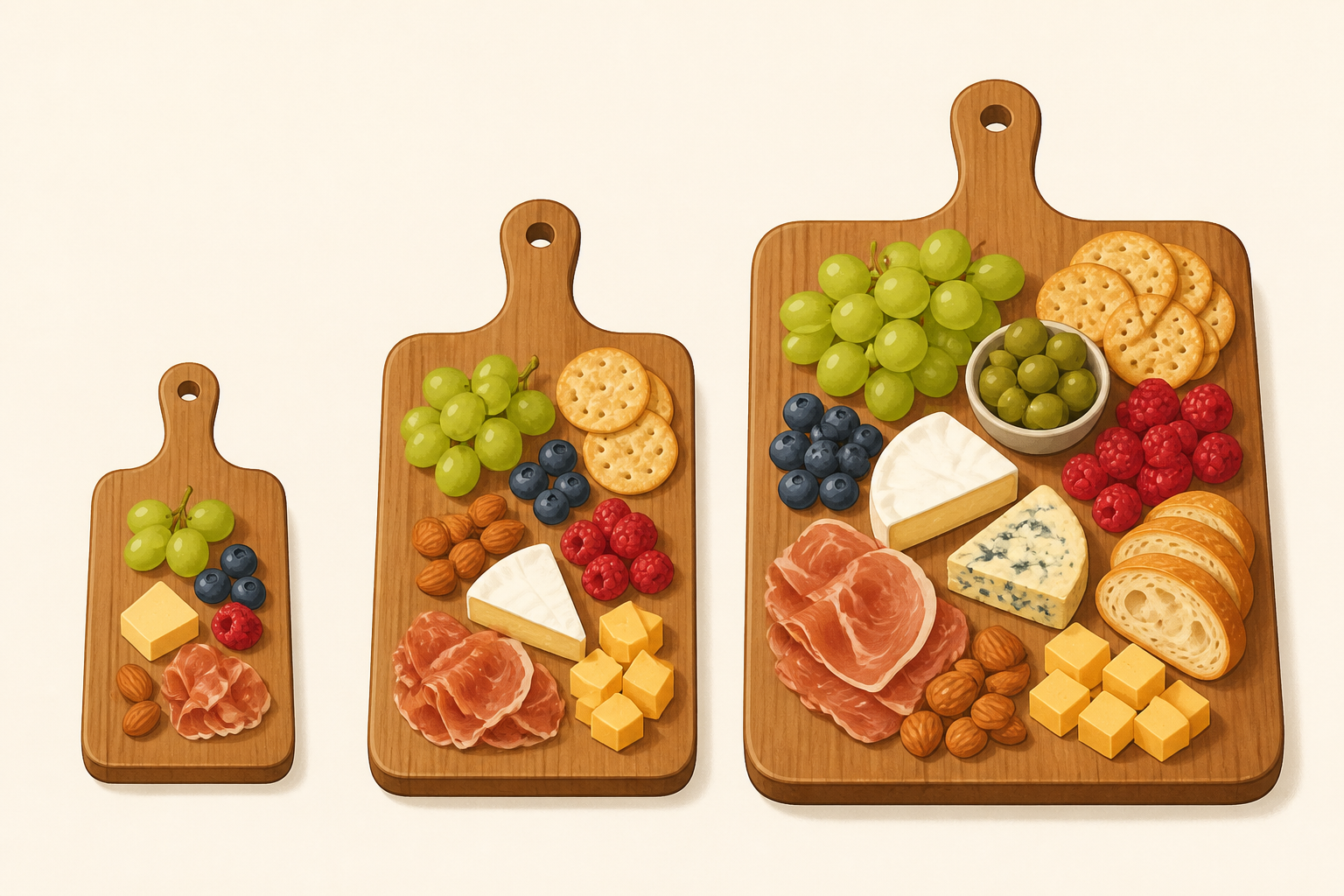
Choose a board size for your guest count and plan roughly 3–4 ounces of meat and 2–3 ounces of cheese per person as a baseline. This keeps the board decisively low‑carb while giving you a clear shopping target.
- 02
Pick your meat anchors
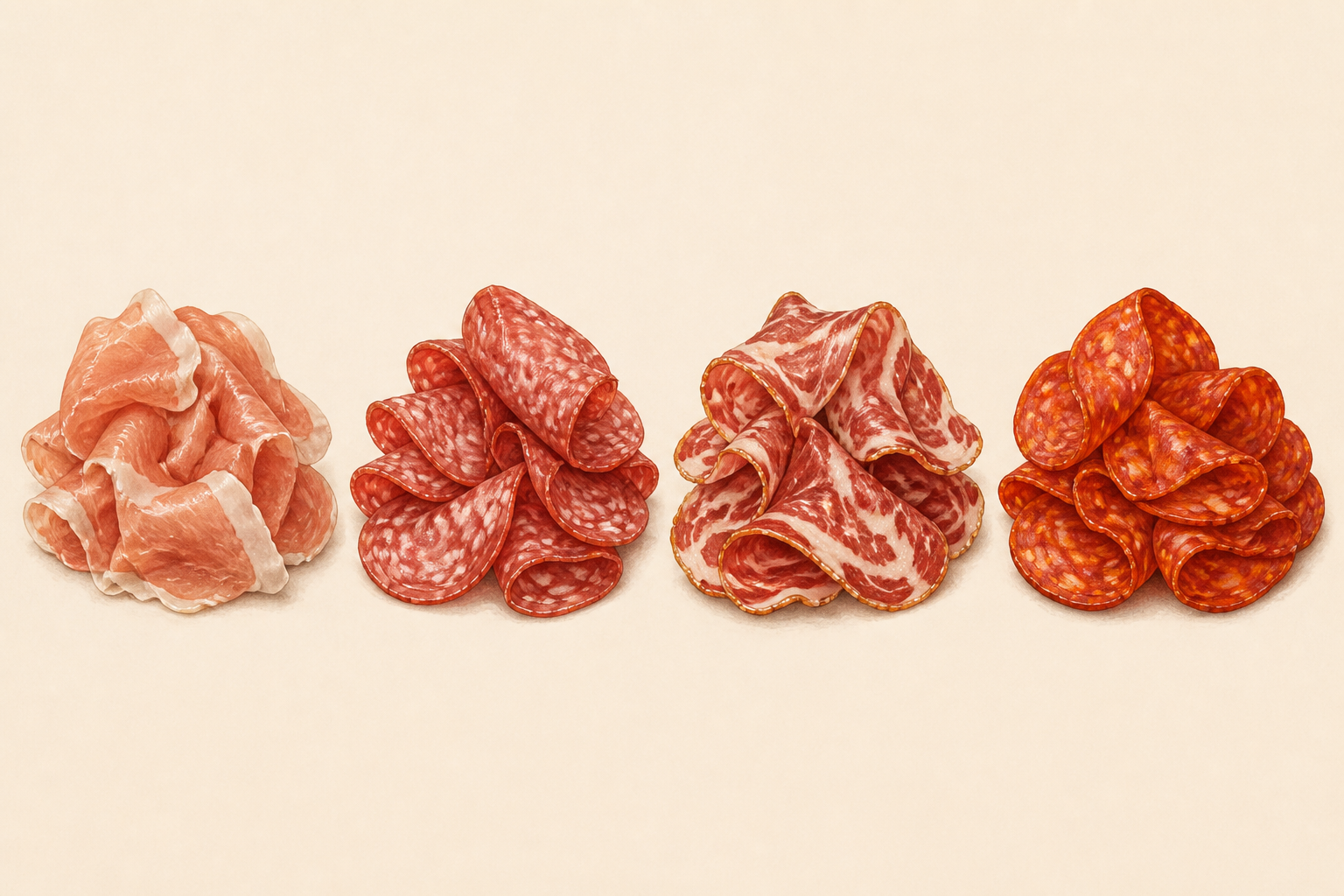
Select 2–4 cured meats that are naturally low in carbs: examples include salami, pepperoni, prosciutto and soppressata. Buy sliced or whole and slice at home. Aim for variety in texture and shape: a folded soft prosciutto, thin pepperoni rounds, and thicker salami slices.
- 03
Choose three complementary cheeses
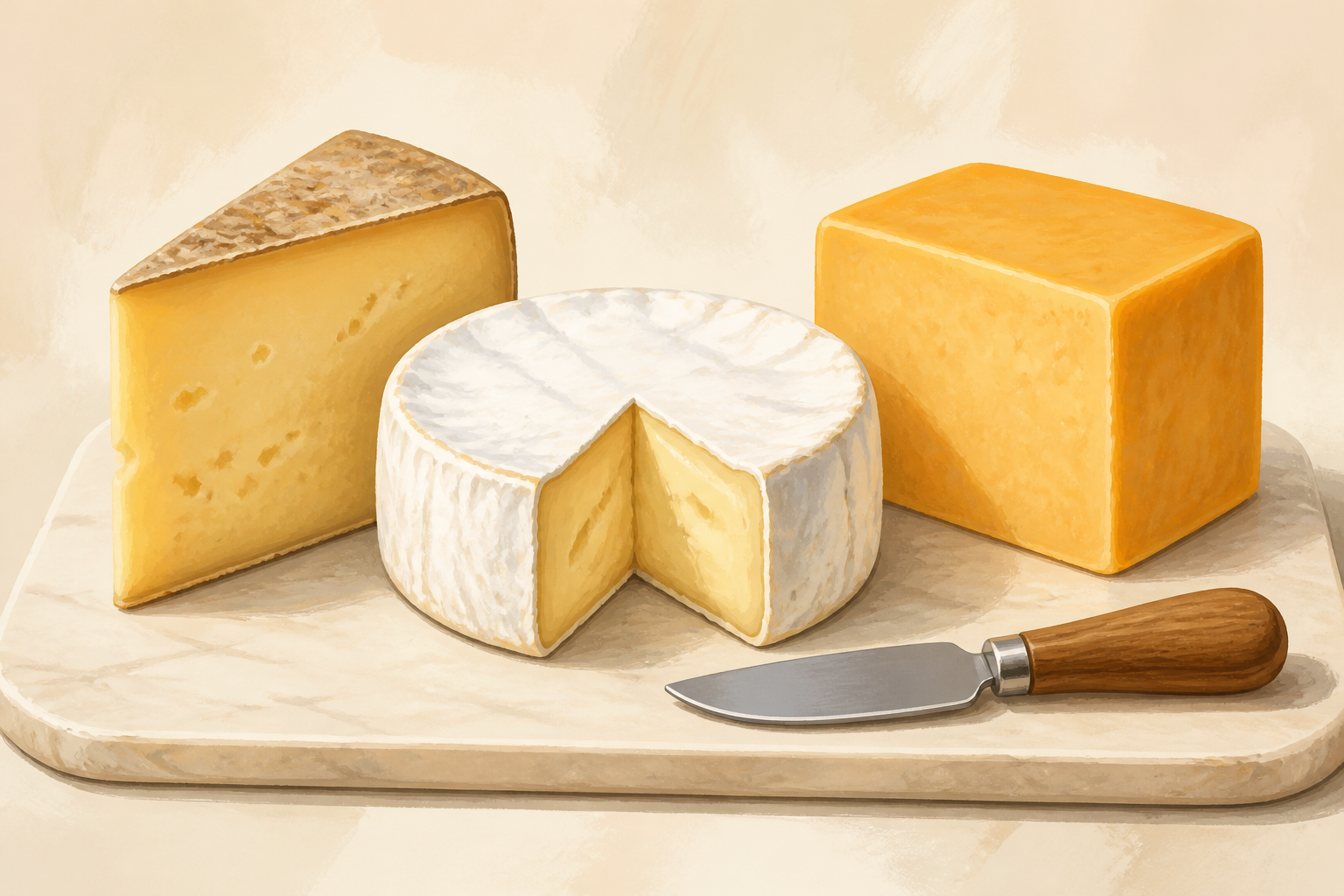
Pick cheeses with contrasting textures and flavors: a hard slicer (cheddar or aged gouda), a creamy soft cheese (brie or goat cheese log), and a firm, sliceable option (manchego or swiss). Keep cheeses pre‑cut or slice/quarter them for easy grabbing.
- 04
Pick low‑carb fillers and crunchy bits
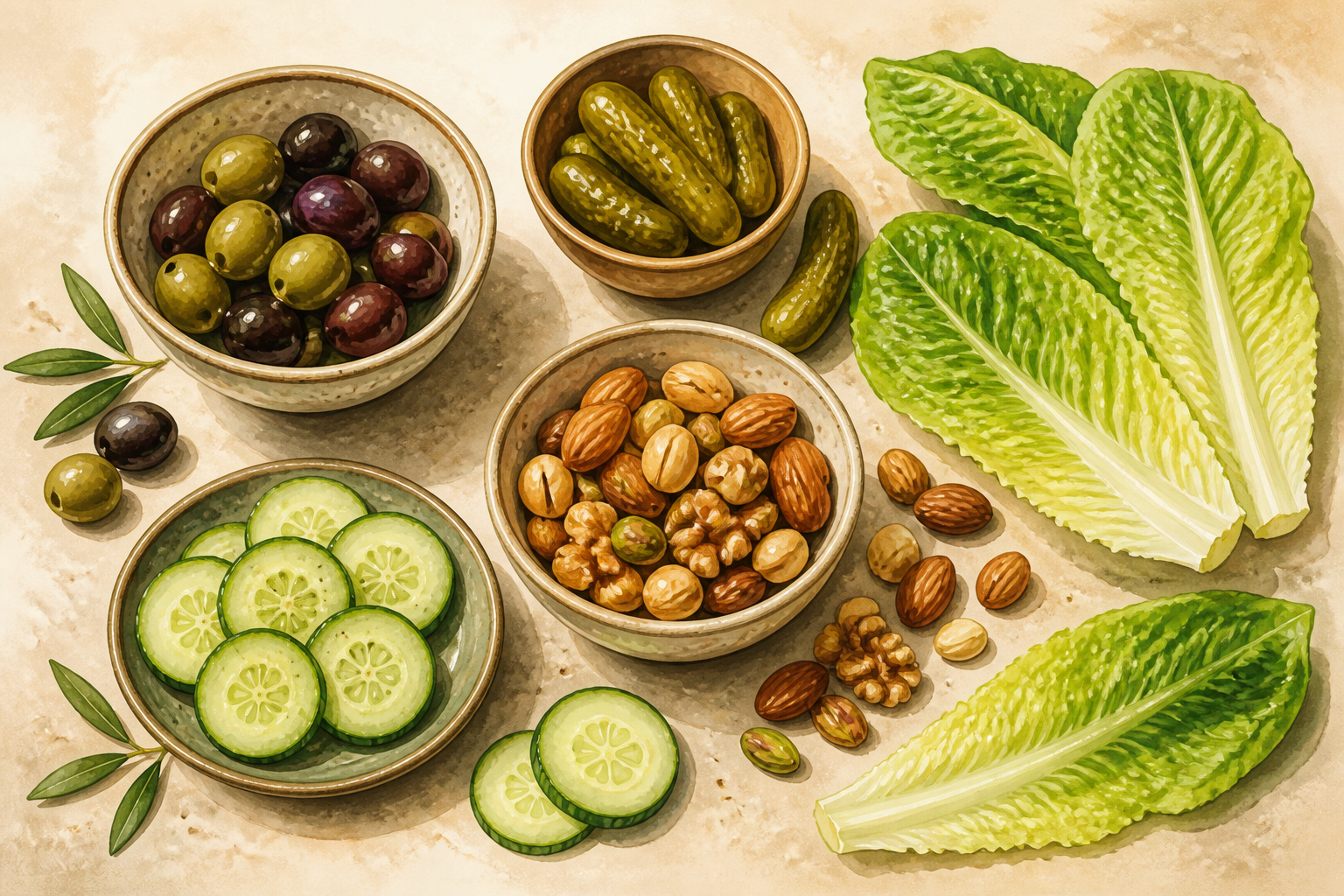
Choose olives, pickles (gherkins or dill chips), marinated artichoke hearts, roasted nuts (almonds, pecans), and sliced radishes or celery for crunch. Avoid bread/crackers; instead offer large romaine leaves, cucumber rounds, or pork rind chips for scooping.
- 05
Make two spooky small features (eyeballs and spiders)
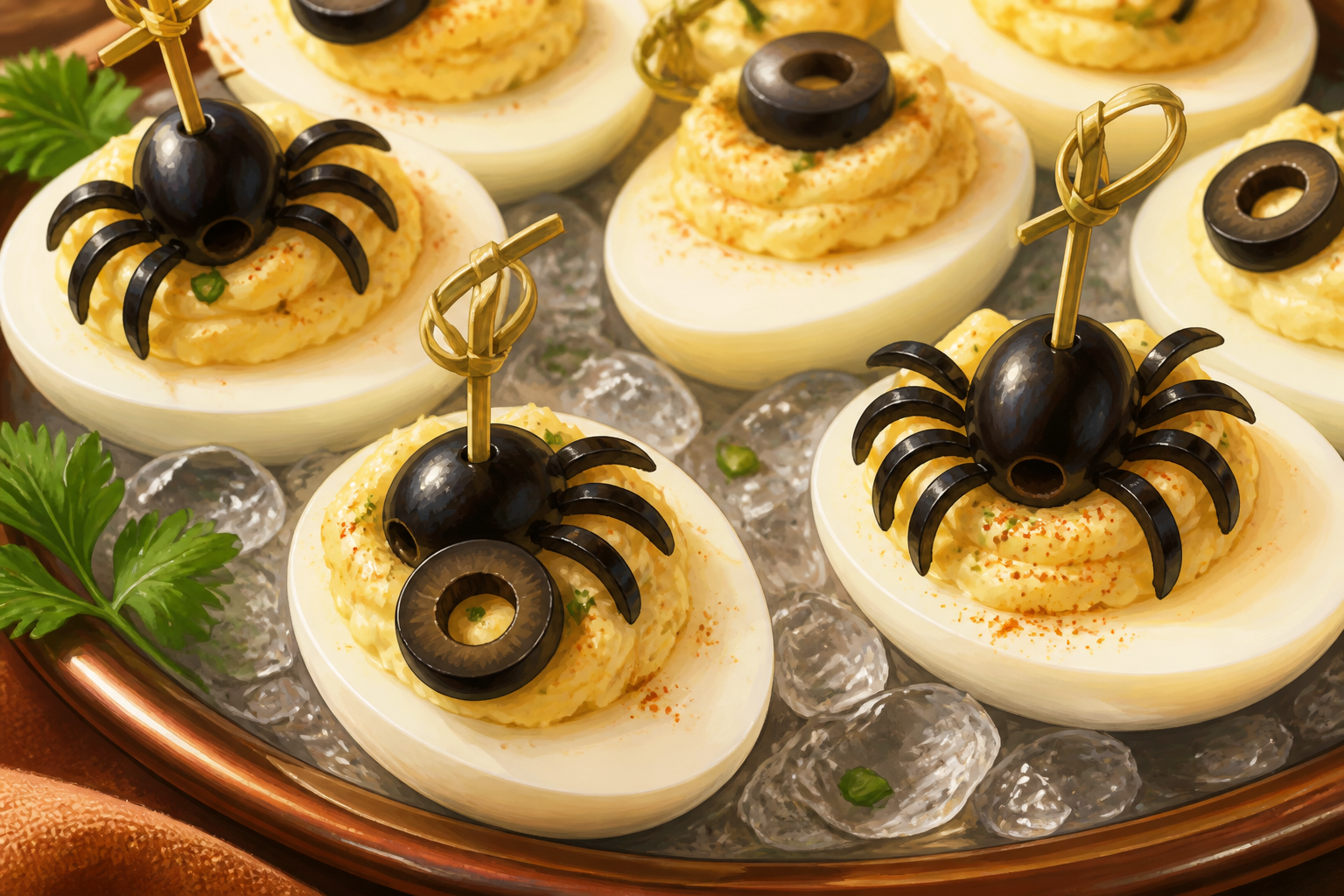
For 'eyeballs': halve hard‑boiled eggs, add a dab of hot‑sauce‑spiked mayo and top each with a sliced black olive. For 'spiders': thread a pitted black olive onto a cocktail pick and fan four short toothpick 'legs' on each side. Prepare in advance and keep chilled until plating.
- 06
Prep components for grabability
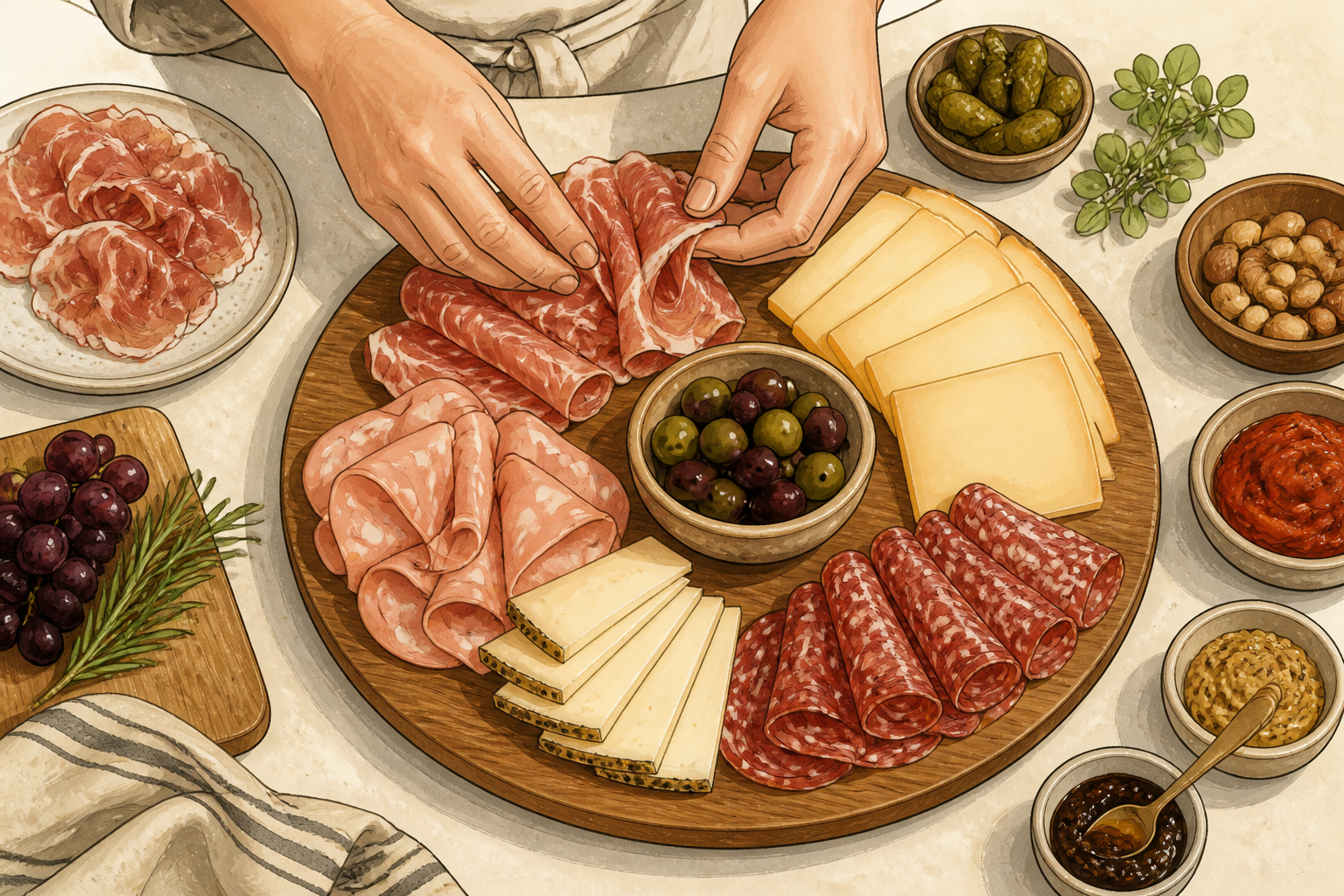
Slice cheese into wedges or cubed bites; roll or fold meats into bite‑size bundles; place sticky or oily items in small bowls. Pre‑slice cucumbers and cut romaine into single‑hand scoop pieces so guests can assemble without extra utensils.
- 07
Lay a skeleton framework on the board
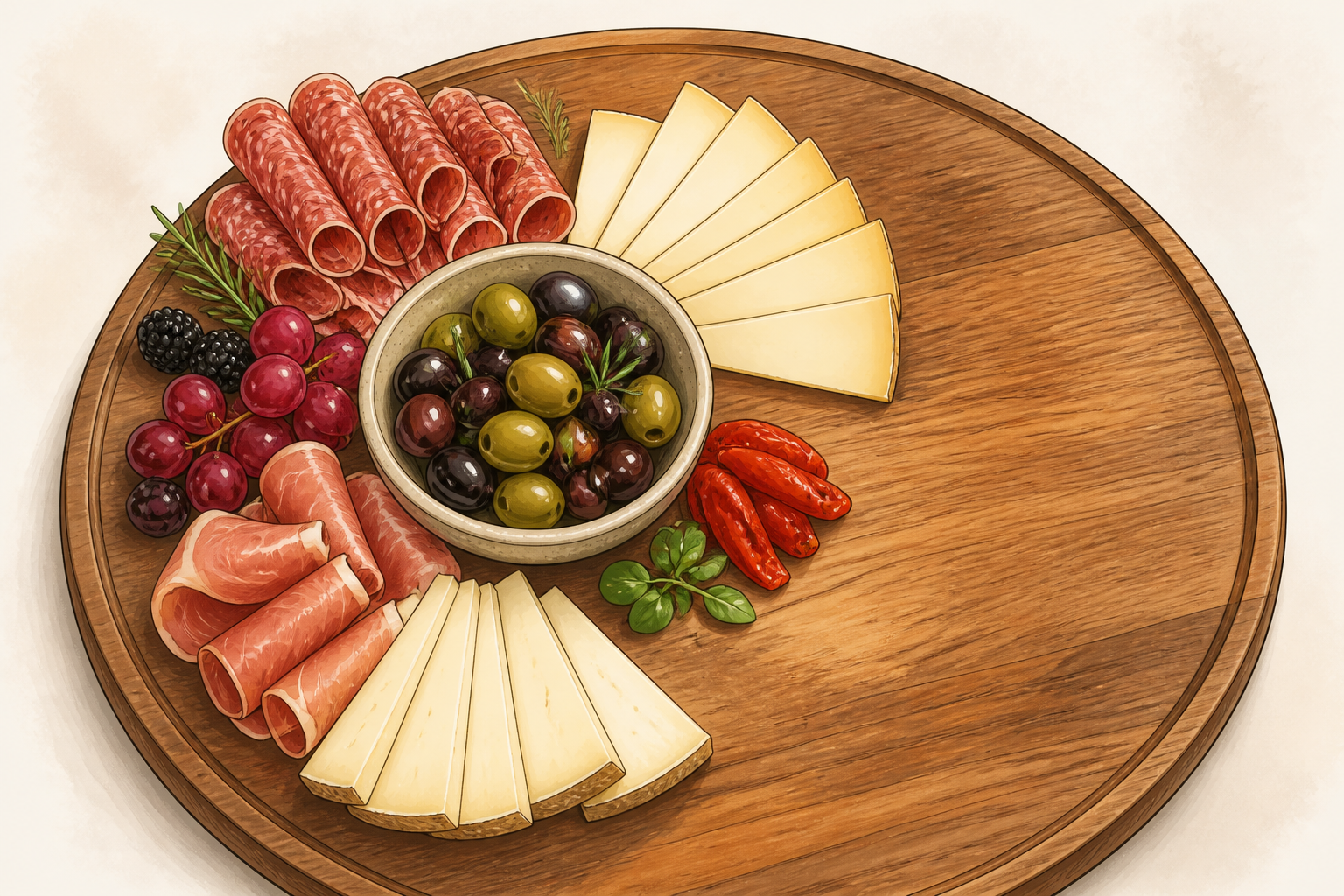
Start by placing 2–4 small bowls for olives, pickles and dips spaced across the board—these anchor movement. Next, place larger items (cheese wedges and big meat rosettes) opposite each other to create balance. Leave negative space for visual impact and spooky props.

- 08
Build visually readable clusters
Arrange each food type in its own cluster: a line of rolled salami, a fan of cheese wedges, a mound of olives in a bowl. Keep like‑items together and place contrasting colors nearby (e.g., bright red pepper slices next to pale cheese) to read well in photos.
- 09
Add the spooky finishing touches
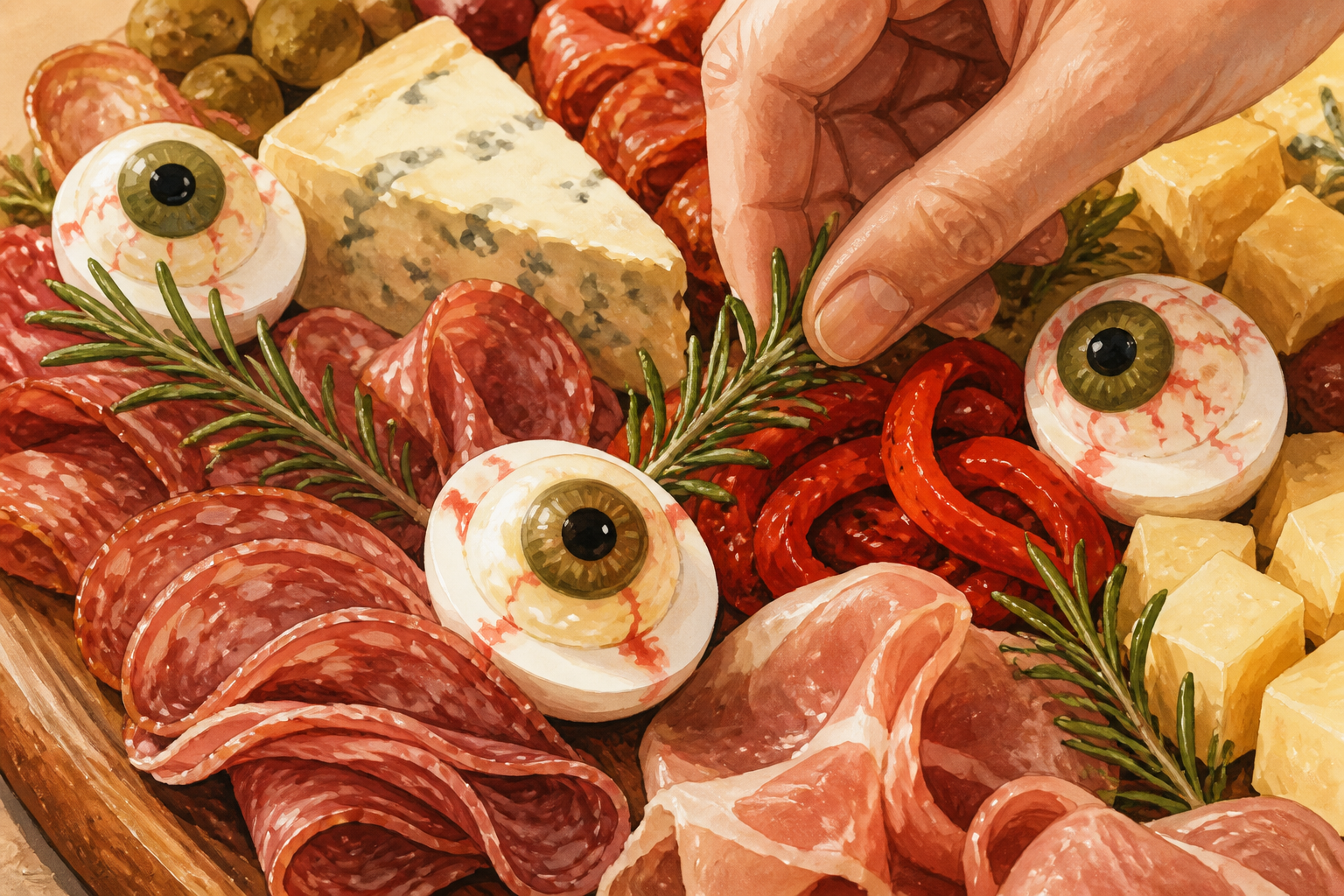
Nestle your eyeball eggs and olive spiders where they’ll be seen but not crushed. Add thin red pepper strips as 'blood streaks' and rosemary sprigs for 'mini trees.' Scatter a few nuts and cucumber rounds into empty spaces to make the board feel abundant without adding carbs.
- 10
Provide serving tools and explain swaps
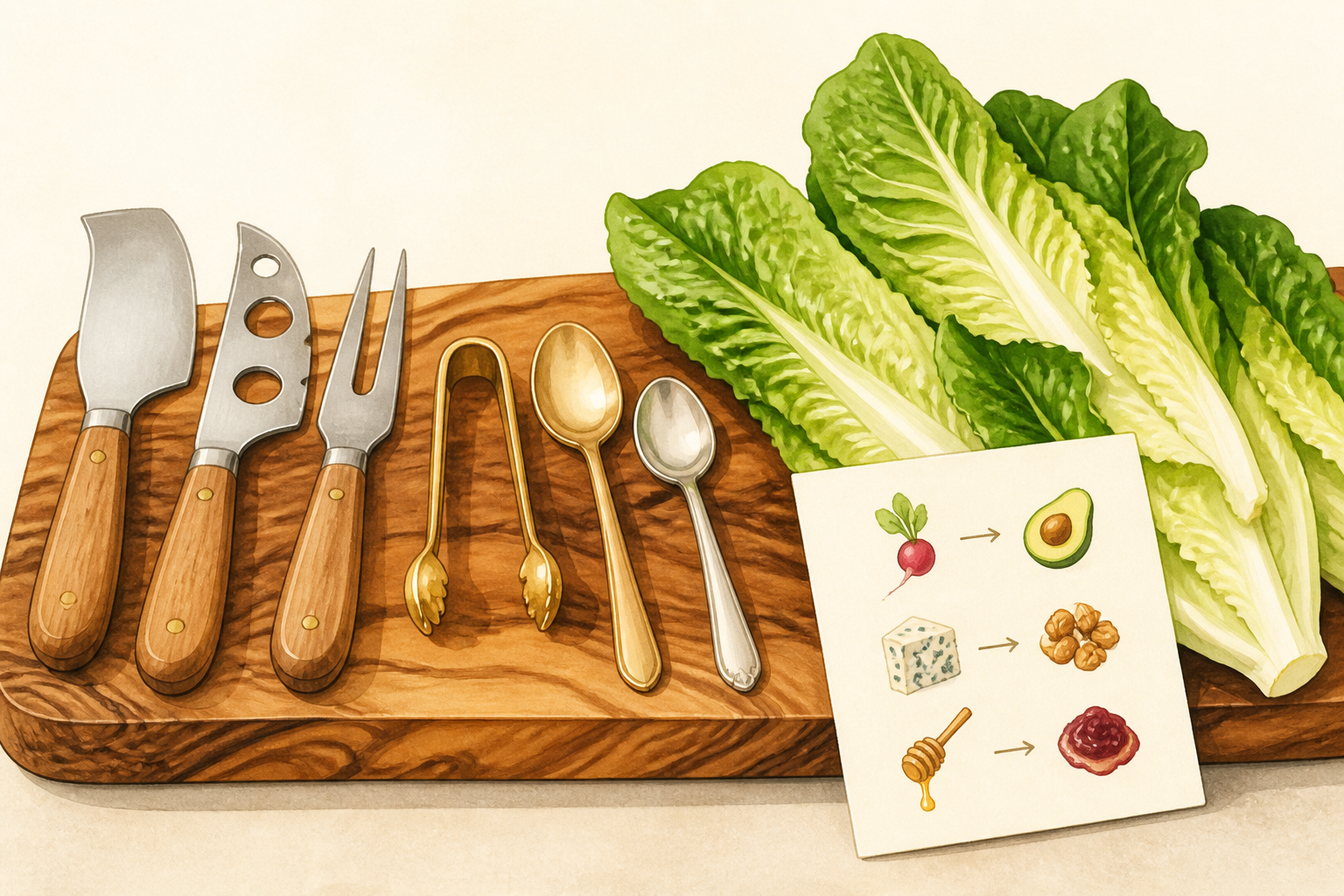
Place separate small tongs or forks for meats, a dedicated cheese knife per cheese, and spoons for bowls. Offer obvious low‑carb swaps on a small card (romaine leaves or cucumber slices instead of crackers) so guests can eat keto‑friendly choices without guessing.
- 11
Serve safely and store leftovers promptly
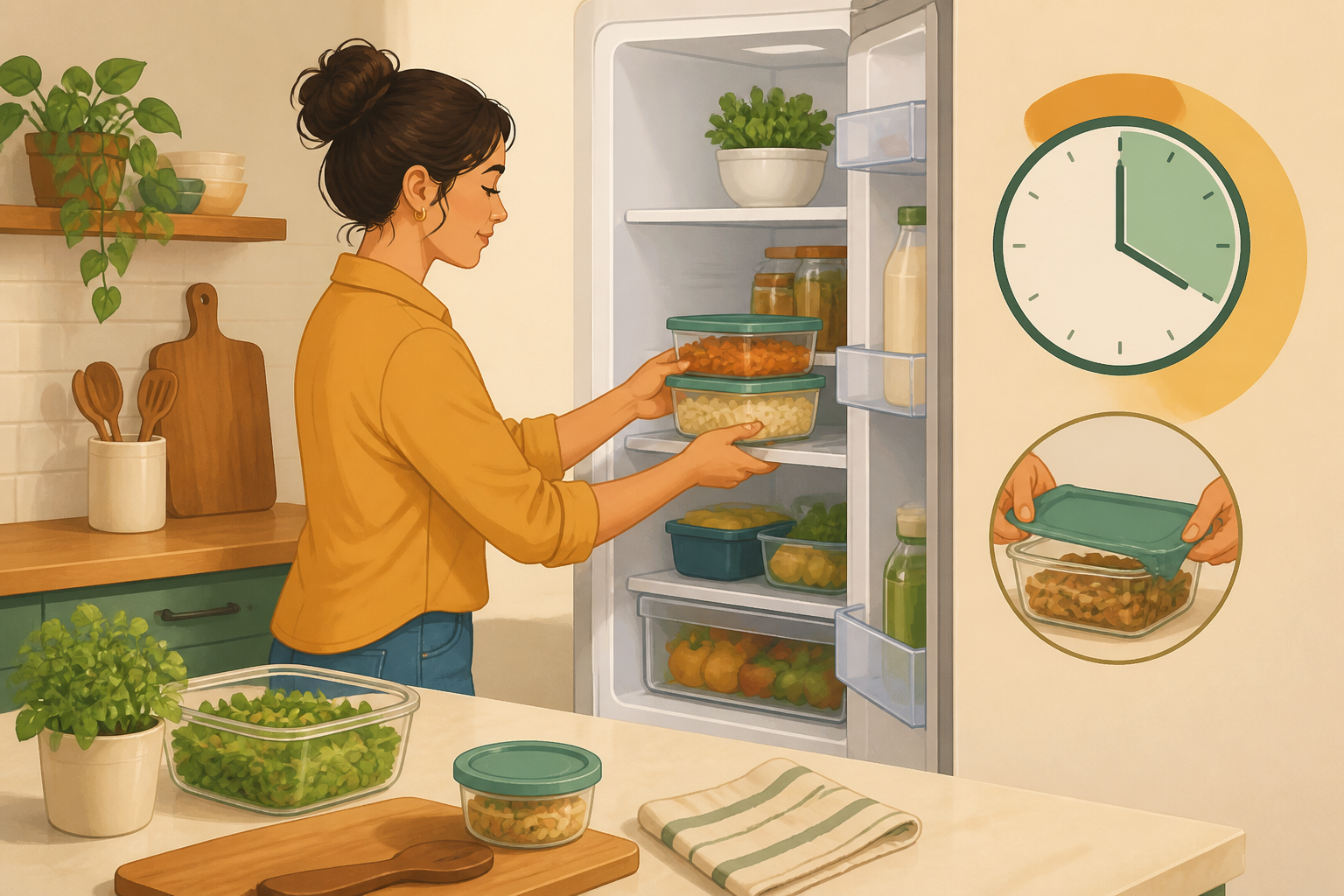
Only leave the assembled board out for up to 2 hours (1 hour if it’s very warm). Replenish from chilled backups and refrigerate leftovers within that window. Store meats and cheeses separately in airtight containers; use within 3–5 days per package recommendations.
If this was useful
Try one of these next
Food & drink How-to
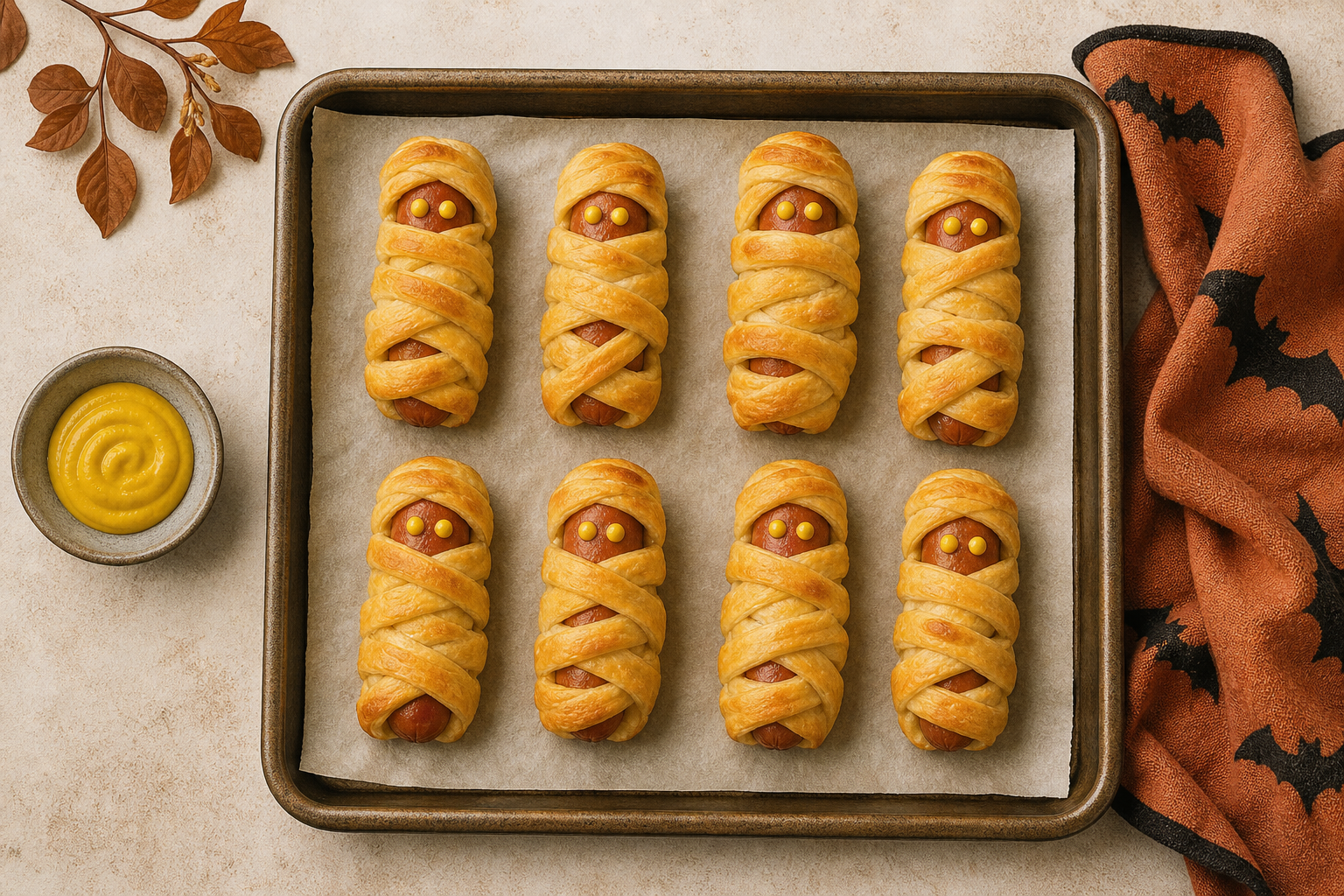
How to make Keto Mummy Dogs (fathead dough wraps for spooky snacks)
Turn weeknight sausages into adorable, low‑carb mummies using a simple cheese‑and‑almond flour fathead-style dough. Step‑by‑step baking and assembly directions show how to roll, wrap, bake to golden, and add cute but edible 'eyes'—all safe, precise, and party-ready.
Read article
Food & drink Listicle
6 Low‑Carb Halloween Cocktail & Mocktail Mixers, Ranked for Flavor and Sugar‑Free Impact
A ranked round‑up of mixers, from sparkling herbal infusions to zero‑sugar syrups, chosen by flavor compatibility and minimal sugar impact for spooky drinks. Great for hosts who want dramatic drinks without hidden carbs.
Read article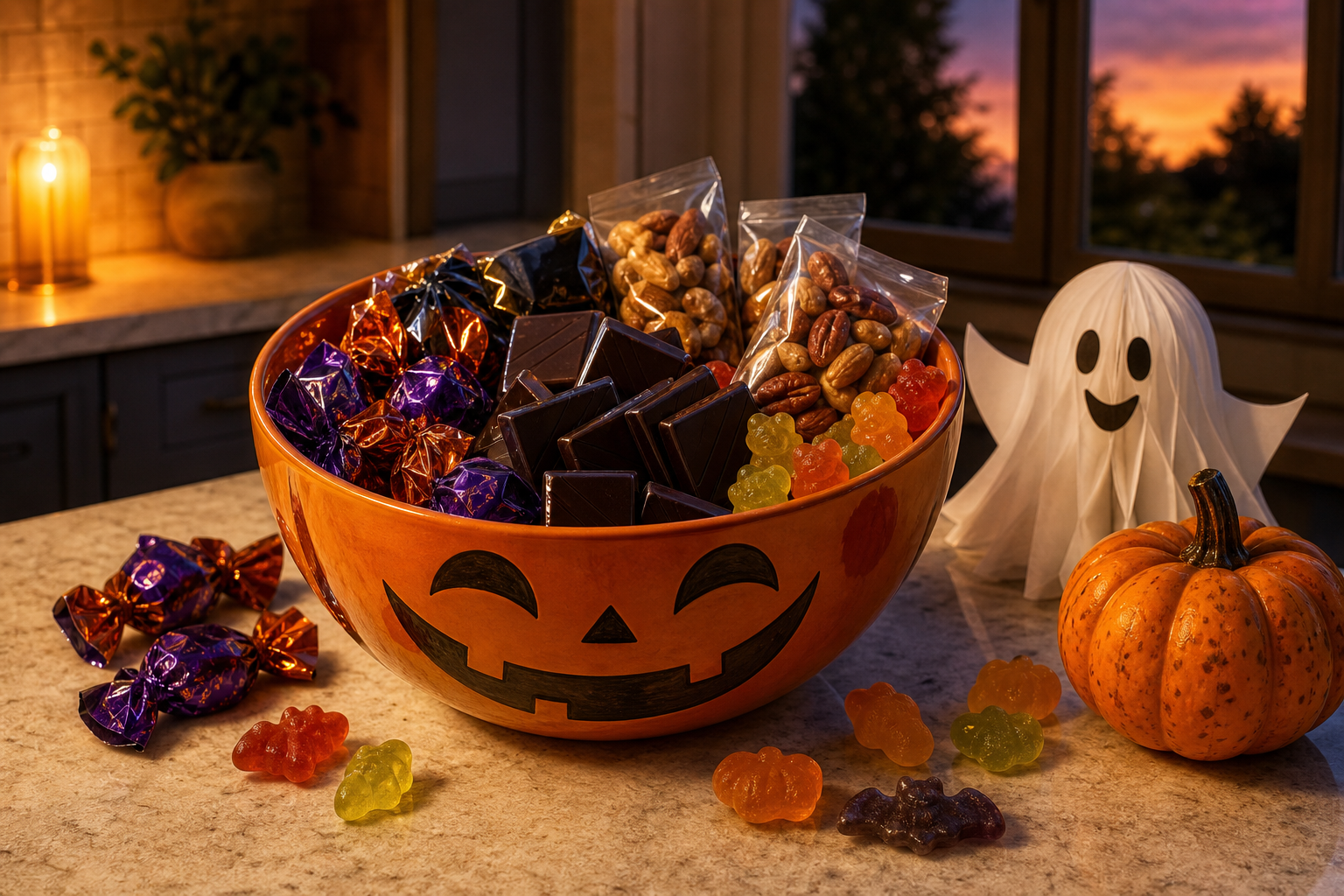
Food & drink Listicle
7 Store‑Bought Keto Halloween Candy Swaps, Ranked
A practical, ranked list of easy supermarket swaps and prepackaged treats that keep carbs lower without feeling like punishment. Items are ordered by accessibility and overall keto‑friendliness so you can stock a candy bowl fast.
Read article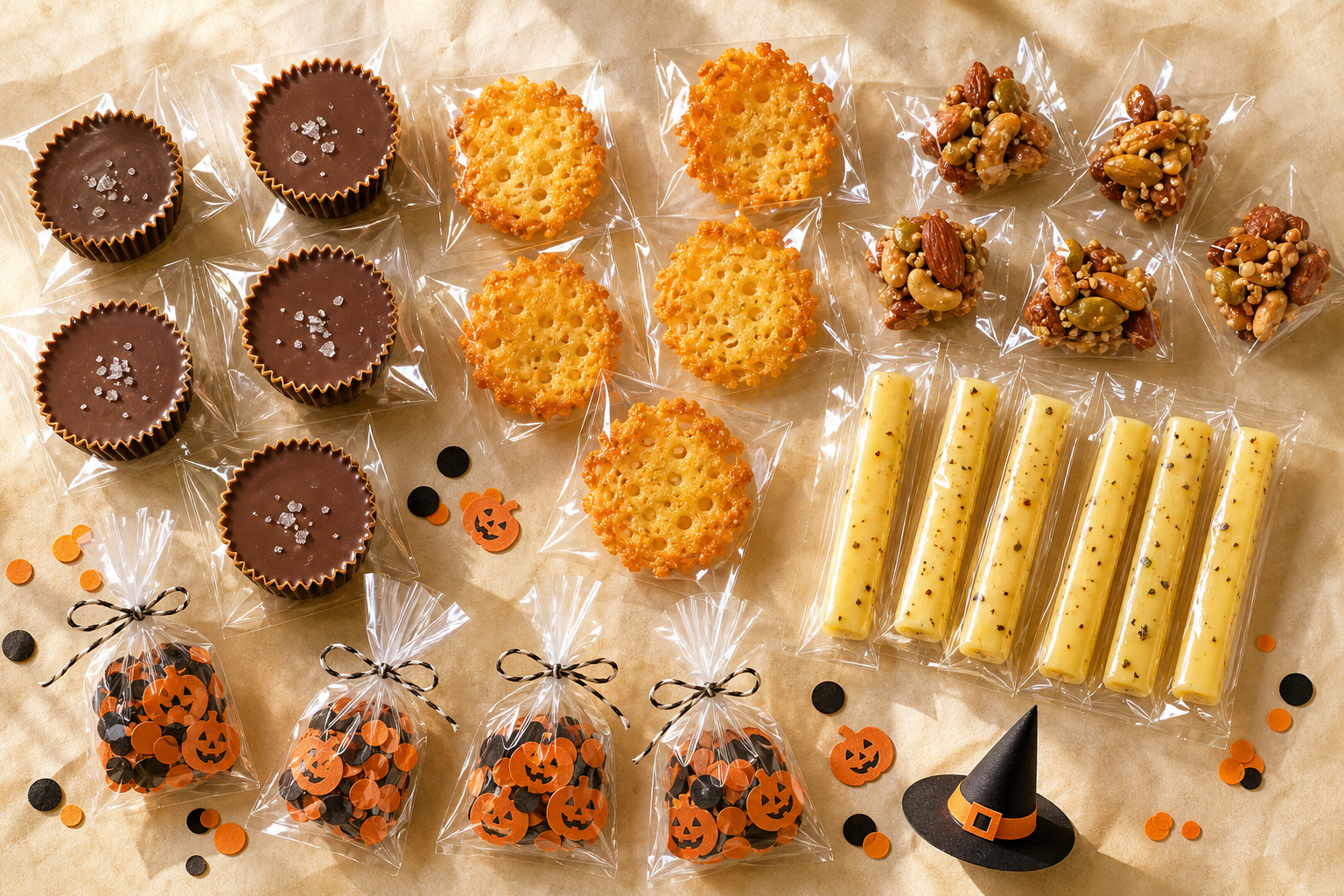
Food & drink Listicle
5 Trick‑or‑Treat‑Ready Keto Treats for School Parties (kid‑approved and portable)
Practical, portable keto treats that travel well in a classroom setting — think individually wrapped fat bombs, bite‑sized cheese crisps, and nut clusters. Ranked by portability and kid appeal so you can hand out something low‑carb and tidy.
Read article