Hobbies & crafts
How to Tighten a Loose Buttonhole with Blanket Stitches
Reinforce stretched buttonholes by stitching a neat border that grips the button and prevents further fraying.
- 01
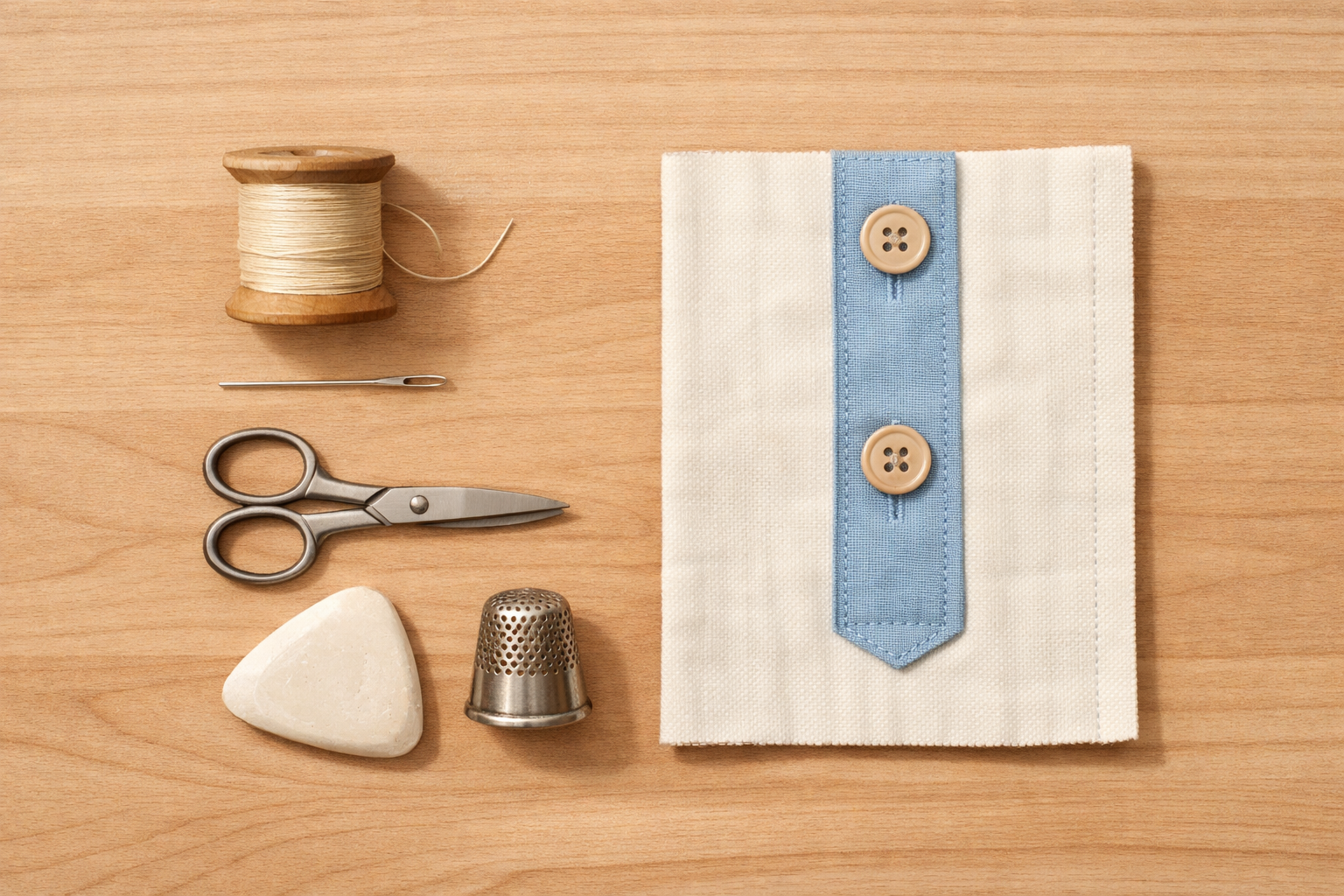
Gather simple tools
Set out a hand-sewing needle, matching or slightly contrasting thread, small scissors or snips, a fabric marker or chalk, and a thimble if you like. Place everything within reach of a well-lit workspace.
- 02
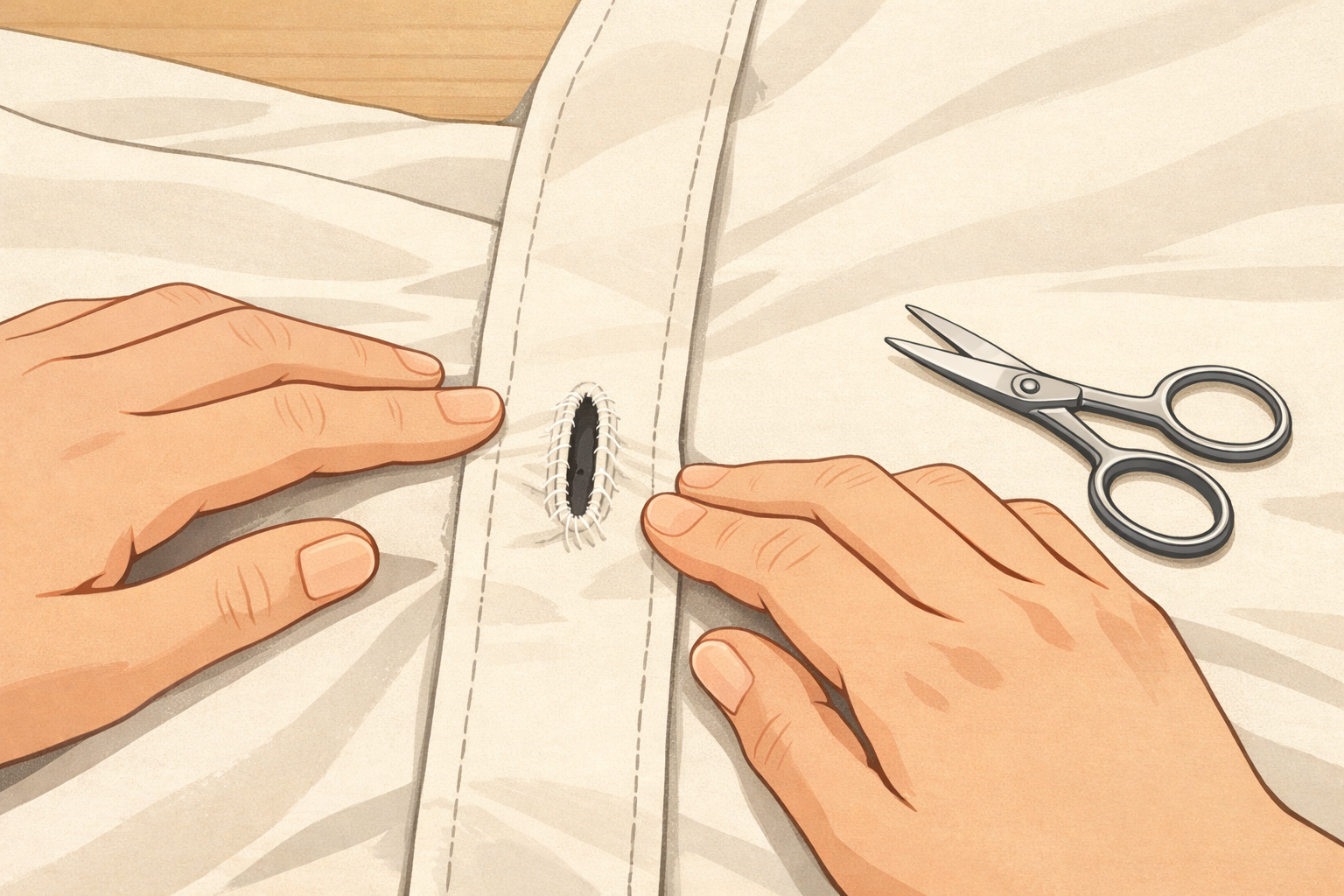
Lay the garment flat and tidy the hole
Place the buttonhole area flat on the table with the inside (wrong side) facing up. Gently smooth away fuzz and, if needed, trim only loose fibers so you don’t enlarge the slit.
- 03
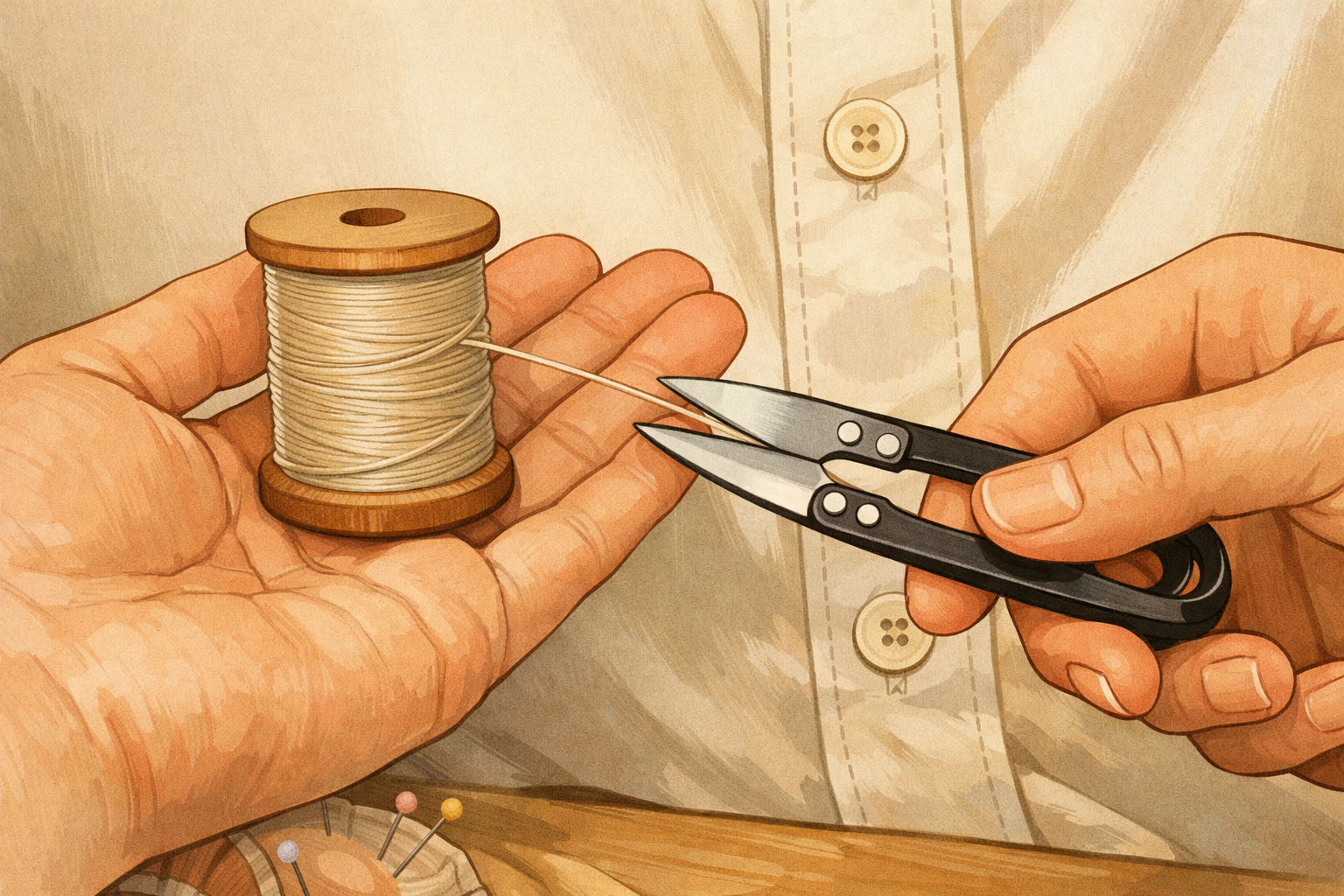
Choose and prep your thread
Pick a thread that blends with the fabric or use a contrast for a visible edge. Cut a length you can pull through comfortably without tangling; you can rethread as needed instead of using a very long piece.
- 04
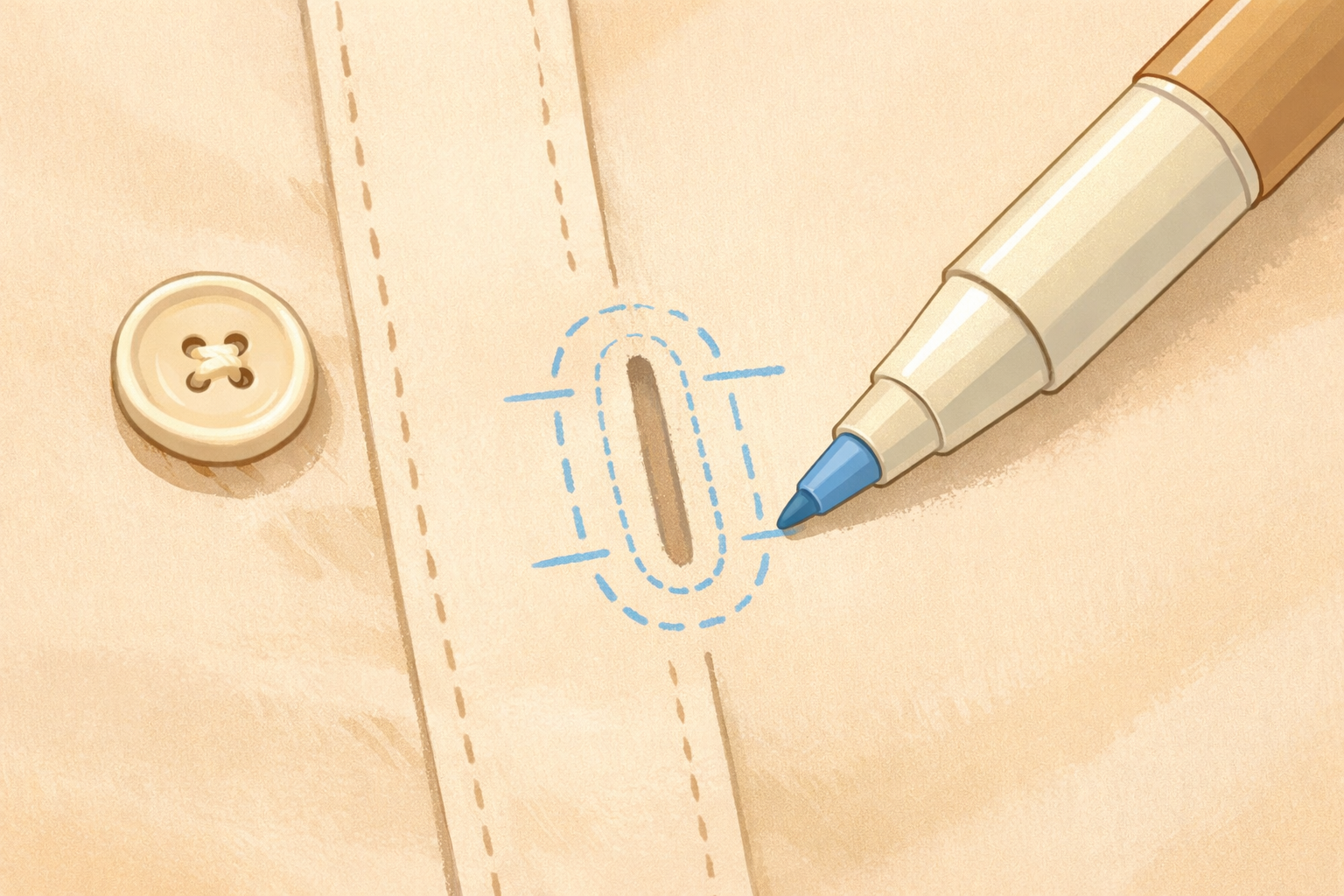
Mark the buttonhole edges
With the right side facing up, lightly mark a guide line just outside the slit on both long edges and across each end. Marks help keep stitches straight and even; they should be faint and removable.
- 05
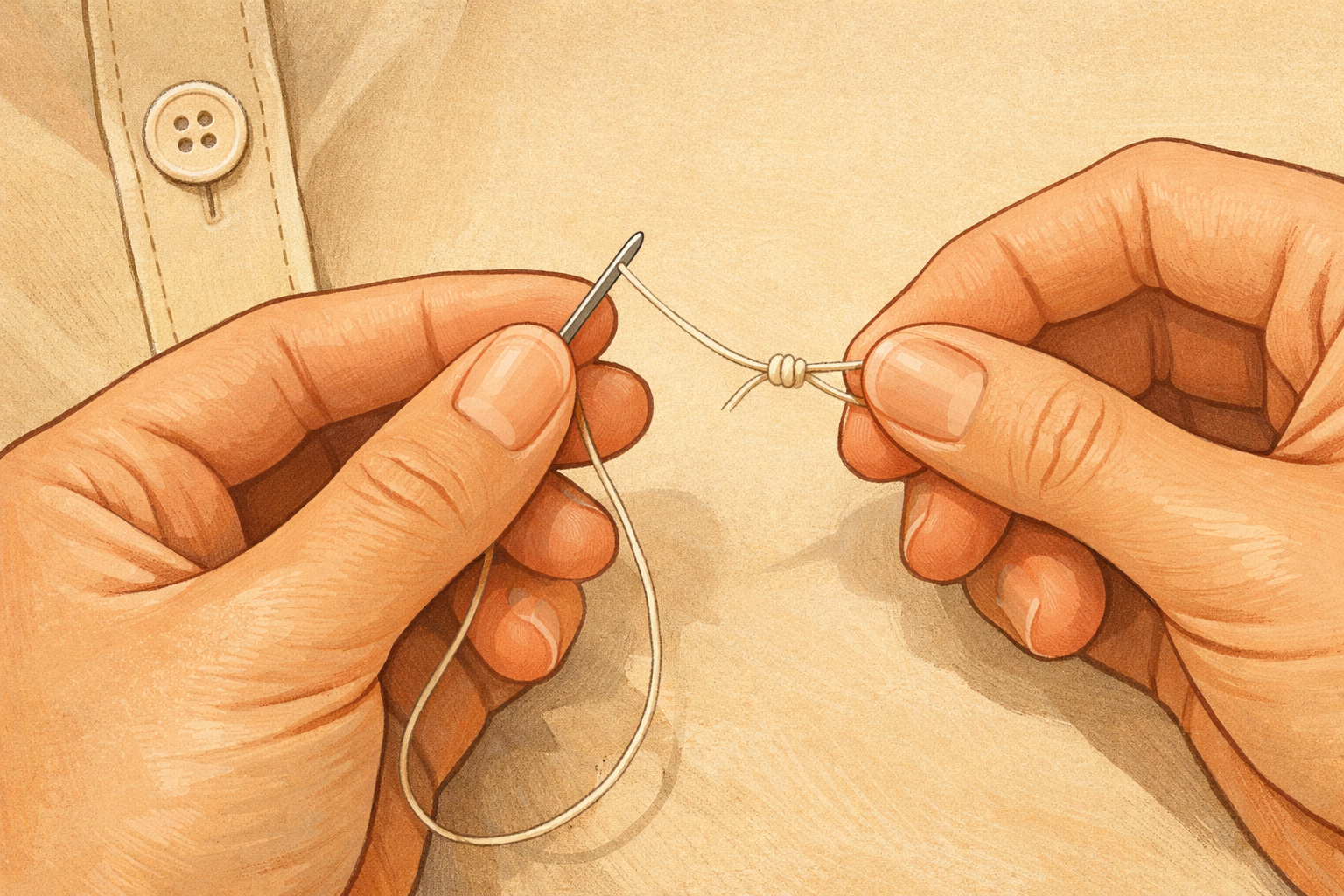
Thread and knot the needle
Thread the needle and tie a small knot at the end. Use a single strand for a delicate edge or a doubled strand for a slightly thicker, grippier border.
- 06
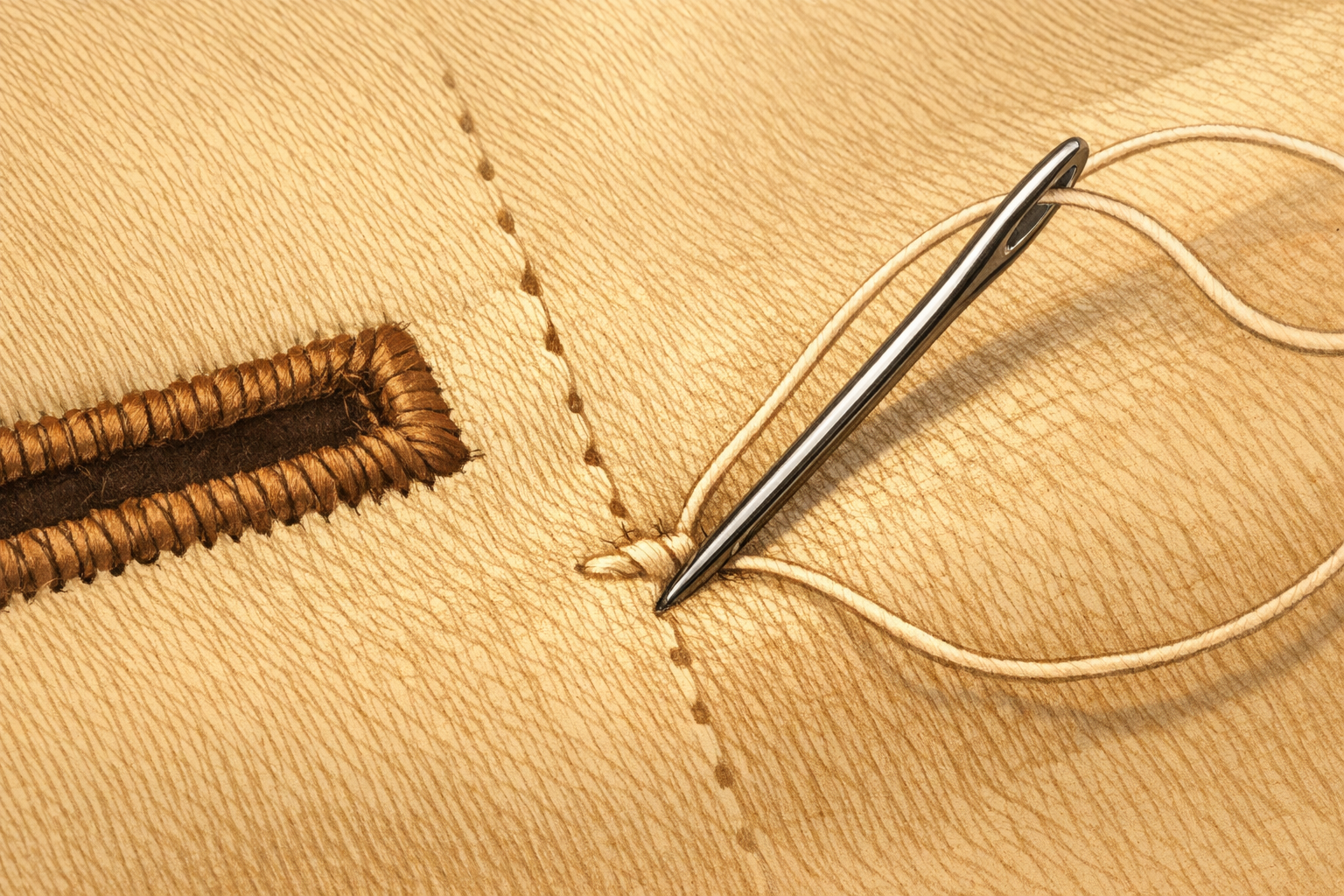
Anchor the thread on the wrong side
Turn the garment so the inside faces you. Make a tiny stitch near one end of the buttonhole to anchor the thread, keeping the stitch small so it doesn’t show on the right side.
- 07
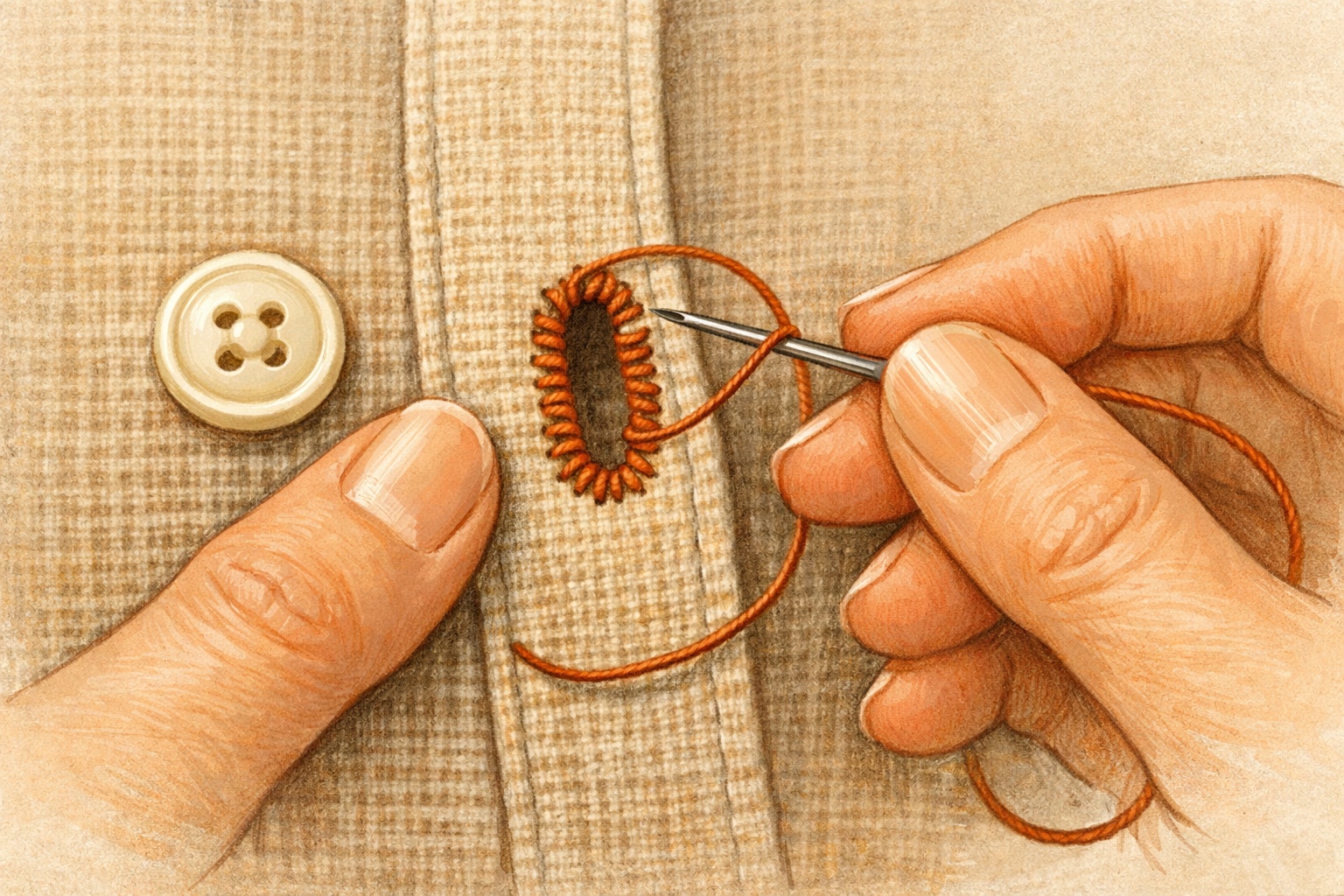
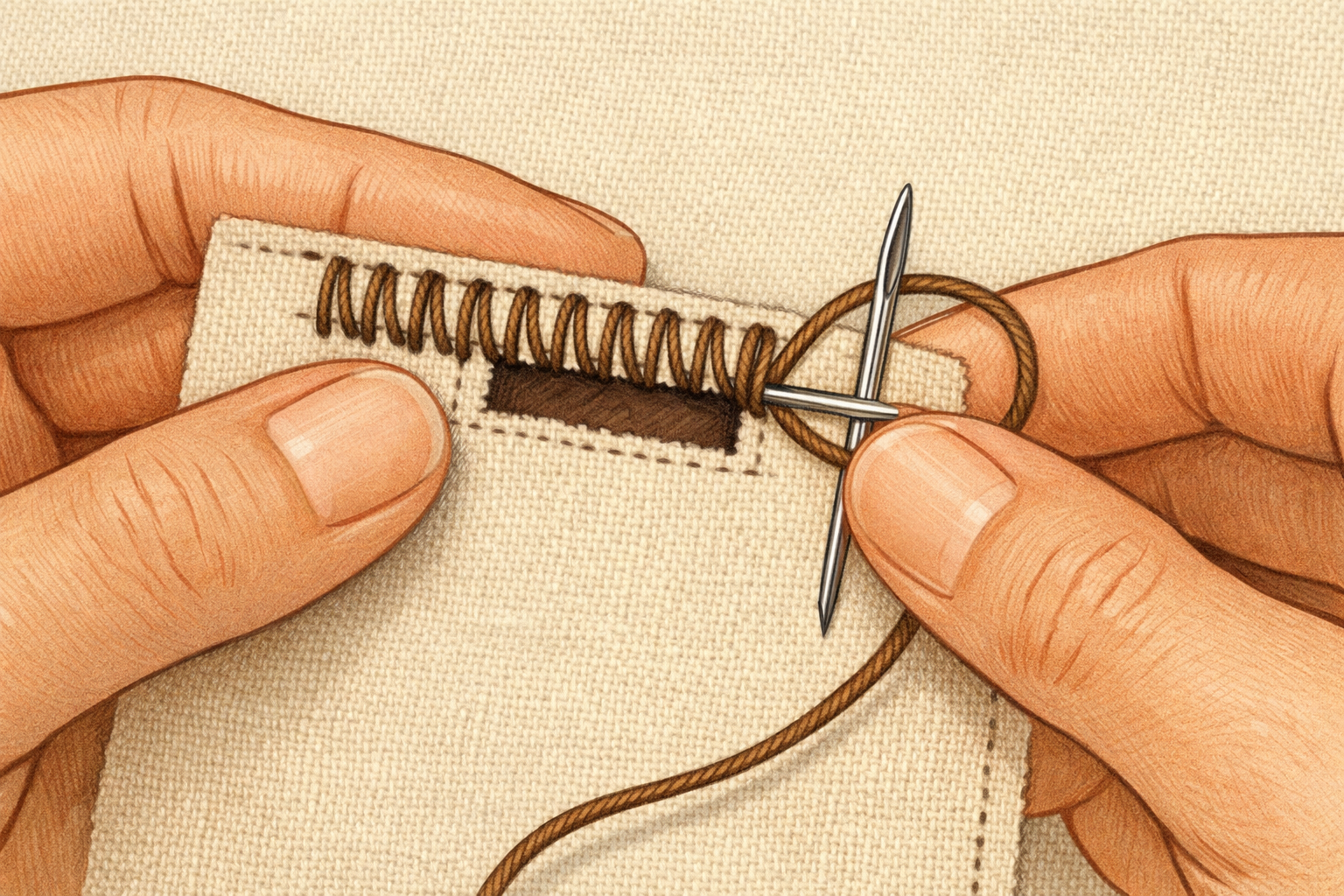
Work blanket stitches up the first edge
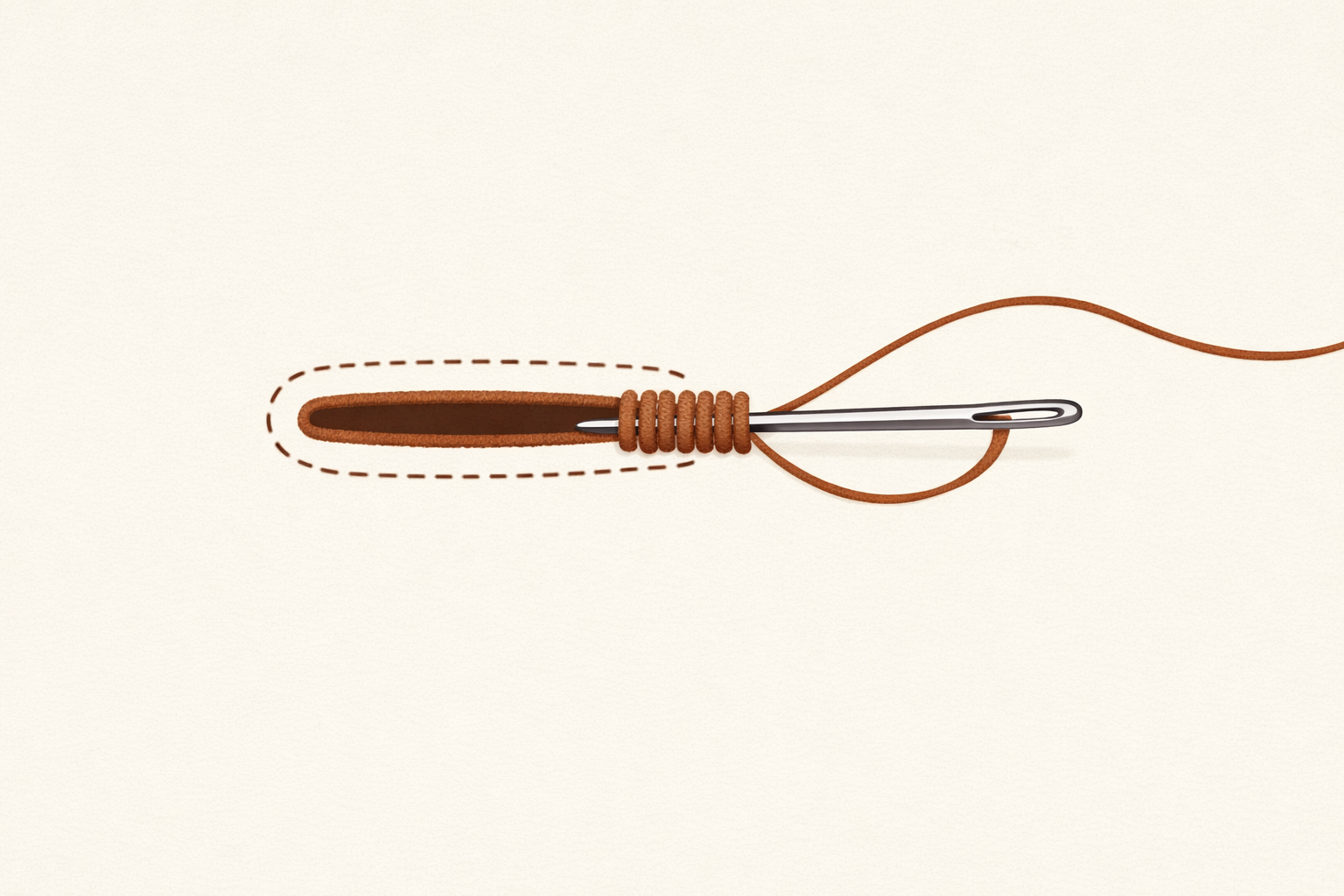
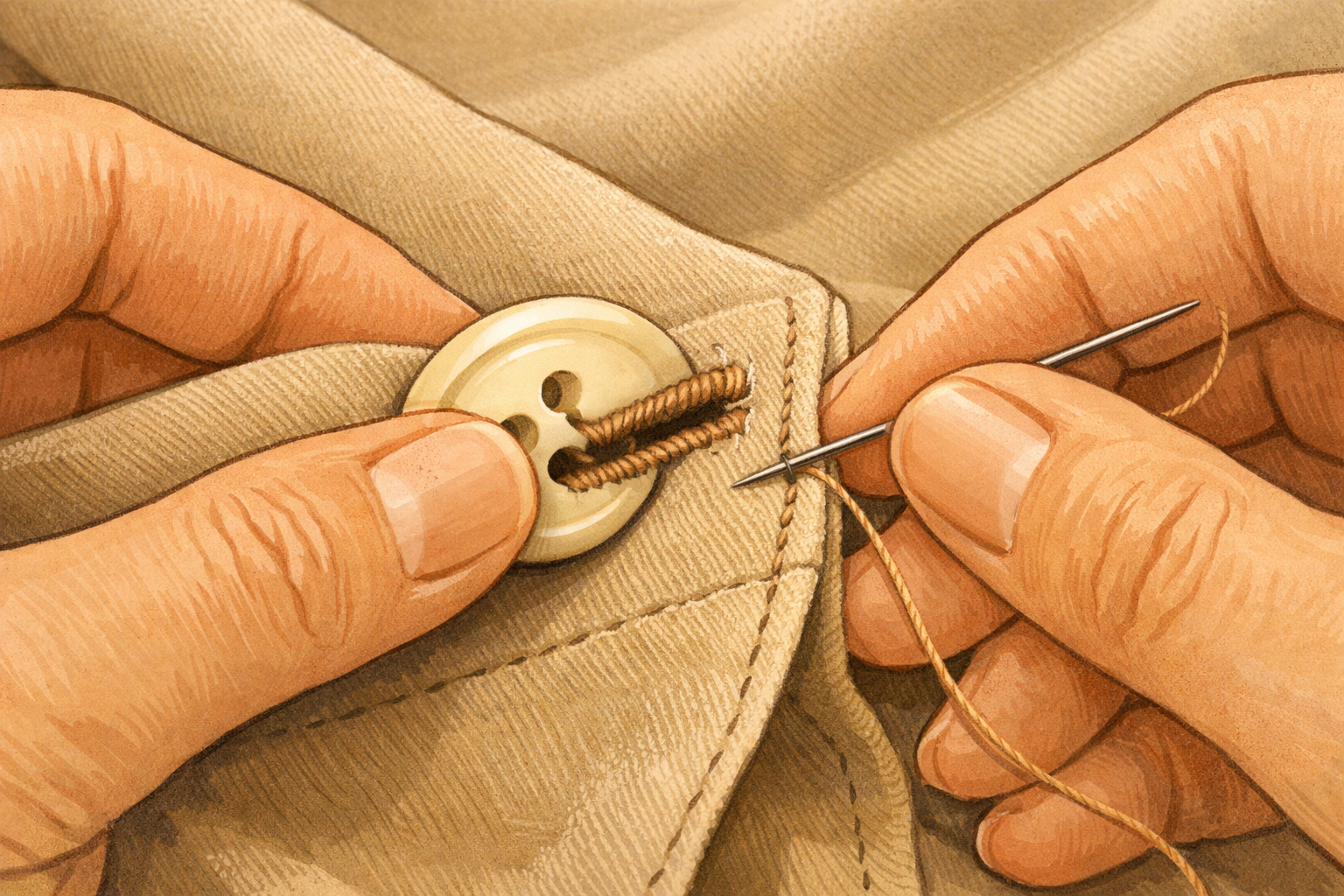
Turn to the right side. Bring the needle up at the edge of the slit. Take the needle down a short step along the slit and bring it back up near the edge, catching the working thread under the needle tip before you pull tight. This forms a tiny cord along the edge. Keep stitches close together and snug, not puckering.
- 08
Bar tack across the far end
At the end of the slit, work several close stitches straight across the opening to bind the end. Keep them neat and slightly firm to resist stretching.
- 09
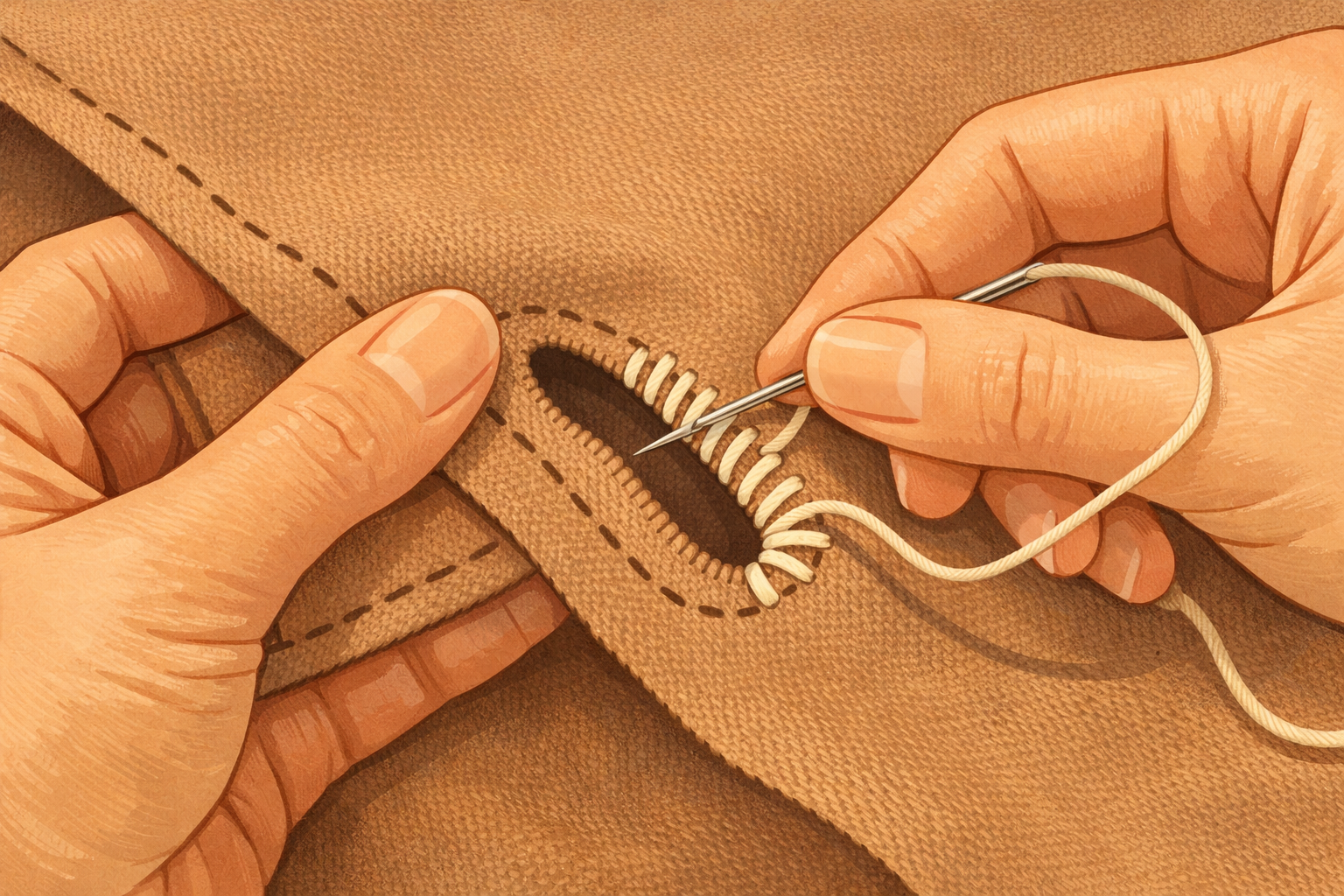
Blanket stitch down the second edge
Rotate the garment and repeat blanket stitches along the other long edge, mirroring the first side. If the hole is too wide, angle stitches inward slightly so the edges draw closer together.
- 10
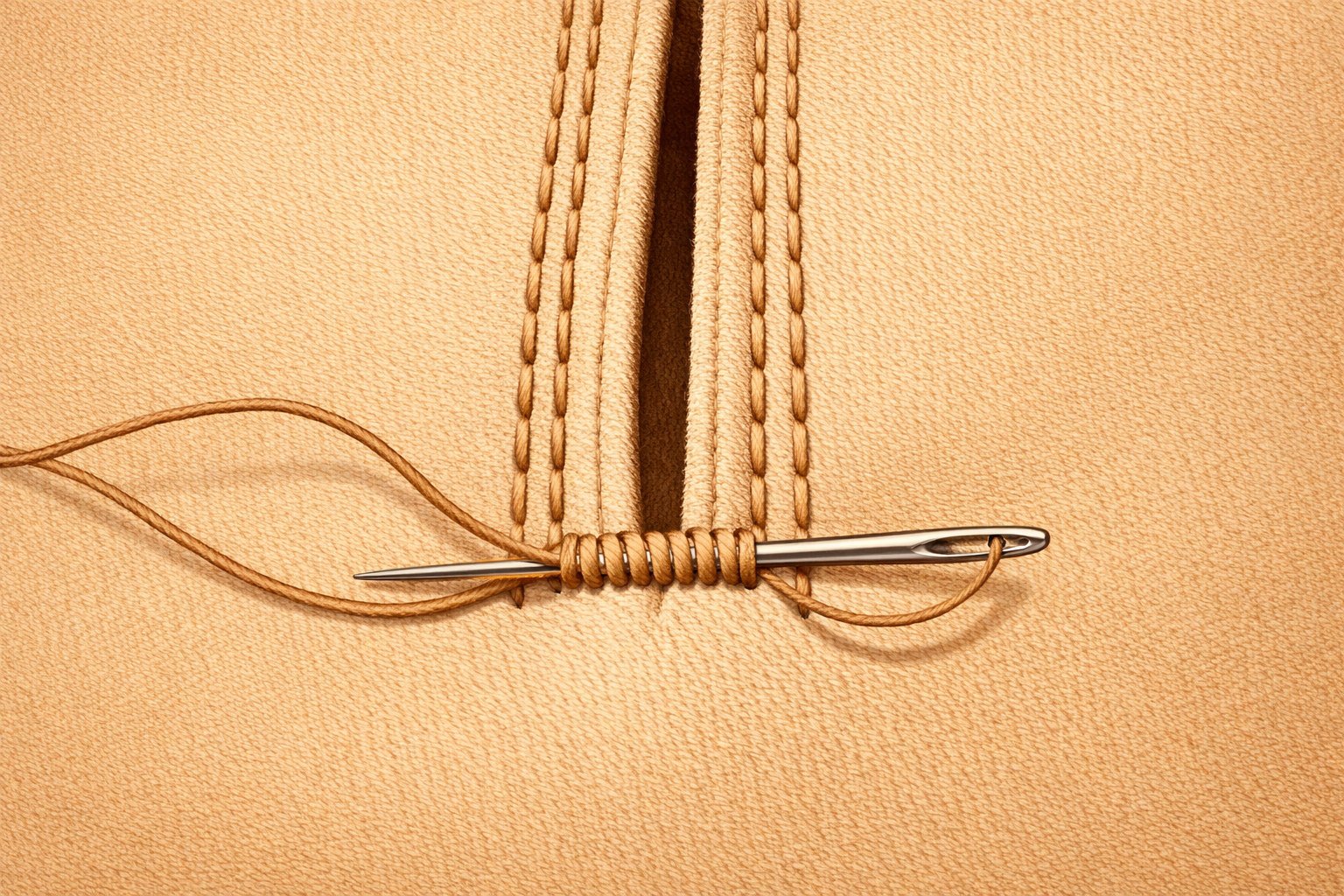
Bar tack across the starting end
Finish the second edge by stitching a small bar across the remaining end of the slit, just as you did before. This helps prevent further fraying and can subtly shorten an overstretched hole.
- 11
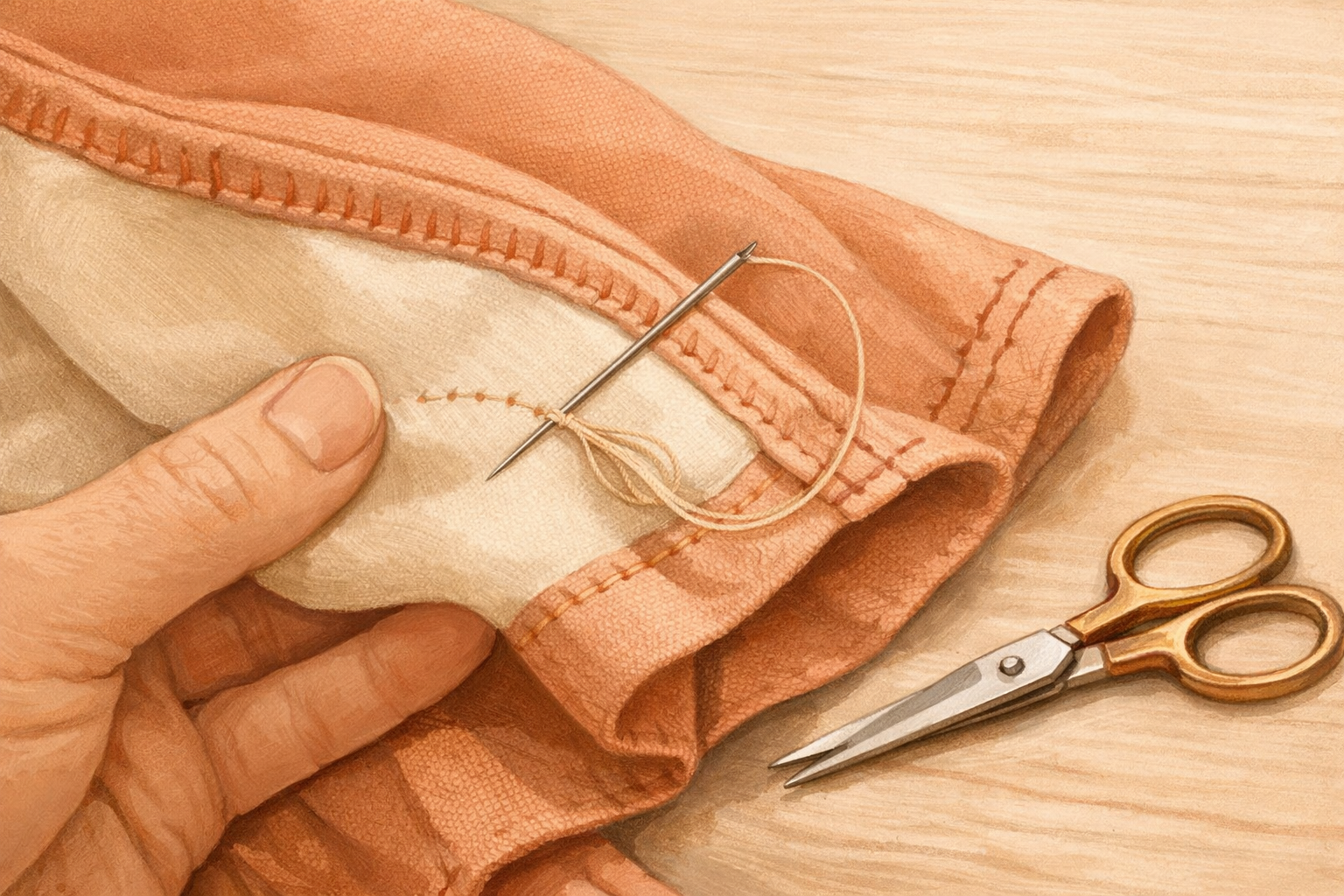
Secure and hide the thread tail
Turn to the inside. Take a few small stitches under the new edge to secure the thread, then weave the tail beneath nearby stitches and trim close without cutting the fabric.
- 12
Test the button and fine-tune
Push the button through the hole. If it’s too tight, gently ease one or two stitches with the needle tip. If it’s still loose, add a few more blanket stitches or an extra pass across an end to snug it up.
If this was useful
Try one of these next
Home & life
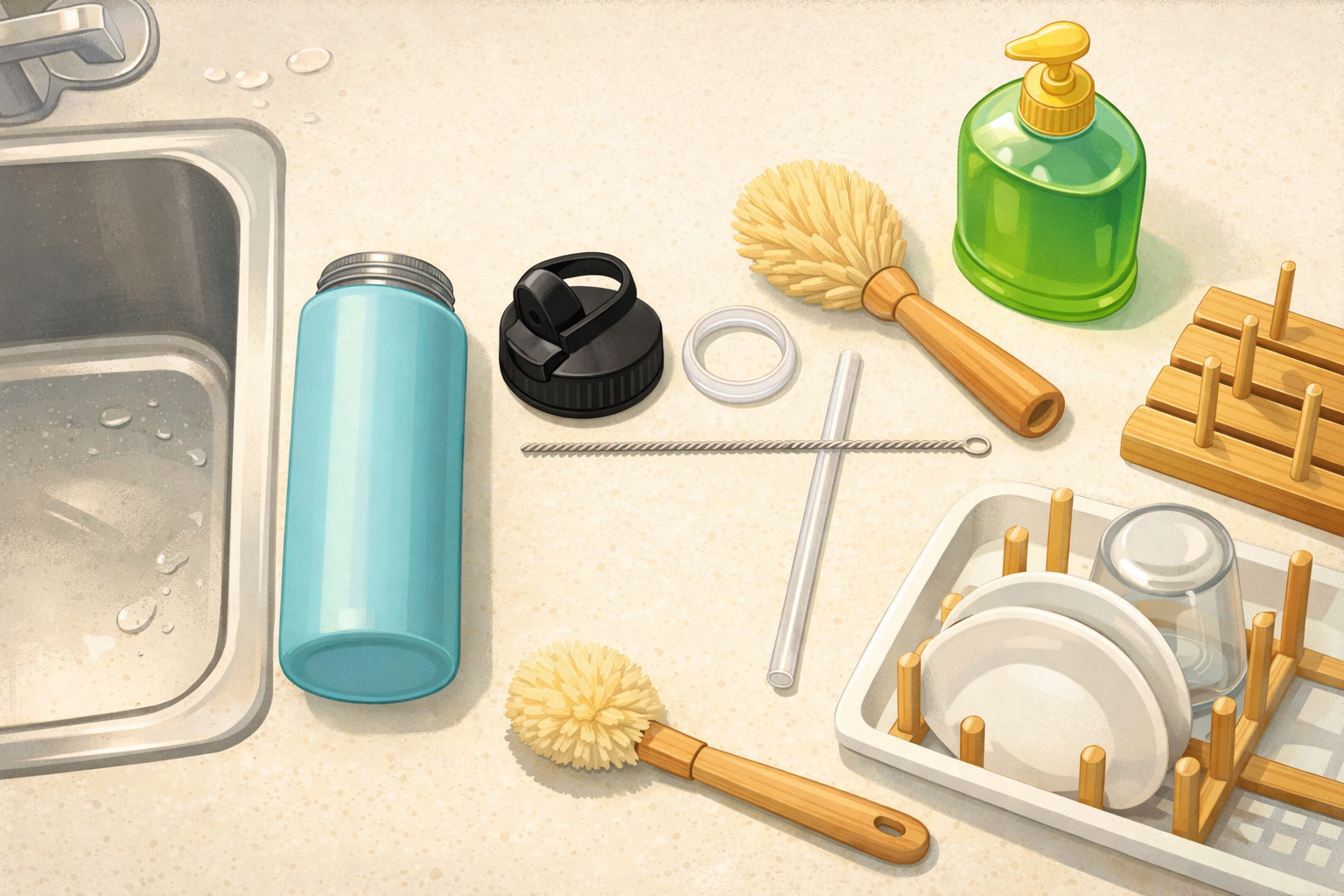
How to clean and dry a reusable water bottle after a picnic
Disassemble the lid, clean threads and seals, wash the body, rinse thoroughly, and air‑dry so it doesn’t develop odours between countryside trips. Close‑ups show where residue hides and a quick drying rack setup.
Read the guide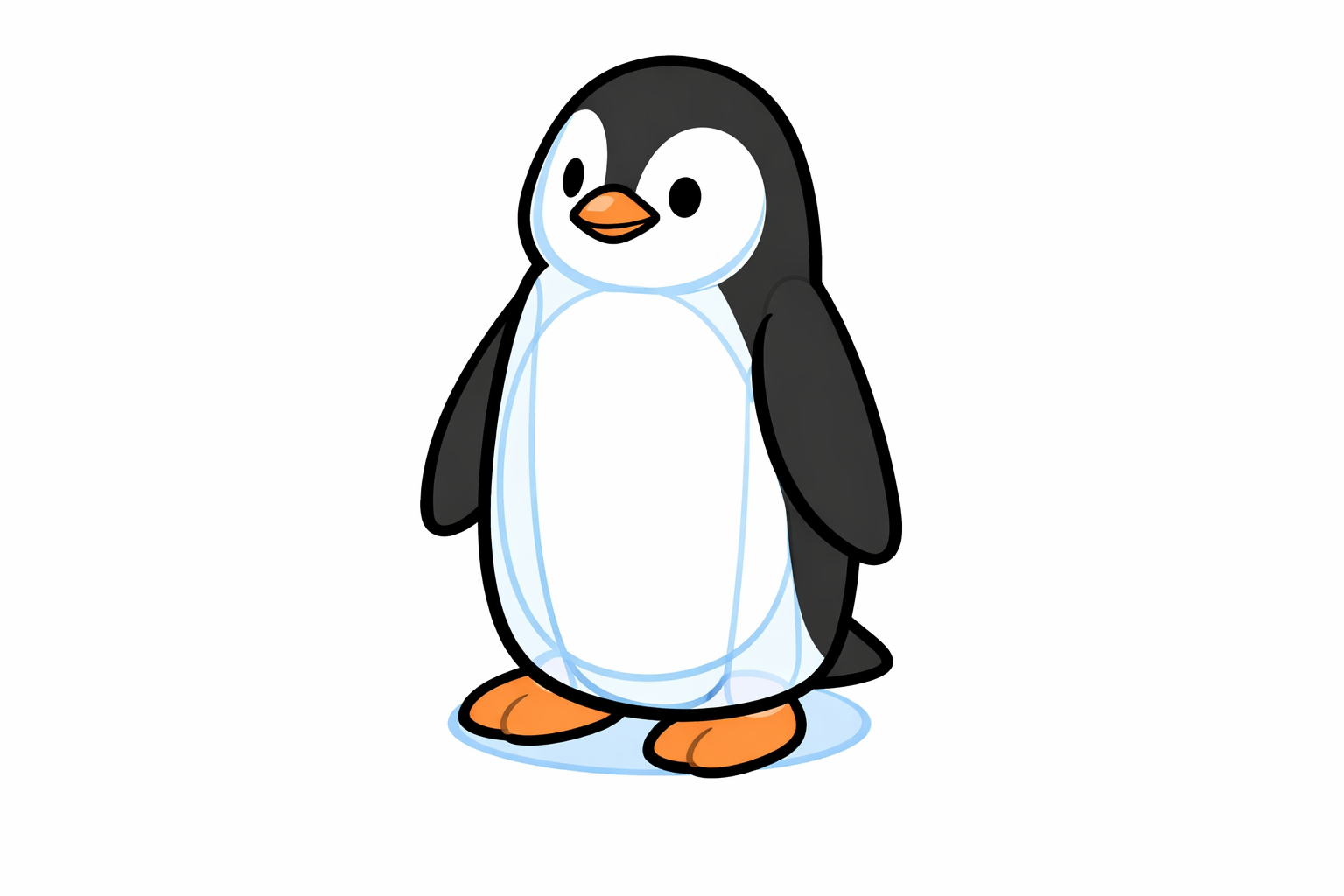
Hobbies & crafts
How to draw a standing penguin using teardrop shapes
Start with a tall teardrop for the body and small ovals for the head and feet. Add a simple beak and flippers with more teardrops, map the tuxedo belly, then refine the outline. Erase the guides and finish with light shading for roundness. Each step’s image overlays pale guide shapes and the darker final lines so you can see what to keep.
Read the guide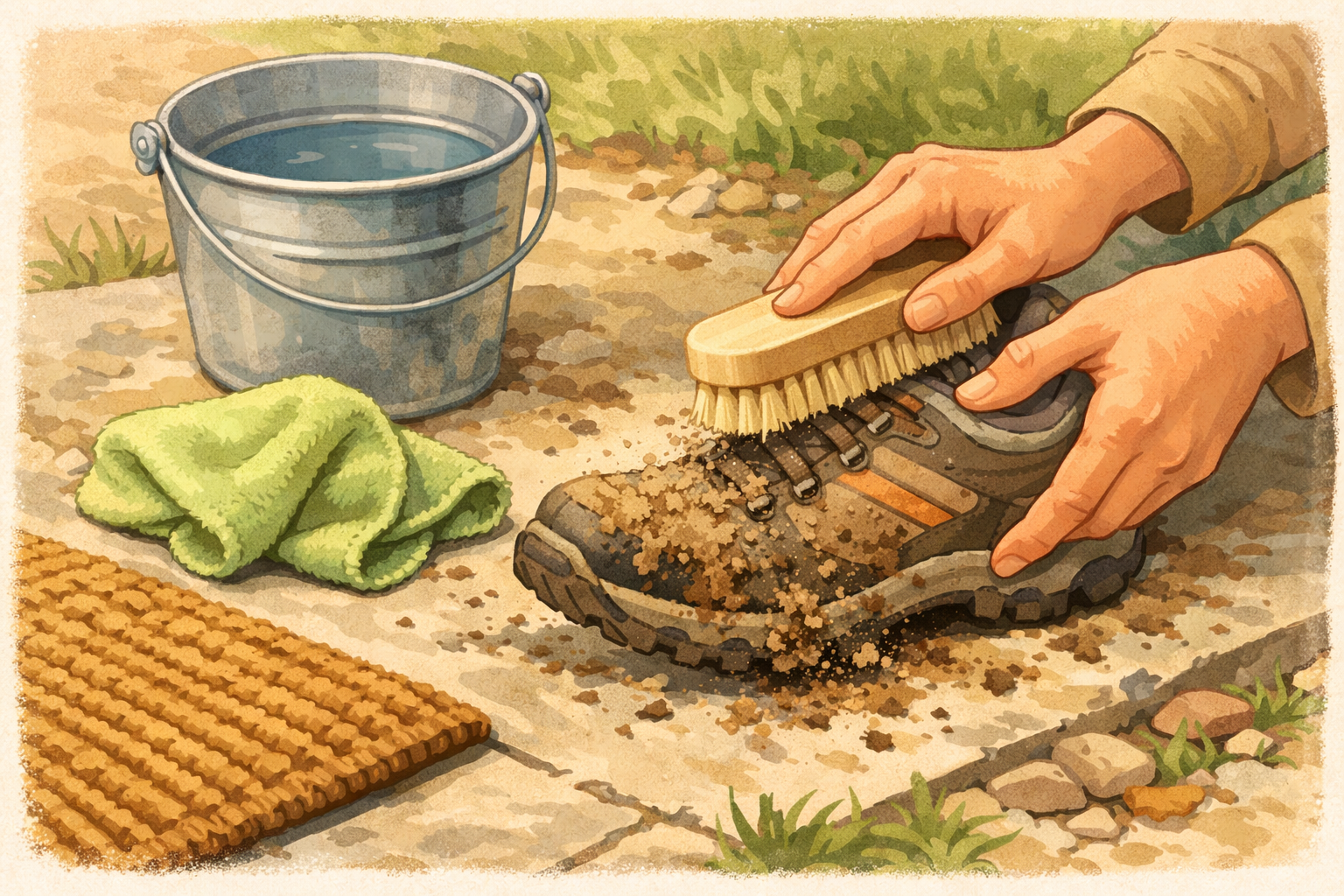
Home & life
How to clean muddy walking shoes after a countryside footpath
Knock off dried mud, brush seams, wipe uppers, clean outsoles, freshen insoles, and air‑dry so your shoes are ready for the next path. Photos show the order and which brushes or cloths to use.
Read the guide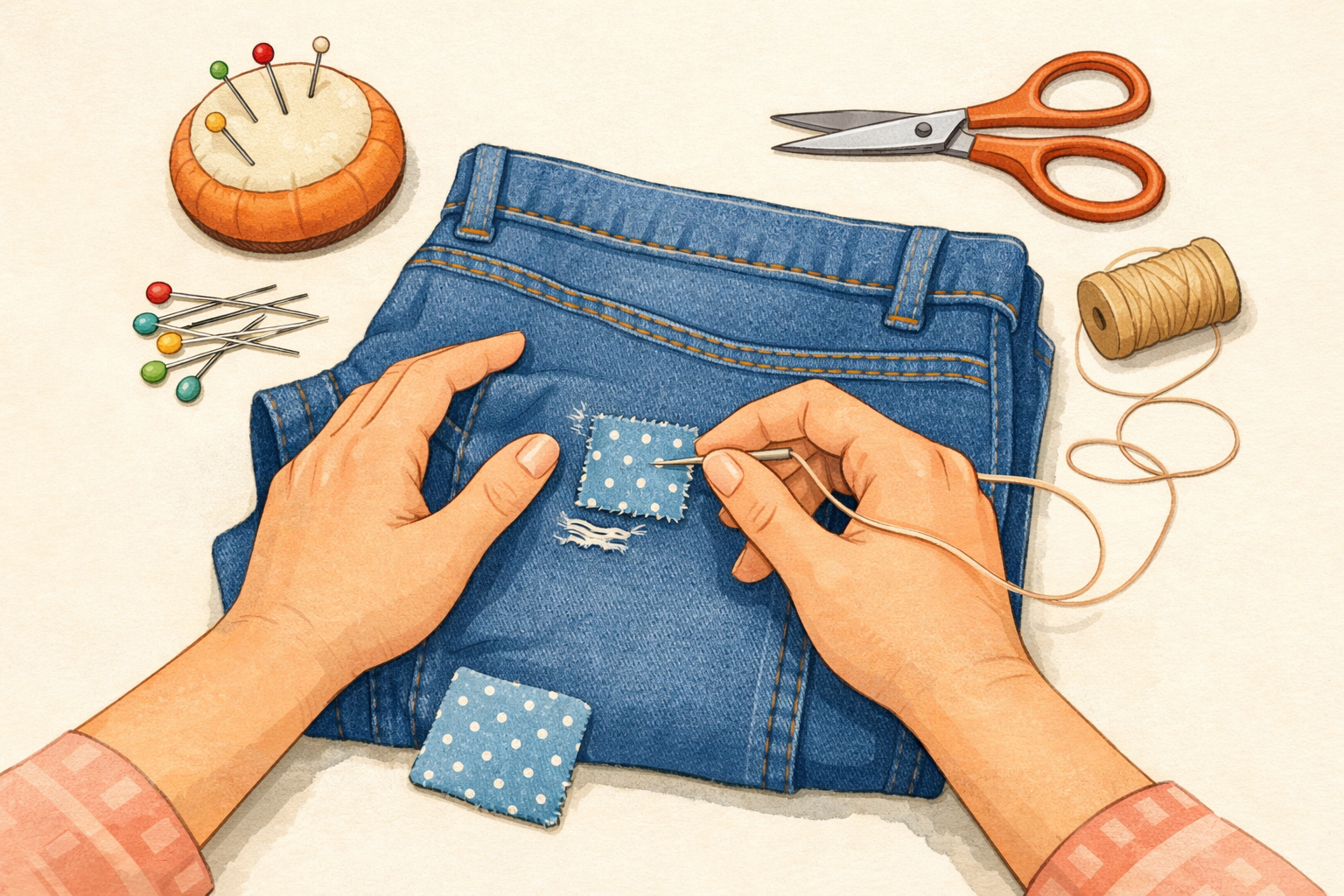
Hobbies & crafts
How to Patch a Small Hole in Jeans by Hand
Stop fraying and extend wear by hand‑sewing a durable patch over or under a small denim hole with simple stitches.
Read the guide