Food & drink How-to
How to Make Celeriac Mash: A Creamy, Low-Carb Potato Alternative
A grounded, five-to-ten step recipe that turns celeriac (celery root) into a silky mash with minimal fuss: peeling, even chopping, gentle simmering, seasoning and options for dairy-free lightness. Includes texture checkpoints so you don’t overcook or make glue.
- 01
Choose and prep the celeriac
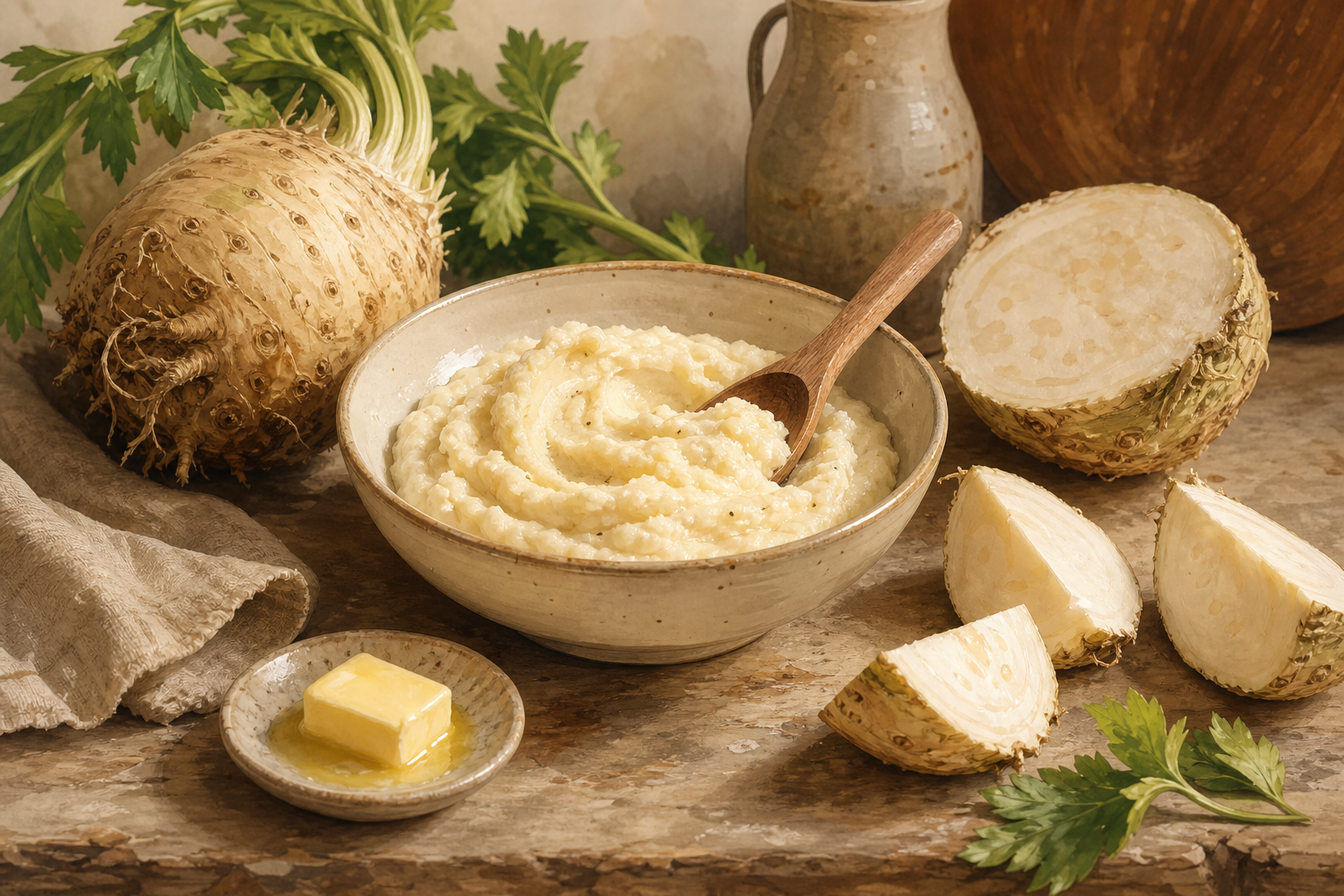
Pick a firm celeriac (celery root) about 1 to 1.5 pounds for 3–4 servings; it should feel heavy for its size and not soft. Trim the stringy root ends and any tough top where the stems were. Rinse well under cold water to remove dirt before you cut.
- 02
Peel the skin carefully
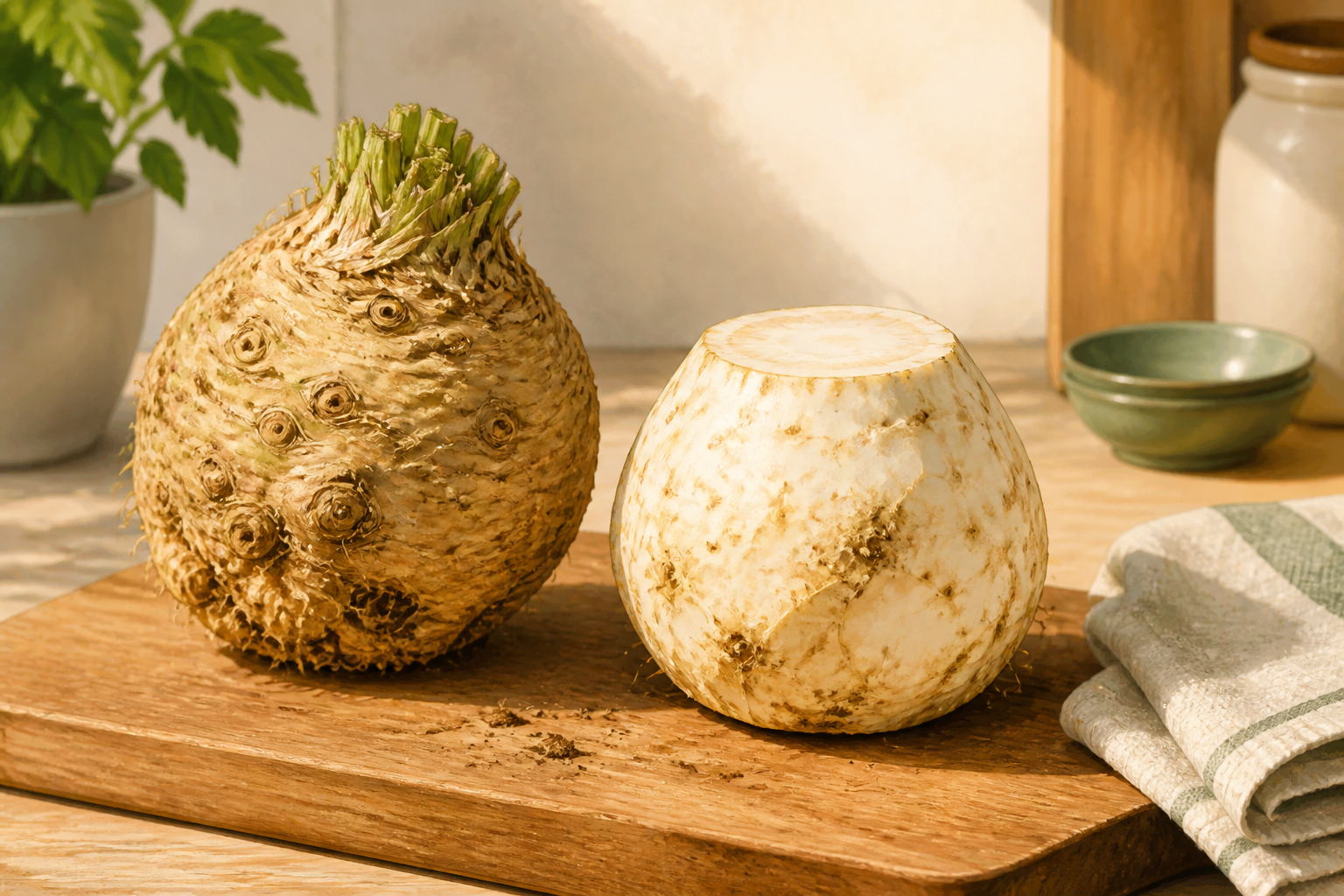
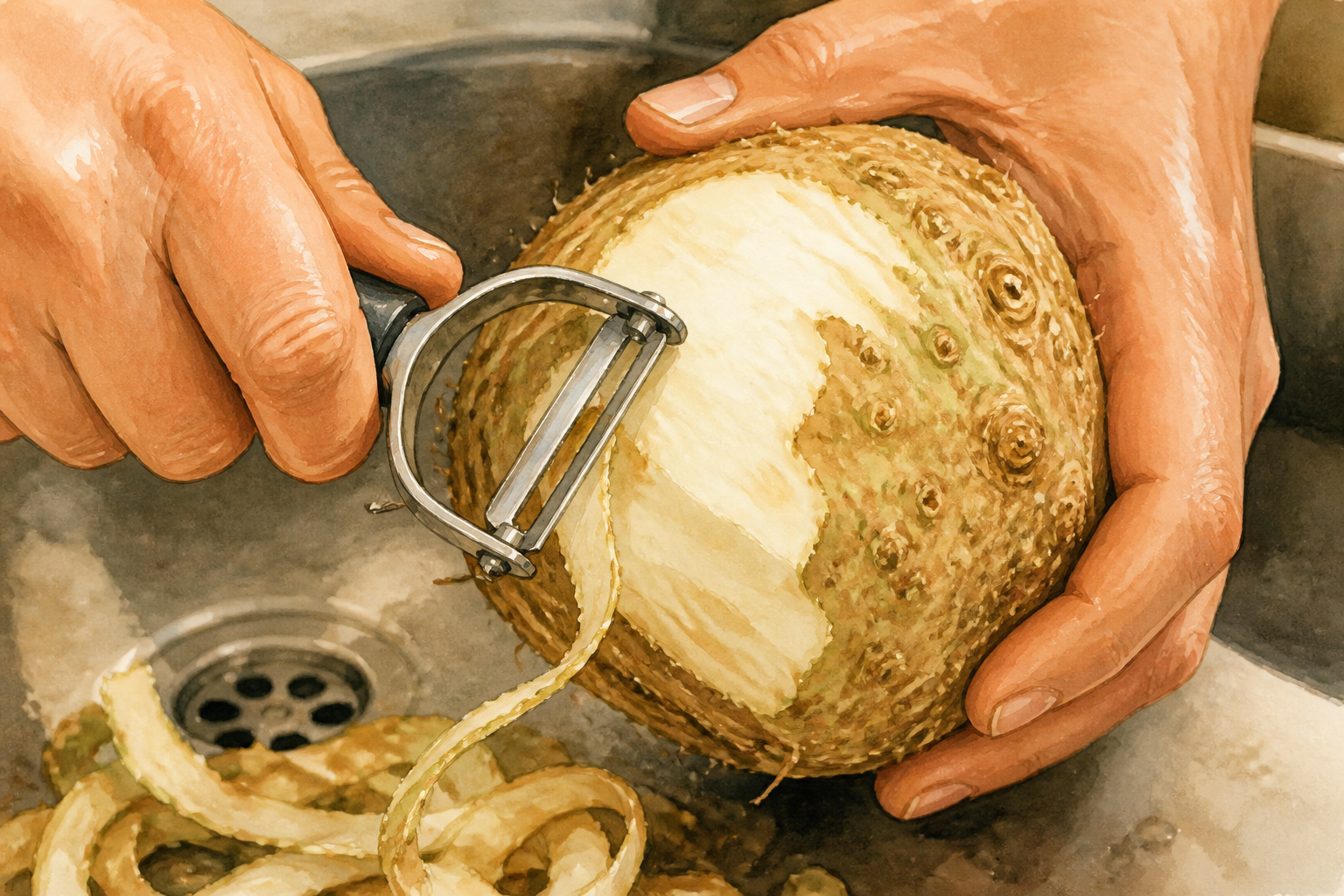
Use a sturdy vegetable peeler to remove the knobbly outer skin, or pare with a small sharp knife for stubborn spots. Remove down to the pale flesh; the bulb can be oddly shaped so take your time and keep the pieces manageable.
- 03
Cut into even 1-inch cubes
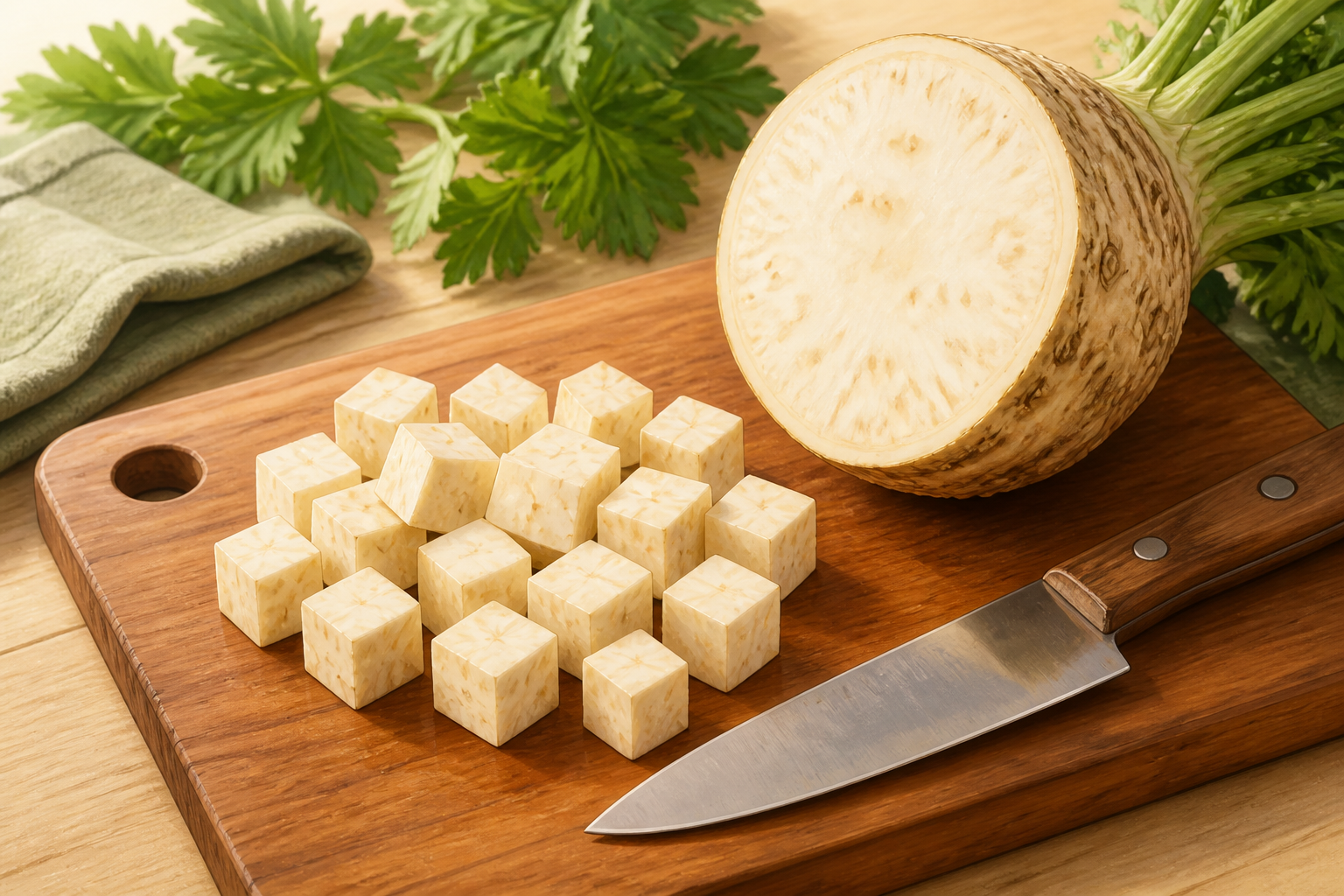
Cut the peeled celeriac into roughly 1-inch cubes so they cook evenly. First slice into rounds or slabs, then stack and cut into uniform sticks and cubes. Aim for pieces of similar size — uneven pieces equal uneven cooking.
- 04
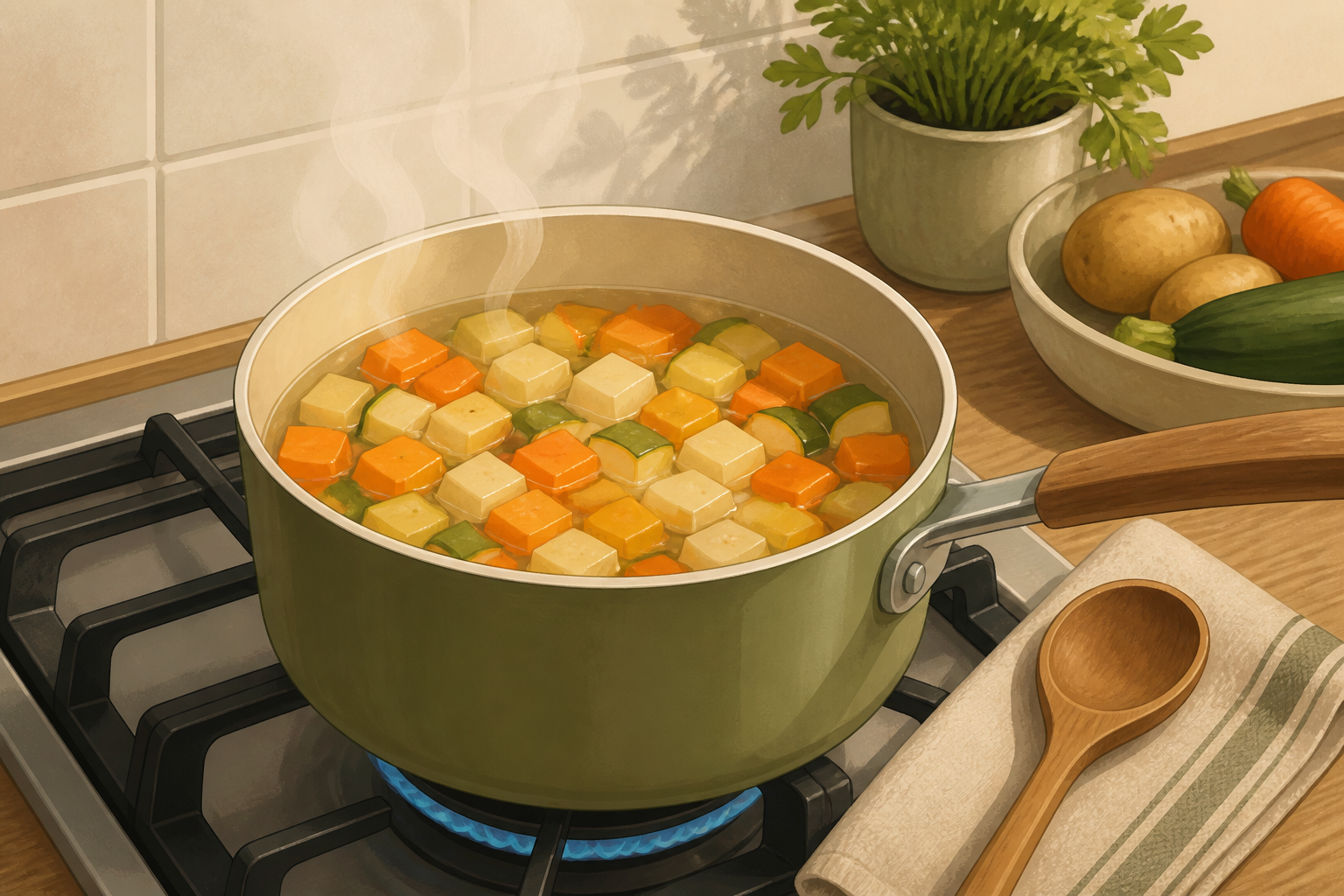
Cover with cold salted water and simmer
Place the cubes in a medium saucepan and add cold water to cover by about 1 inch. Add about 1 teaspoon of salt per quart of water. Bring to a gentle simmer over medium heat, then lower to maintain a simmer. Cook until a fork slides through a cube with no resistance — usually 15–25 minutes depending on size.
- 05
Drain and steam-dry briefly
Drain the cooked celeriac in a colander. Return the drained pieces to the still-warm pot and place over very low heat for 1–2 minutes, shaking the pot occasionally to evaporate excess water. This keeps the mash from becoming watery — check: pieces should be soft but not waterlogged.

- 06
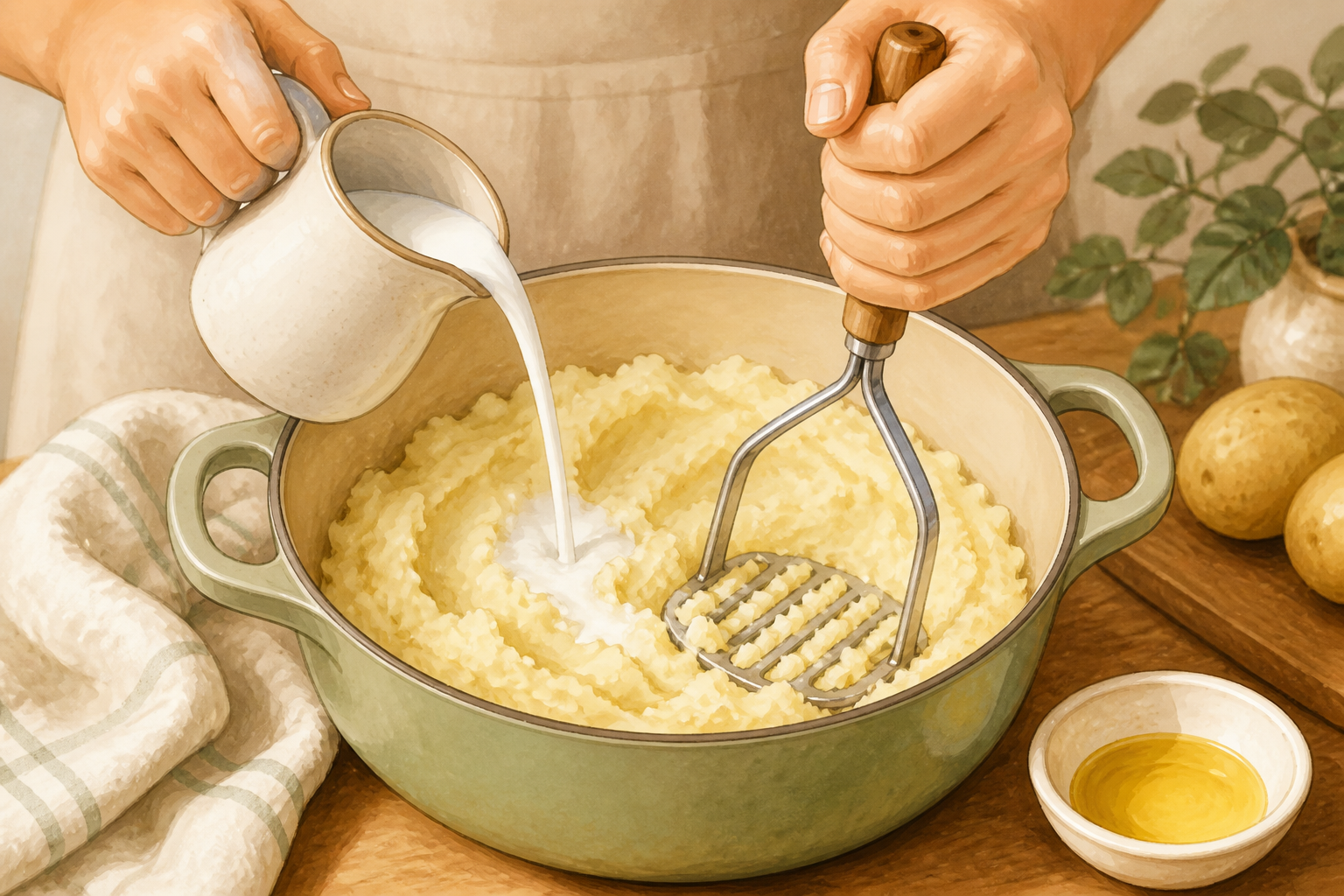
Mash with fat and a splash of liquid
Mash using a potato masher for a rustic texture or press through a ricer for silkier results. For approximately 1 pound of cooked celeriac start with 2 tablespoons of butter (or 2 tablespoons olive oil for dairy-free) and 2 tablespoons of milk or unsweetened plant milk; add more liquid a tablespoon at a time until the mash is creamy. Mix gently — overworking can make a gluey texture.
- 07
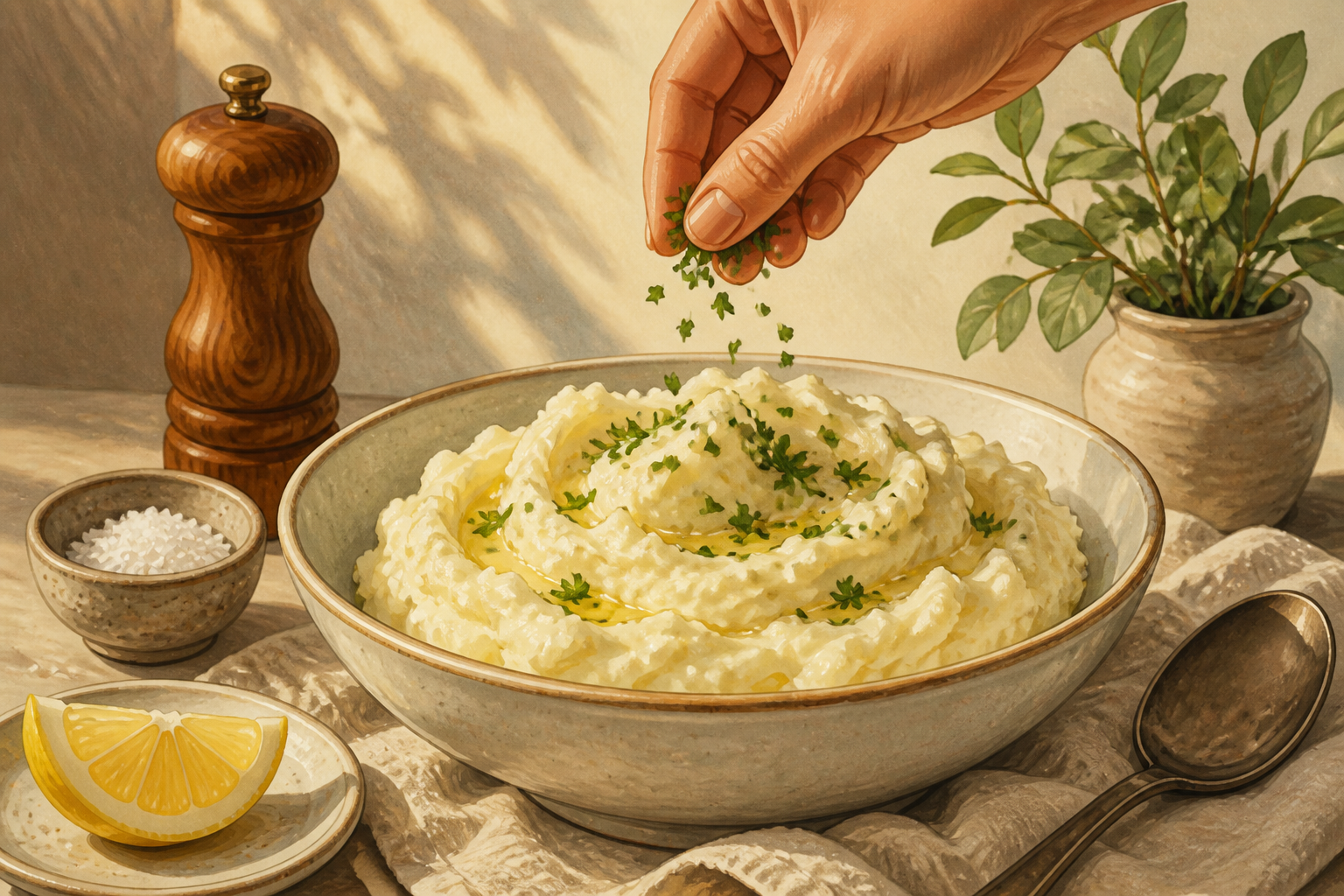
Season, brighten and check final texture
Season with salt and freshly ground black pepper, then brighten with about 1 teaspoon of lemon juice per pound to lift flavors. Optional: a pinch of nutmeg or a spoonful of roasted garlic. Texture checkpoint: the mash should hold a soft peak but glide off a spoon — not soupy, not gummy. Taste and adjust salt, acid and fat.
- 08
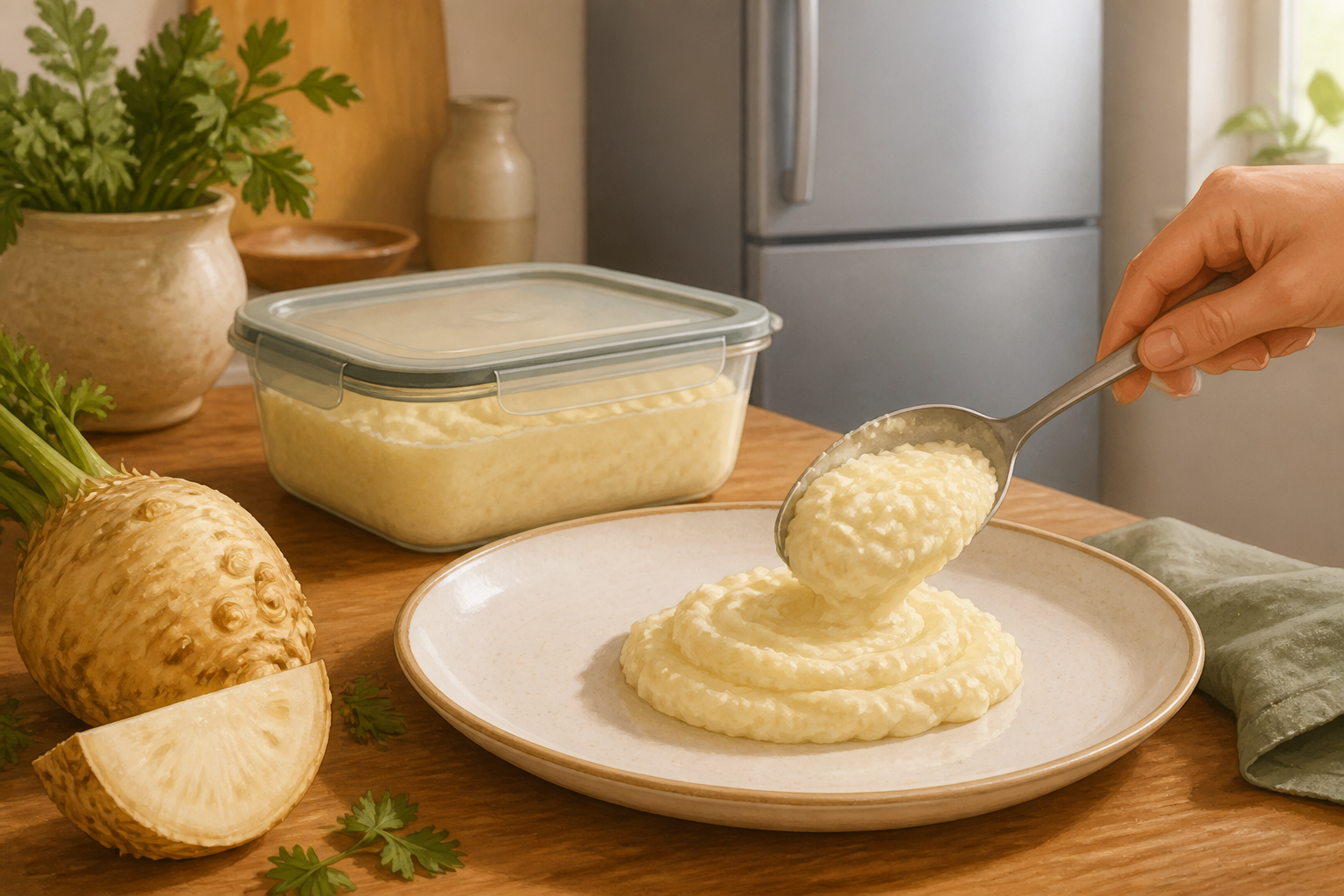
Serve warm and store properly
Serve immediately while warm, topped with an extra drizzle of olive oil or a pat of butter and chopped chives if desired. Leftovers: cool to room temperature promptly and refrigerate within two hours in a covered container; use within 3–4 days. Reheat gently with a splash of milk or oil over low heat or in short bursts in the microwave.
If this was useful
Try one of these next

Food & drink How-to
How to build a Spooky Low‑Carb Charcuterie Board (visual tricks, real keto options)
Assemble a Halloween‑ready charcuterie board that reads scary and stays low in carbs: cured meats, cheeses, olives, pickles, and low‑carb garnishes arranged for effect. Clear placement, proportion, and storage tips keep it photo‑ready and h
Read article
Food & drink How-to
How to make Keto Mummy Dogs (fathead dough wraps for spooky snacks)
Turn weeknight sausages into adorable, low‑carb mummies using a simple cheese‑and‑almond flour fathead-style dough. Step‑by‑step baking and assembly directions show how to roll, wrap, bake to golden, and add cute but edible 'eyes'—all safe, precise, and party-ready.
Read article
Food & drink Listicle
6 Low‑Carb Halloween Cocktail & Mocktail Mixers, Ranked for Flavor and Sugar‑Free Impact
A ranked round‑up of mixers, from sparkling herbal infusions to zero‑sugar syrups, chosen by flavor compatibility and minimal sugar impact for spooky drinks. Great for hosts who want dramatic drinks without hidden carbs.
Read article
Food & drink Listicle
7 Store‑Bought Keto Halloween Candy Swaps, Ranked
A practical, ranked list of easy supermarket swaps and prepackaged treats that keep carbs lower without feeling like punishment. Items are ordered by accessibility and overall keto‑friendliness so you can stock a candy bowl fast.
Read article