Learning
How to Keep a Simple Language Journal You’ll Actually Use
Set up one page per day with three prompts (date, one new word, one sentence), add a weekly review page, and reuse sentence frames to make writing easy.

- 01
Pick a format you’ll actually open
Choose the simplest place you’ll use daily: a small paper notebook, a single digital note, or a basic document. Keep it where you study or in your bag. Set the goal: one page per day, nothing fancy.

- 02
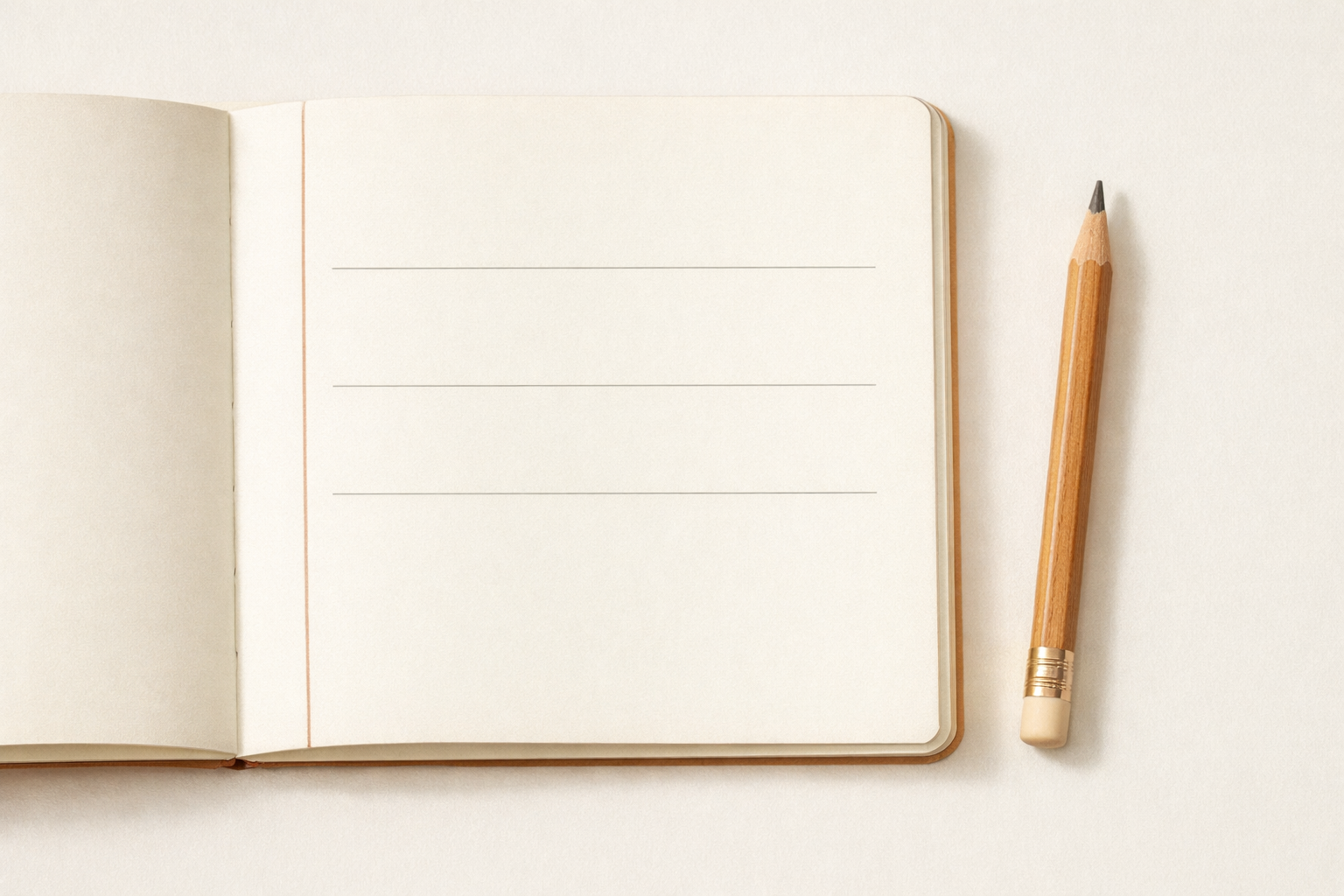
Make a three-line daily template
Reserve one page per day with three prompts: write the date, pick one new word, and write one sentence. Leave a small margin for a check mark or a tiny doodle if you like—keep it simple and repeatable.
- 03
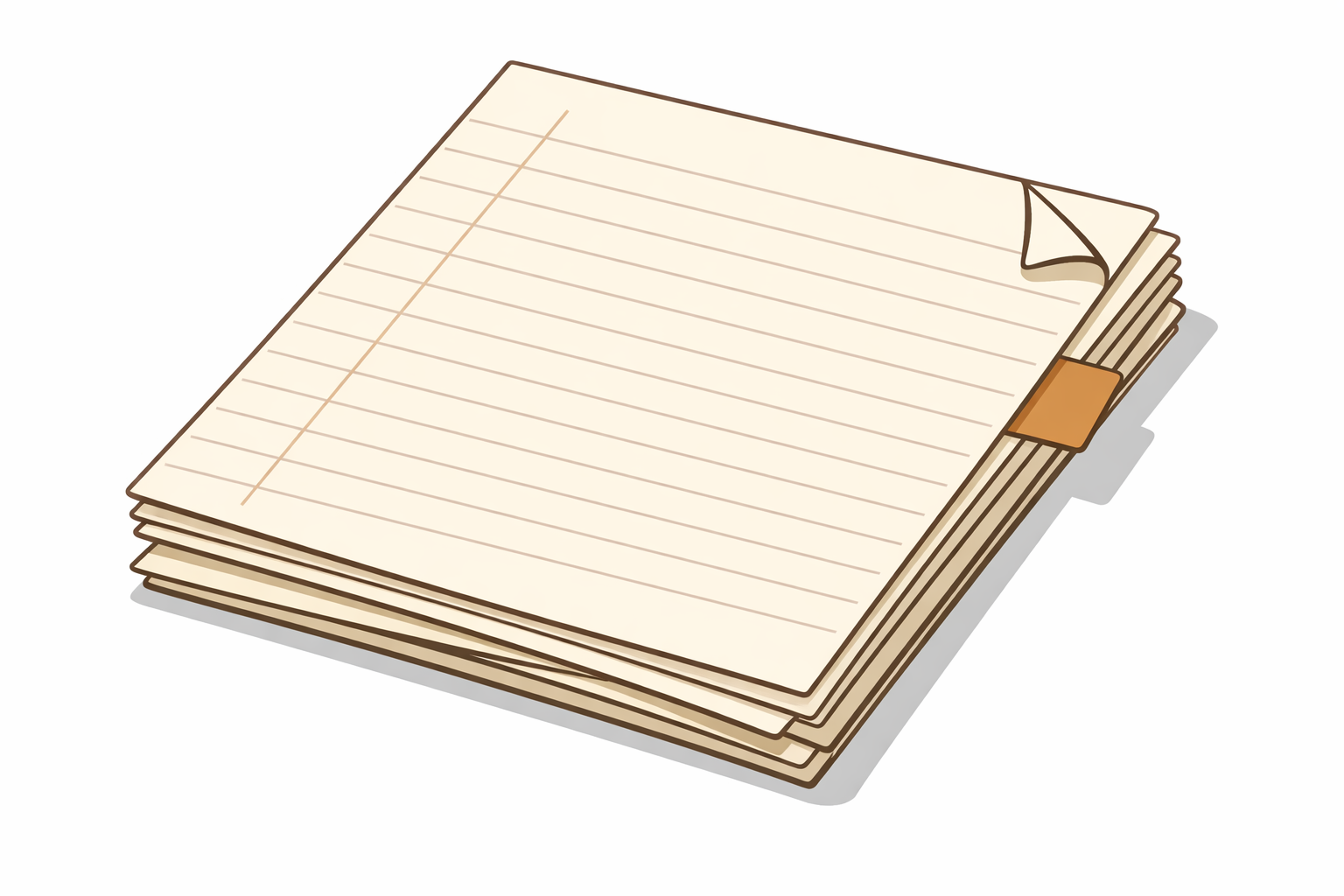
Pre-set the next seven pages
Reduce friction by setting up a week at once: mark seven pages, add the dates at the top, and fold a small corner or place a tab on the current page so you can flip to it instantly.
- 04
Choose a handful of sentence frames
Pick 6–8 easy frames you can reuse, such as: “Today I…”, “I like…”, “I went to…”, “I need to…”, “I will…”, “It is…”, “I think…”, “My favorite…”. Keep them on the inside cover for quick reference.

- 05
Decide where your daily word comes from
Choose one reliable source: a page you’re reading, a show you watched, a conversation, or words you notice during the day. Prefer useful, everyday words you’ll actually say.

- 06
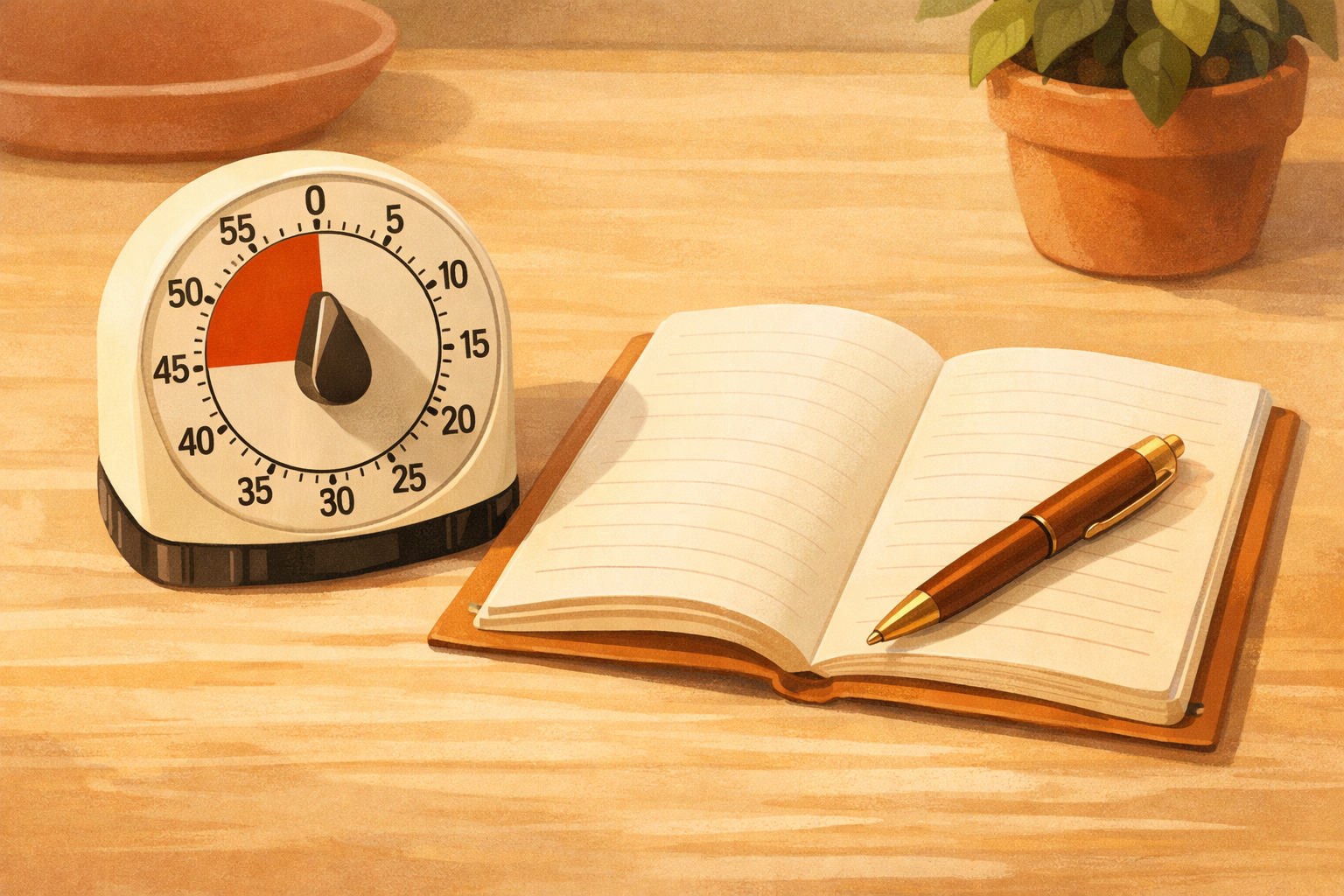
Set a 5-minute cue and keep tools ready
Attach journaling to a routine you already do (after breakfast, commute, or study warm-up). Start a 5‑minute timer, open your journal, and keep your pen or keyboard within reach.
- 07
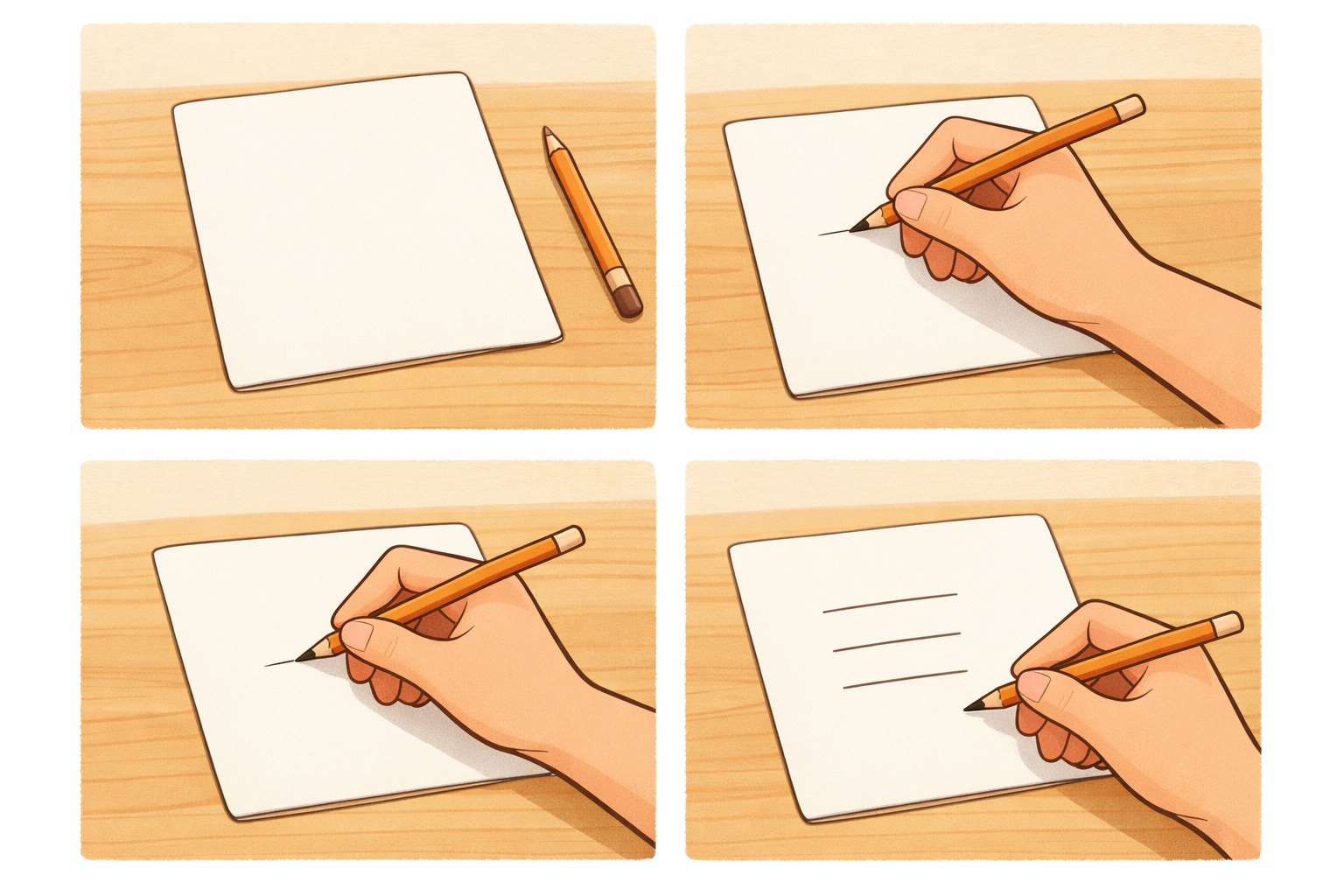
Write today’s entry in three moves
1) Date: add today’s date. 2) One new word: write the word you picked. 3) One sentence: reuse a frame to build a short sentence with that word. Done is better than perfect.
- 08
Underline and vary over time
Lightly mark the new word (underline or circle) so it pops. In future days, try placing the word in different frames or positions in the sentence to stretch your usage without adding extra steps.

- 09
Make a weekly review page
At week’s end, add one page: note two or three words you used most, one frame that worked well, one thing to adjust next week, and copy your favorite sentence. Set one tiny goal for the next seven days.

- 10
Refresh frames and recycle words
Each new week, swap in one new frame and retire one you’ve mastered. Reuse last week’s words in fresh sentences to keep them active without increasing daily workload.

- 11
Track streaks lightly
Add a tiny row of seven boxes at the bottom of each weekly page and check one per completed day. If you miss a day, just resume—consistency grows from returning, not from perfection.

- 12
Keep it enjoyable and low-pressure
Personalize the look, keep sessions short, and celebrate small wins by flipping through completed pages each weekend. If a prompt feels stale, swap it—your journal should make practice feel easy.

If this was useful
Try one of these next

Bike & travel
How to Practice Small‑Talk Phrases Before a Trip
Build short scripts for greetings, ordering, and asking directions, record yourself and repeat, and pack a pocket card with 10 go‑to lines you can say smoothly.
Read the guide
Hobbies & crafts
How to Learn a Song in a New Language (Even If You’re Not Musical)
Choose a slow, clear song, look up the lyrics and mark unknown words, loop the chorus to memorize pronunciation, and sing along softly to lock in sounds and phrases.
Read the guide
Learning
How to Set Up a 15‑Minute Daily Language Routine You Can Keep
Pick a consistent time, split 15 minutes into review, new words, and quick speaking, and track progress with a simple checklist so you build momentum without burning out.
Read the guide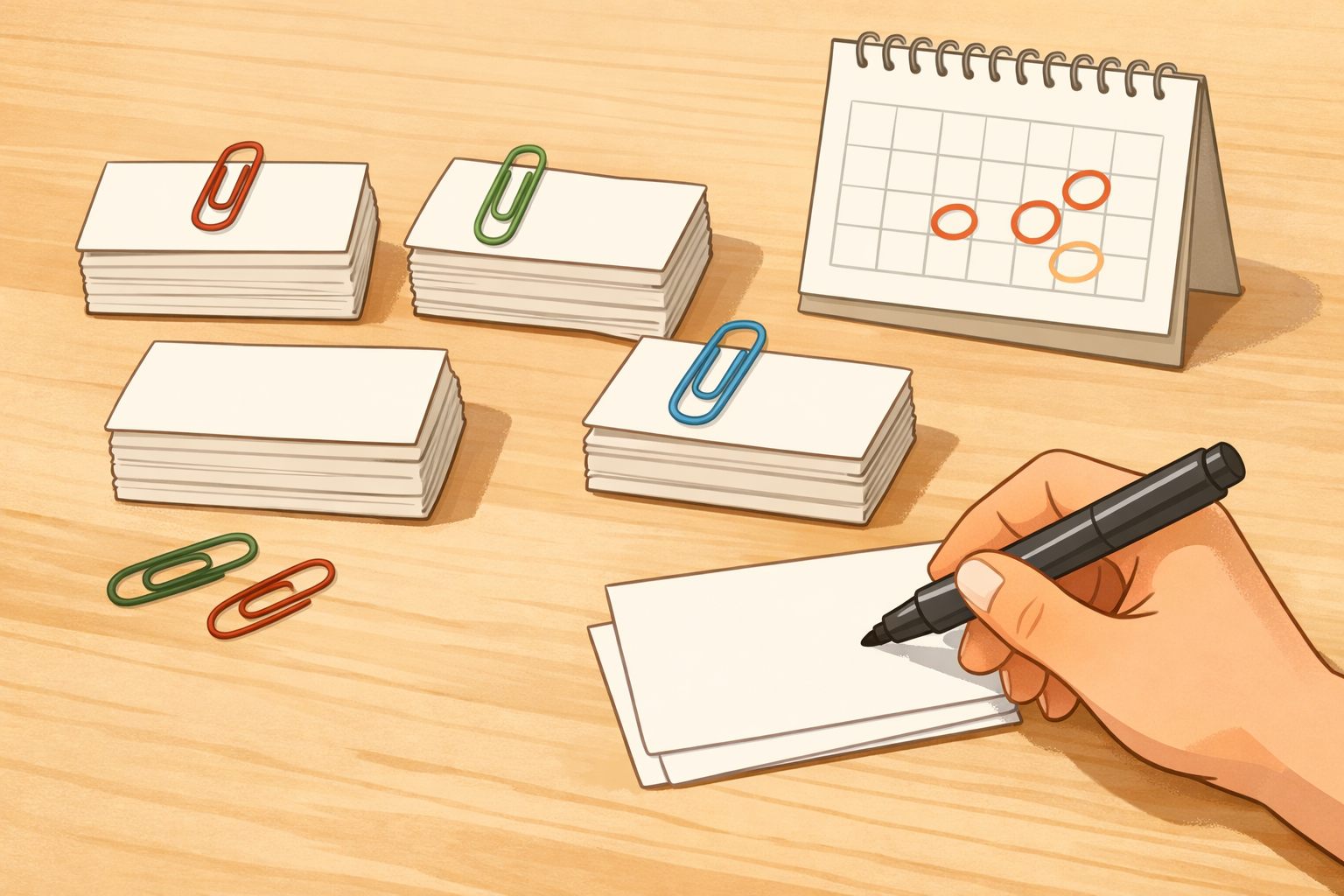
Learning
How to Make DIY Flashcards That Actually Stick
Create clear, one-word-per-card flashcards with a picture or example phrase, sort them into “know,” “review,” and “learn” piles, and revisit them on a simple spaced schedule to make what you study easier to remember.
Read the guide