Hobbies & crafts
How to Learn a Song in a New Language (Even If You’re Not Musical)
Choose a slow, clear song, look up the lyrics and mark unknown words, loop the chorus to memorize pronunciation, and sing along softly to lock in sounds and phrases.

- 01
Set a tiny target
Decide you’ll learn just the chorus and one short verse first, aiming for clear pronunciation rather than volume or range. A small, specific goal makes progress quick and keeps motivation high.
- 02
Choose a slow, clear song
Pick a studio recording with a steady, unhurried tempo, clear vocals, and a repetitive chorus. Avoid live versions and heavy effects so the words are easy to hear and repeat.

- 03
Find and tidy the lyrics
Search for the lyrics, then cross‑check two sources to catch typos. Copy them into a note or printout, keeping line breaks that match the recording so you can follow along easily.

- 04
Mark unknown words and meanings
Highlight words or phrases you don’t know, then look them up in a reliable bilingual dictionary. Write brief meanings right on your lyric sheet so the sense of each line is clear at a glance.

- 05
Listen once or twice without singing
Play the song while following the lyrics silently. Notice where the singer links words, softens endings, or stresses syllables. Your aim is to map what you hear to what you see.

- 06
Loop the chorus to lock in sounds
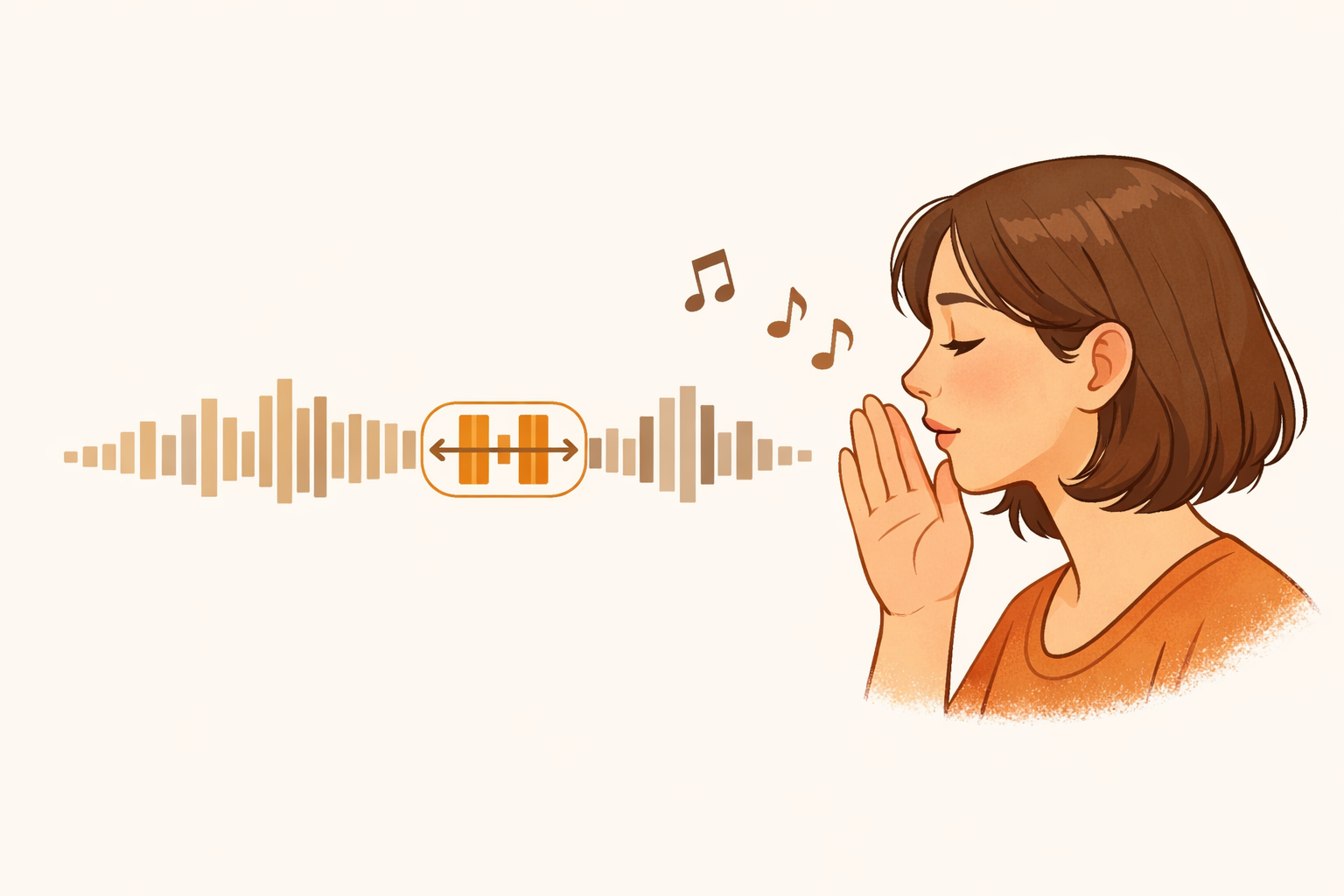
Use an audio player to repeat just the chorus several times. Mouth the words softly, then whisper them, focusing on matching vowel shapes and rhythm before trying full voice.
- 07
Break verses into bite‑size lines
Practice one or two lines at a time. Play a short line, pause, and echo it in your own voice. String the practiced lines together only after each one feels comfortable.

- 08
Add pronunciation help
For tricky words, listen to a dictionary’s audio if available, watch your mouth in a mirror to match shapes, and add simple phonetic hints to your lyric sheet that make sense to you.

- 09
Slow the playback slightly
If the normal speed feels rushed, slow the track a little without changing pitch. Sing along at this comfortable pace, then nudge the speed back toward normal as you improve.

- 10
Shadow softly, then sing out
Shadow the singer by starting just a fraction after each phrase, matching rhythm and sound. Move from whispering to a light speaking‑singing voice, keeping consonants quick and vowels steady.

- 11
Record and compare
Make a short voice memo of the chorus and one verse. Compare it to the original, noticing any sounds you miss or rush. Revisit just those spots with looping and slow playback.

- 12
Review on a simple schedule
Run the chorus once today, once tomorrow, and again after a few days. Alternate listen‑only and sing‑along passes, and try recalling the first words of each line before pressing play.
If this was useful
Try one of these next

Bike & travel
How to Practice Small‑Talk Phrases Before a Trip
Build short scripts for greetings, ordering, and asking directions, record yourself and repeat, and pack a pocket card with 10 go‑to lines you can say smoothly.
Read the guide
Learning
How to Set Up a 15‑Minute Daily Language Routine You Can Keep
Pick a consistent time, split 15 minutes into review, new words, and quick speaking, and track progress with a simple checklist so you build momentum without burning out.
Read the guide
Learning
How to Make DIY Flashcards That Actually Stick
Create clear, one-word-per-card flashcards with a picture or example phrase, sort them into “know,” “review,” and “learn” piles, and revisit them on a simple spaced schedule to make what you study easier to remember.
Read the guide
Home & life
How to Label Your Home to Learn Everyday Words
Use small sticky notes to label 30–50 common items (door, window, cup), say each word aloud during chores, and rotate labels weekly to steadily expand vocabulary.
Read the guide