Home & life
How to Label Your Home to Learn Everyday Words
Use small sticky notes to label 30–50 common items (door, window, cup), say each word aloud during chores, and rotate labels weekly to steadily expand vocabulary.

- 01
Pick your language and a tiny daily goal
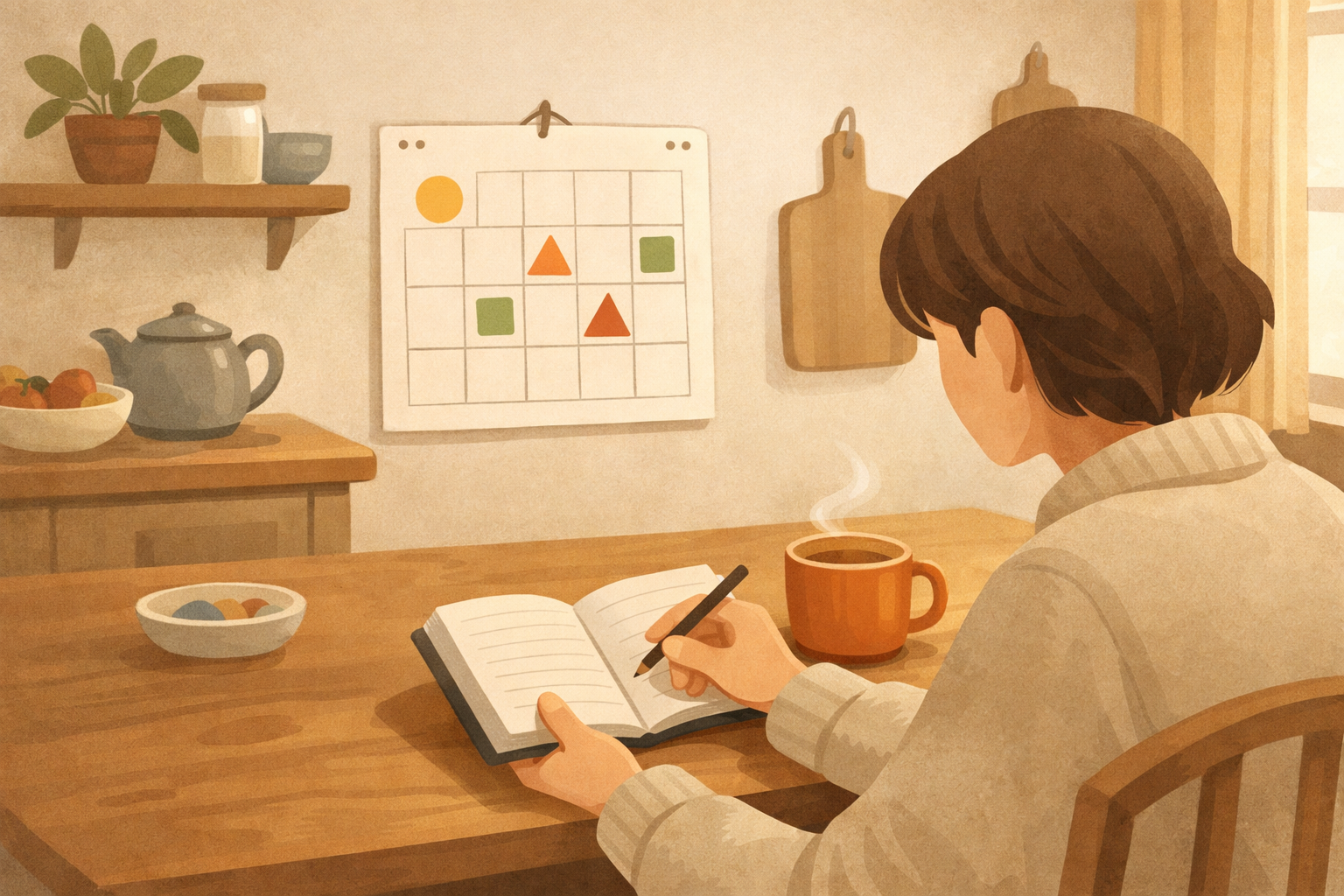
Decide which language you’ll practice and commit to a short daily routine (for example, a few minutes during breakfast cleanup and again at bedtime). Focusing on everyday nouns in your own space makes each word easy to revisit many times a day.
- 02
Gather simple supplies
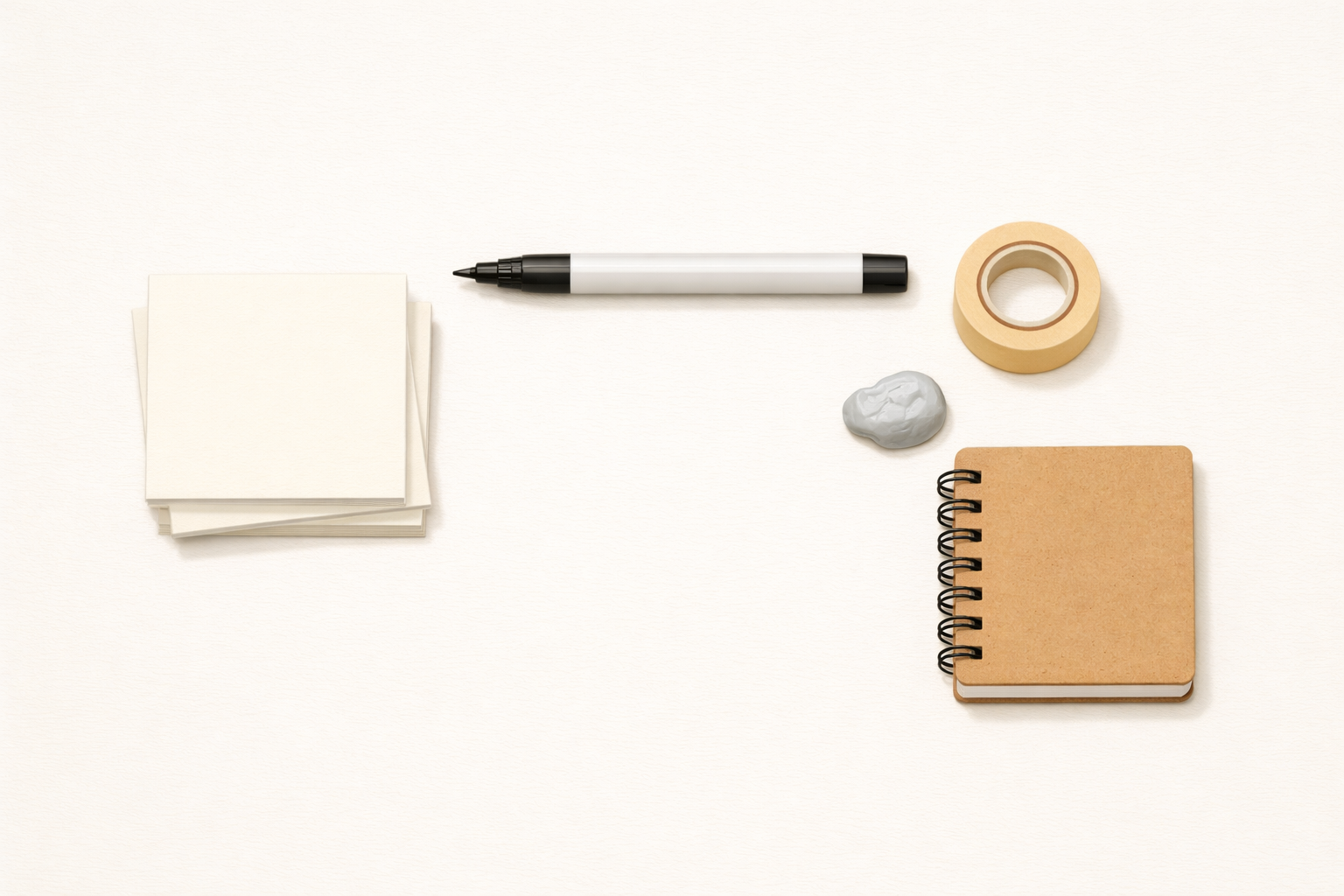
You need small sticky notes, a fine-tip marker, and a removable option (painter’s tape or poster putty) for delicate surfaces. A notebook or phone list helps you track words. Test adhesives on a hidden spot to avoid residue.
- 03
Make a starter list of 30–50 items you actually see
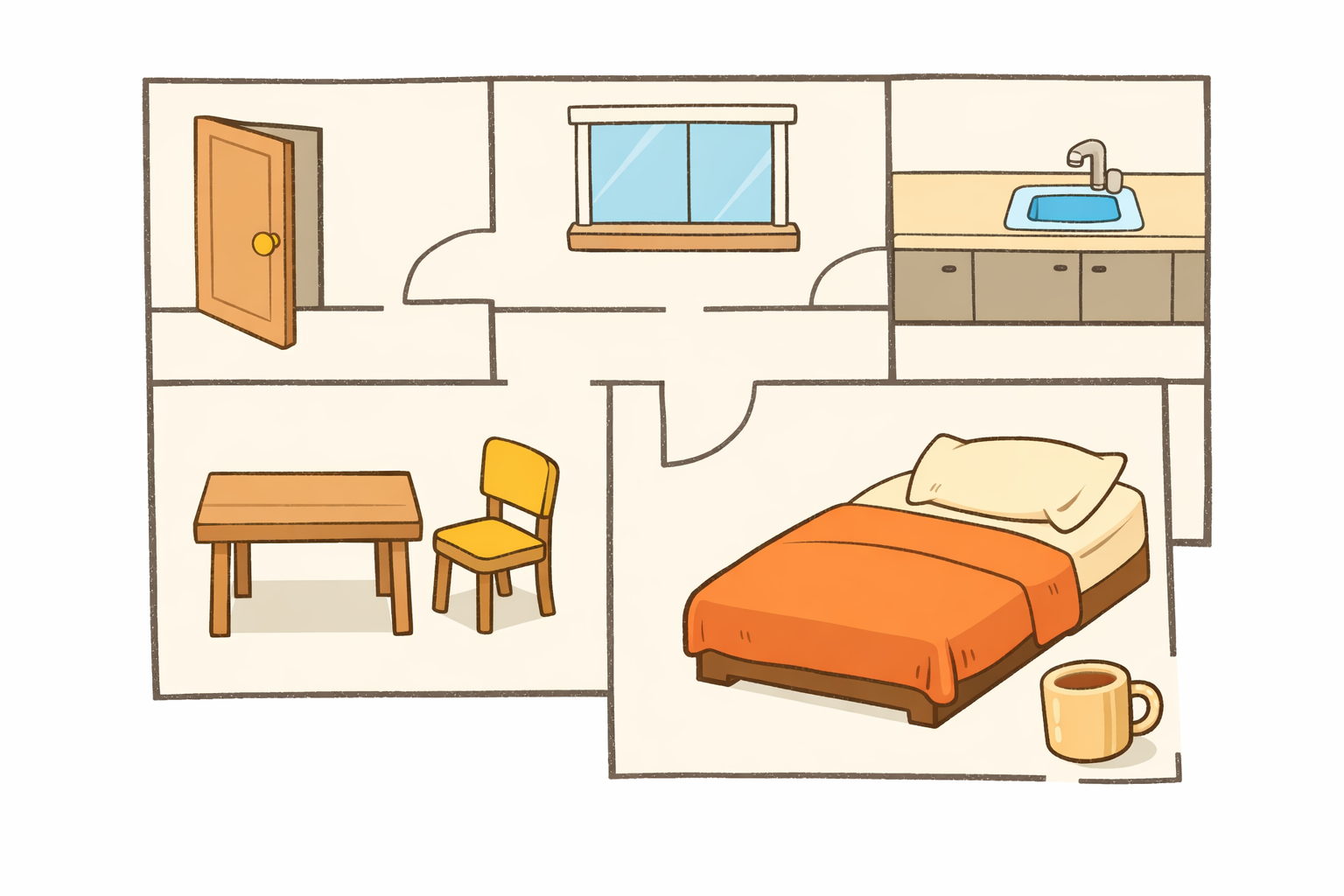
Choose objects you notice daily across rooms. Ideas: door, handle, key, lock, window, curtain, light, switch, table, chair, couch, pillow, blanket, shelf, book, clock, phone, bag, wallet, shoes, socks, coat, bed, sheet, dresser, mirror, sink, soap, towel, toothbrush, toilet, shower, fridge, freezer, stove, oven, pan, pot, cup, glass, mug, plate, bowl, fork, spoon, knife, trash, plant, rug.
- 04
Confirm spellings and write clear labels
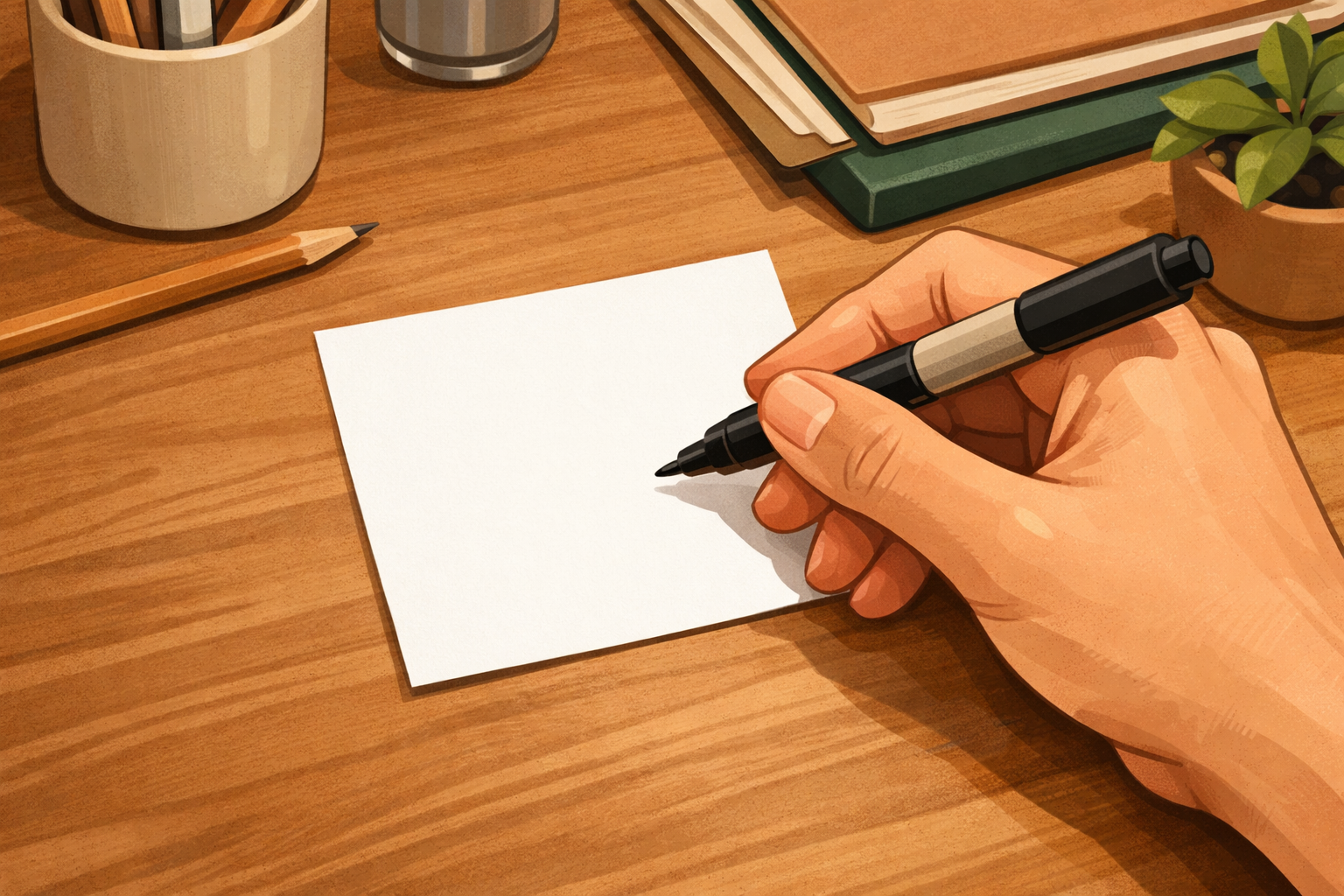
Use a reliable dictionary or phrasebook to check each word’s spelling. Write one large, legible word per note. If your language uses articles or gender, choose one consistent form (for example, always include the article) so you see it the same way each time.
- 05
Place labels safely and where eyes naturally land
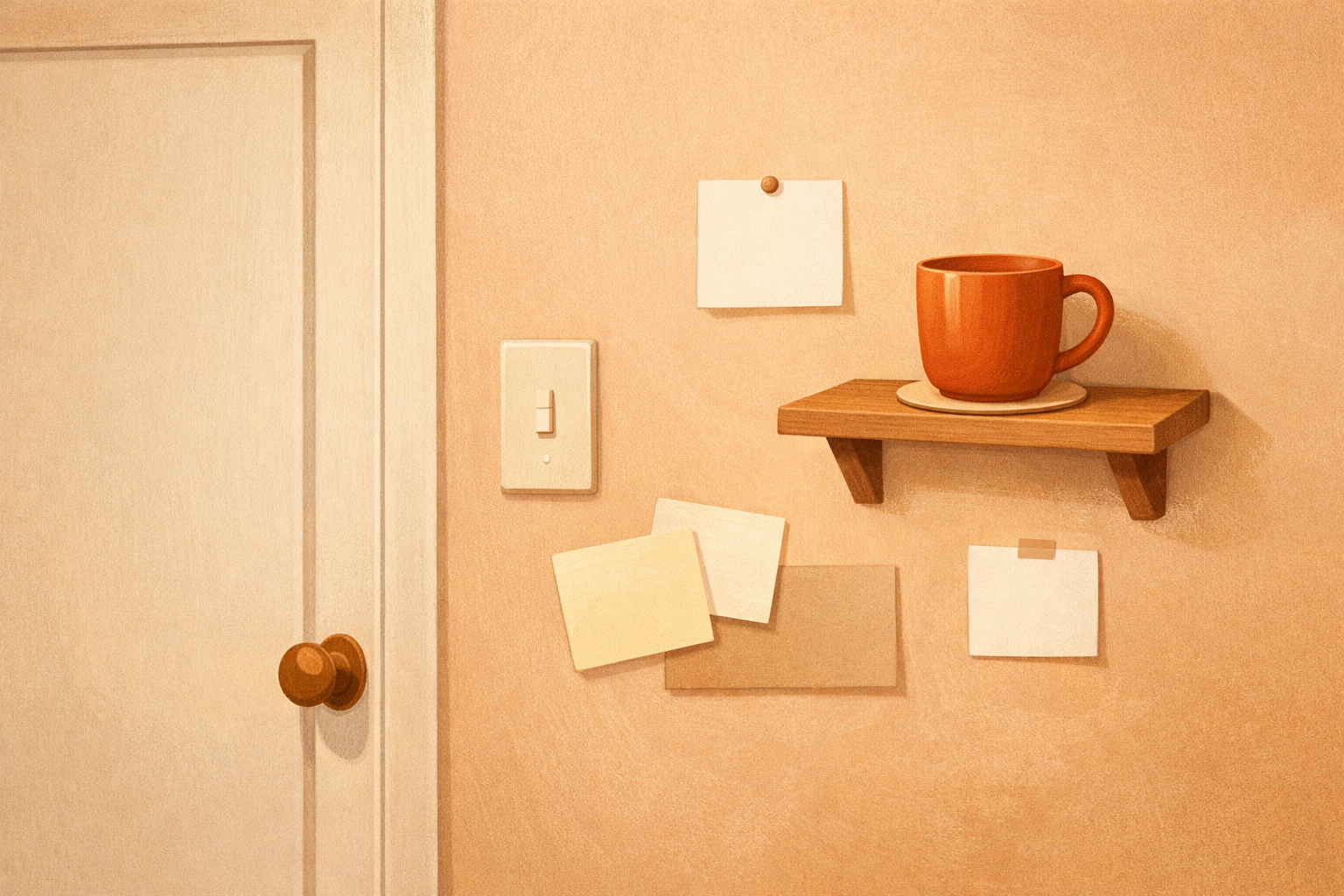
Stick each note near, not on, the part you touch—edge of a door frame, side of a cup shelf, or the wall beside a switch. Avoid hot, wet, or high-traffic spots and never cover displays, vents, or moving parts. Keep pathways clear in case a note falls.
- 06
Use the “see it, say it” habit during chores
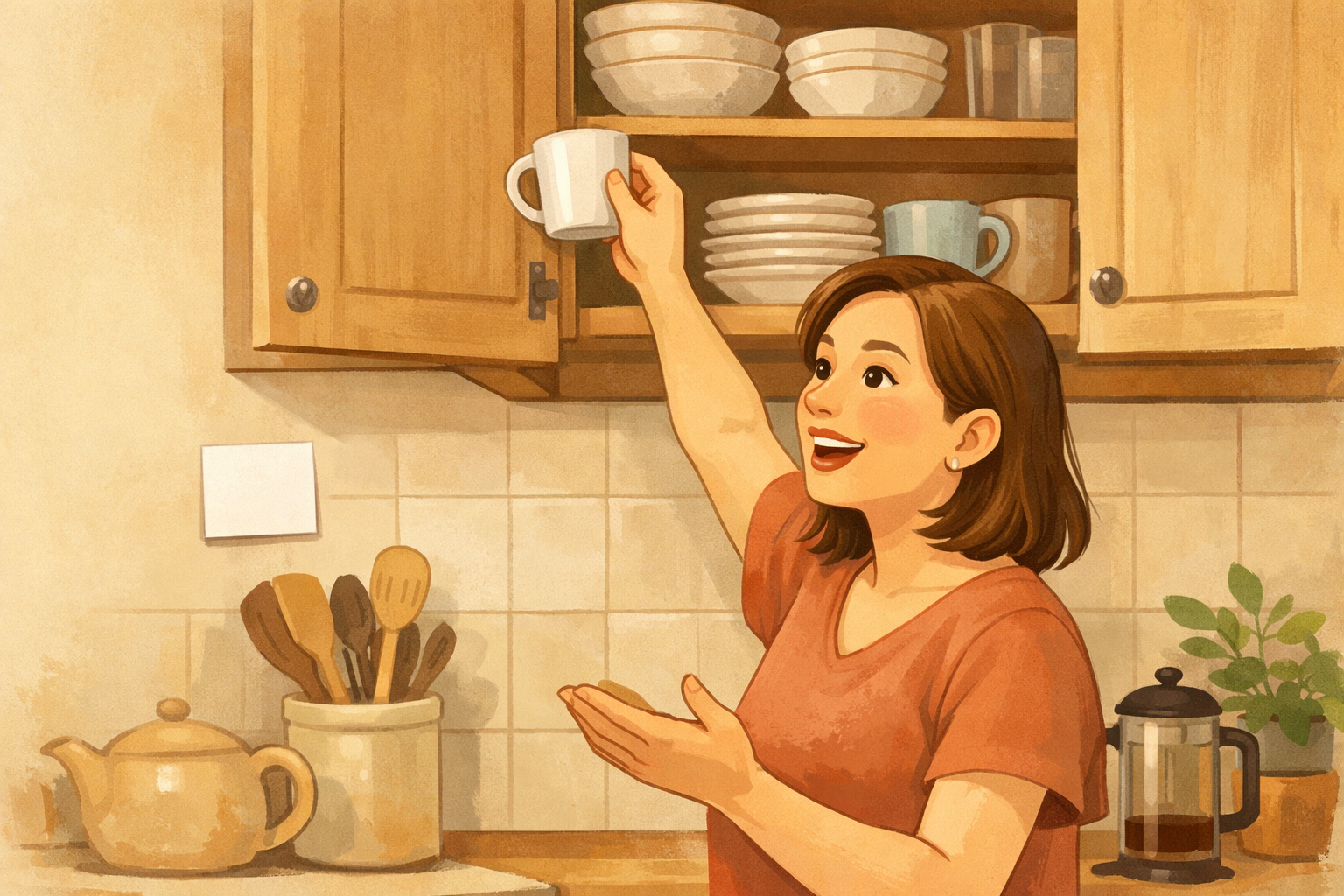
Whenever you see or touch a labeled item, pause for a second, read it, and say the word aloud two or three times. Link it to the action you’re doing—opening a door, washing a cup, folding a towel—so the word gains context.
- 07
Do quick daily sweeps for extra reps
Once a day, walk past 10–15 labels and say each word clearly. Keep it short so you’ll repeat it tomorrow. If others are around, you can whisper—consistent reps matter more than volume.

- 08
Give yourself tiny quizzes
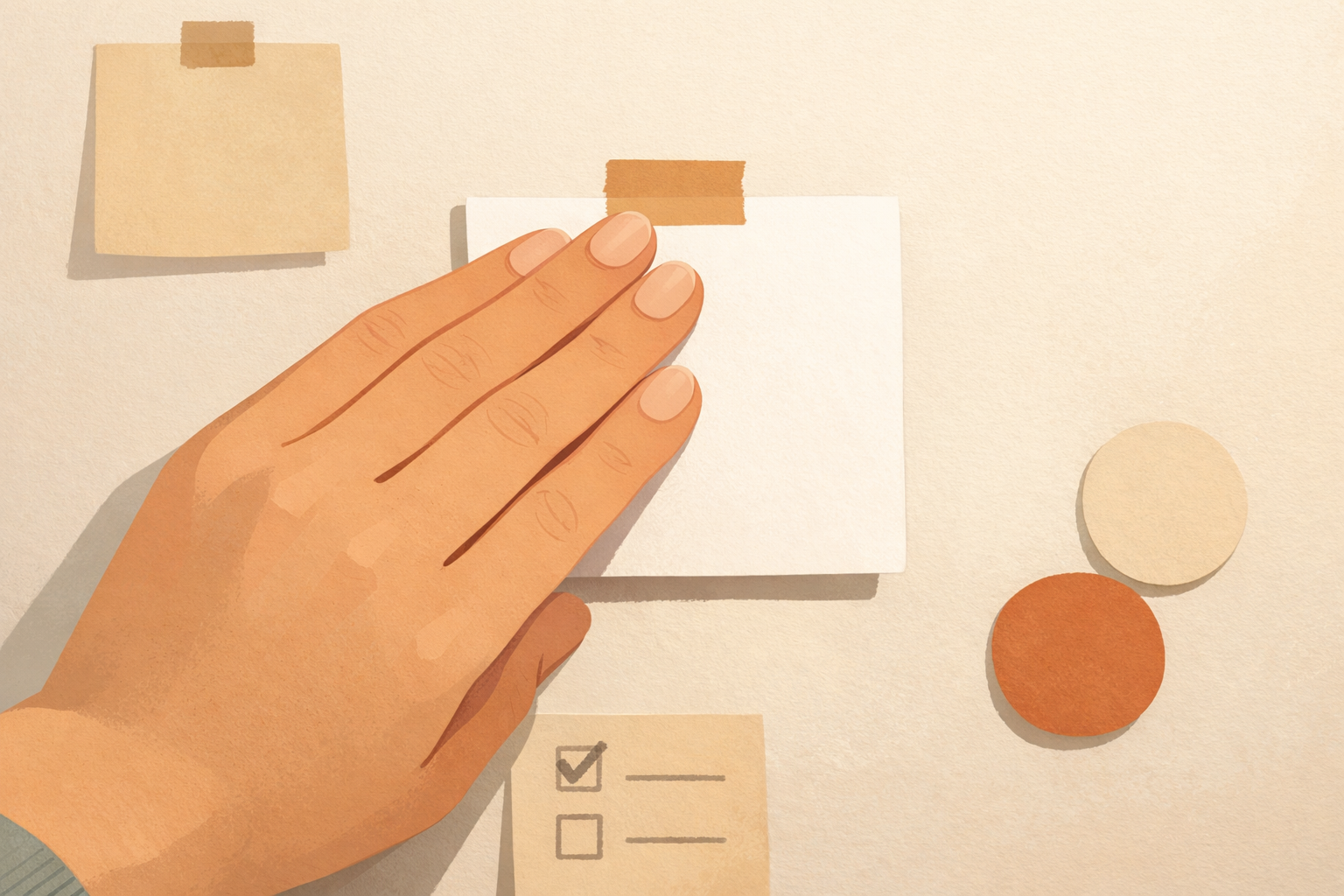
Cover a label with your hand, try to recall the word, then reveal it to check. If you get it right twice in a row on different days, place a small dot on the note’s corner to mark it as nearly learned and plan to retire it soon.
- 09
Rotate and expand each week
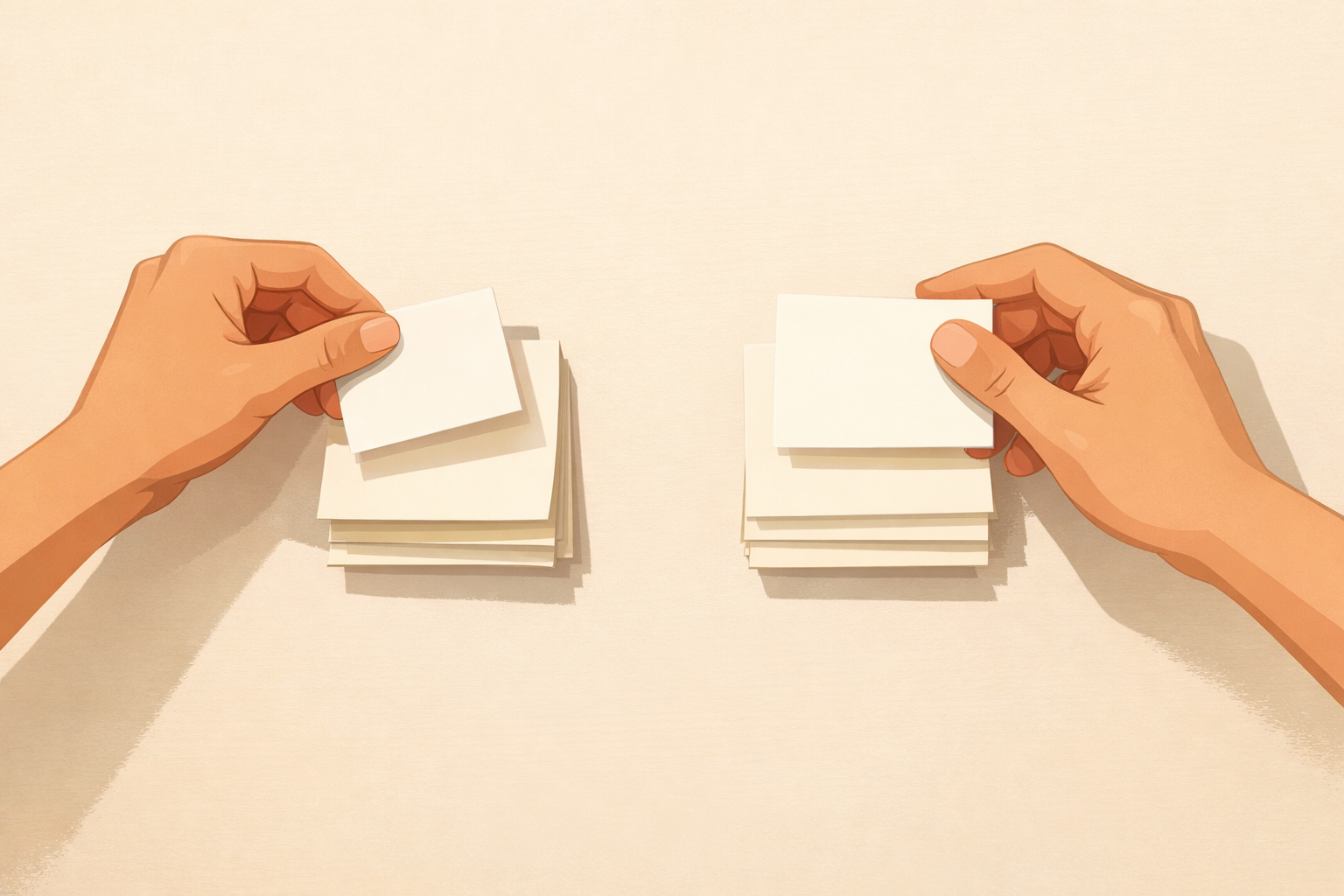
Once a week, remove 10–15 “almost learned” notes and add new ones so you keep a total of 30–50 visible. Move a few old notes to less-used rooms for gentle review without cluttering main spaces.
- 10
Add a few action words near common tasks
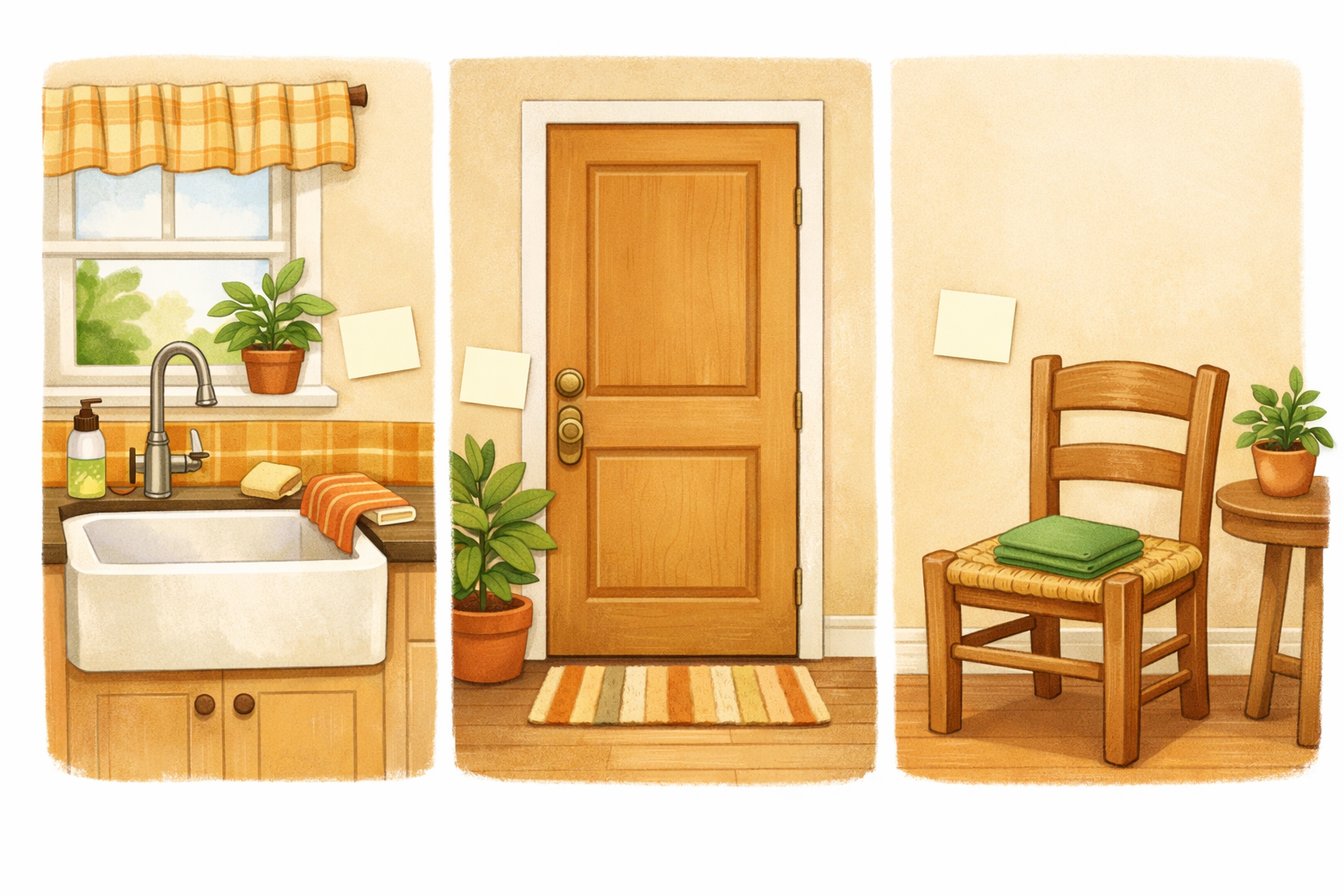
After your first week, place a handful of action labels in logical spots—near the sink for wash, by the door for open/close, by the chair for sit. Keep these few and focused so they reinforce what you already do each day.
- 11
Track progress and keep surfaces happy
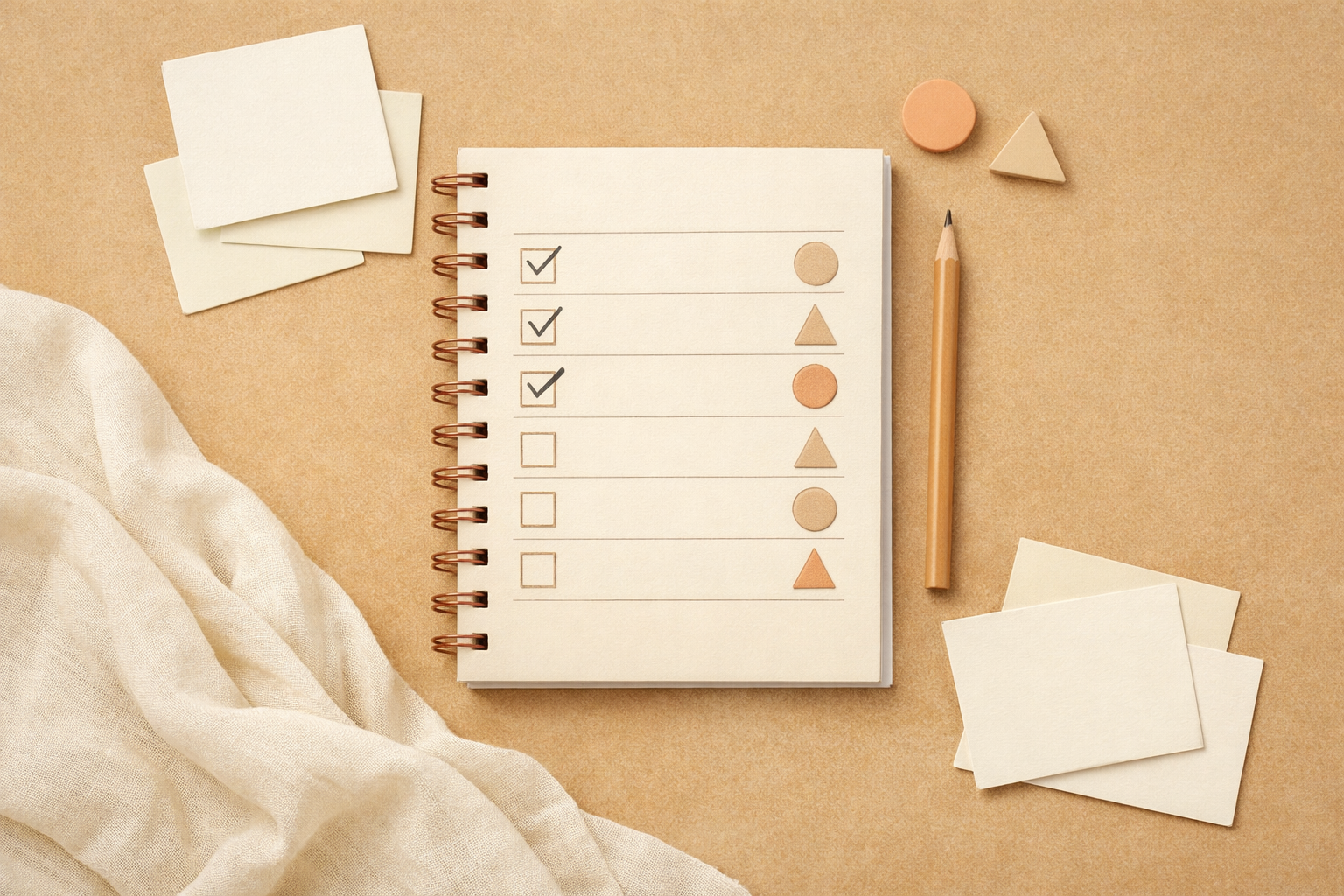
Keep a simple list by room and mark the date you placed each label. During weekly cleanup, remove learned notes, wipe any residue gently, and switch to tape or putty on delicate areas if needed.
- 12
Refresh monthly with themes and a mini review
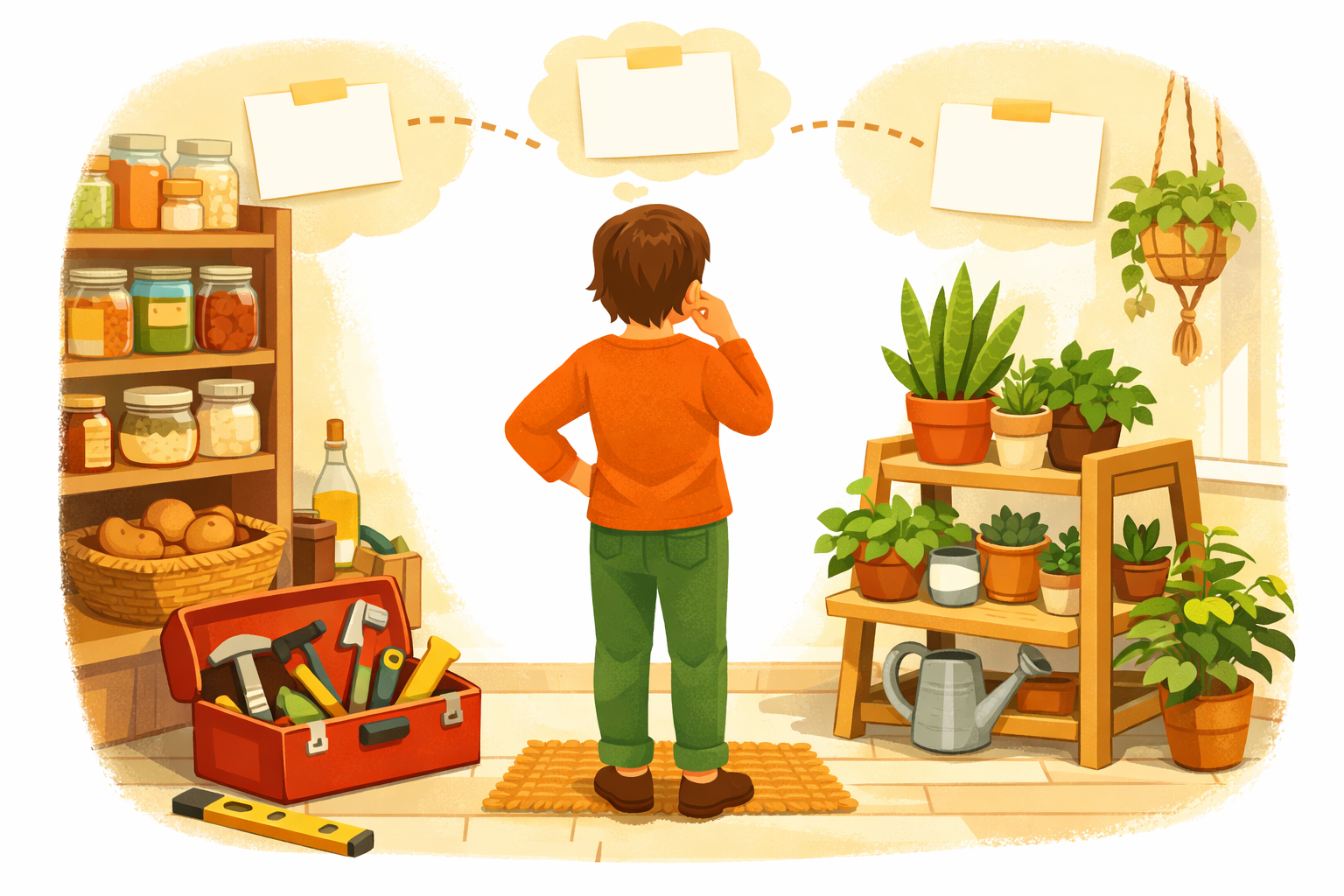
At month’s end, do a room-by-room walk and name items without looking. Then choose a new theme—pantry foods, tools, plants, or hobbies—and relabel so your vocabulary grows with your life at home.
If this was useful
Try one of these next

Bike & travel
How to Practice Small‑Talk Phrases Before a Trip
Build short scripts for greetings, ordering, and asking directions, record yourself and repeat, and pack a pocket card with 10 go‑to lines you can say smoothly.
Read the guide
Hobbies & crafts
How to Learn a Song in a New Language (Even If You’re Not Musical)
Choose a slow, clear song, look up the lyrics and mark unknown words, loop the chorus to memorize pronunciation, and sing along softly to lock in sounds and phrases.
Read the guide
Learning
How to Set Up a 15‑Minute Daily Language Routine You Can Keep
Pick a consistent time, split 15 minutes into review, new words, and quick speaking, and track progress with a simple checklist so you build momentum without burning out.
Read the guide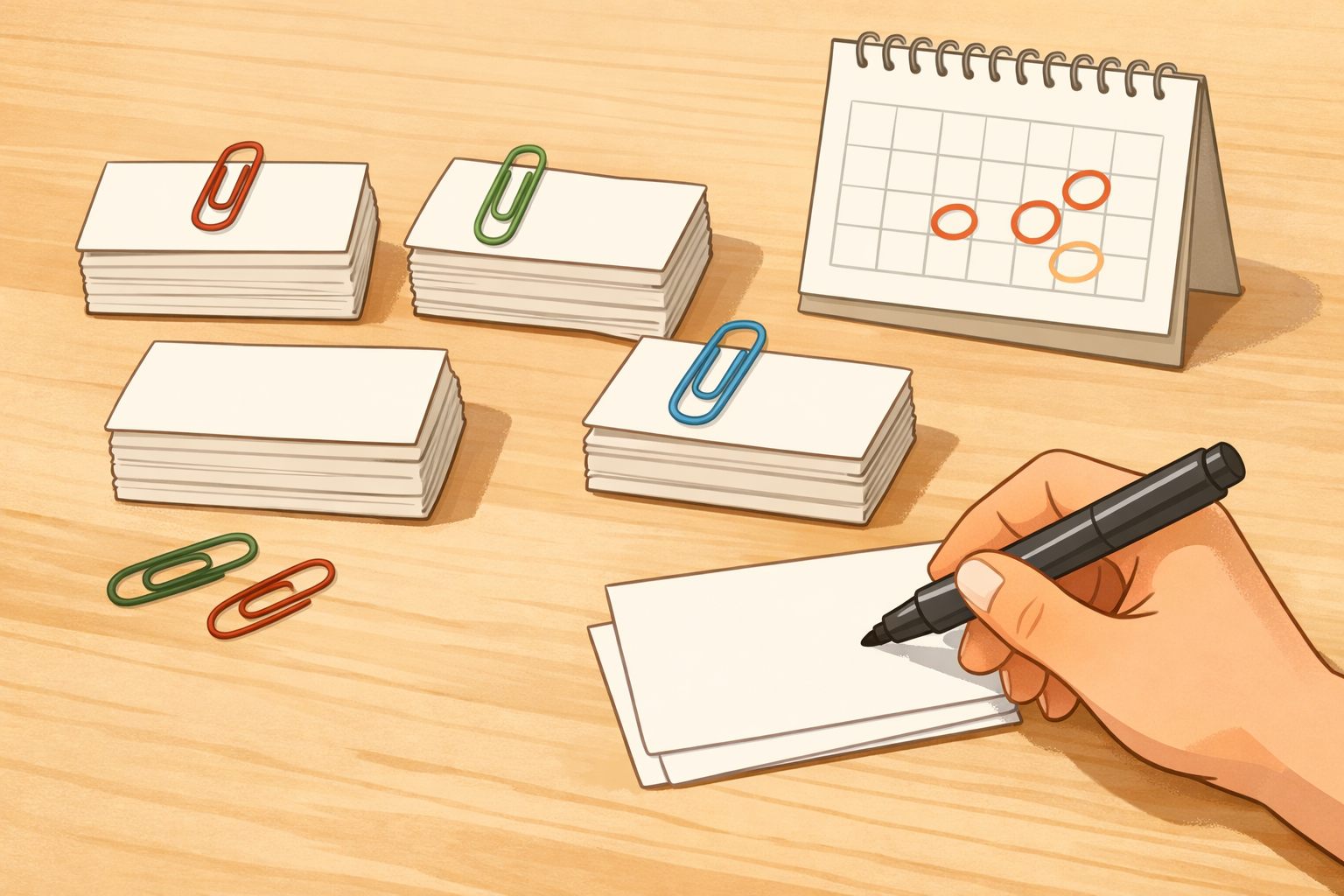
Learning
How to Make DIY Flashcards That Actually Stick
Create clear, one-word-per-card flashcards with a picture or example phrase, sort them into “know,” “review,” and “learn” piles, and revisit them on a simple spaced schedule to make what you study easier to remember.
Read the guide