Out & About How-to
How to map and legally listen to every village clocktower chime in a single weekend
Planable how-to: compile timetables, build a bell-log, plot a driving route and time arrivals so you hear each hourly peal. Deliverable: a county-sized map and smug audio evidence that you 'conquered the bells.'

- 01
Declare your county and weekend of conquest
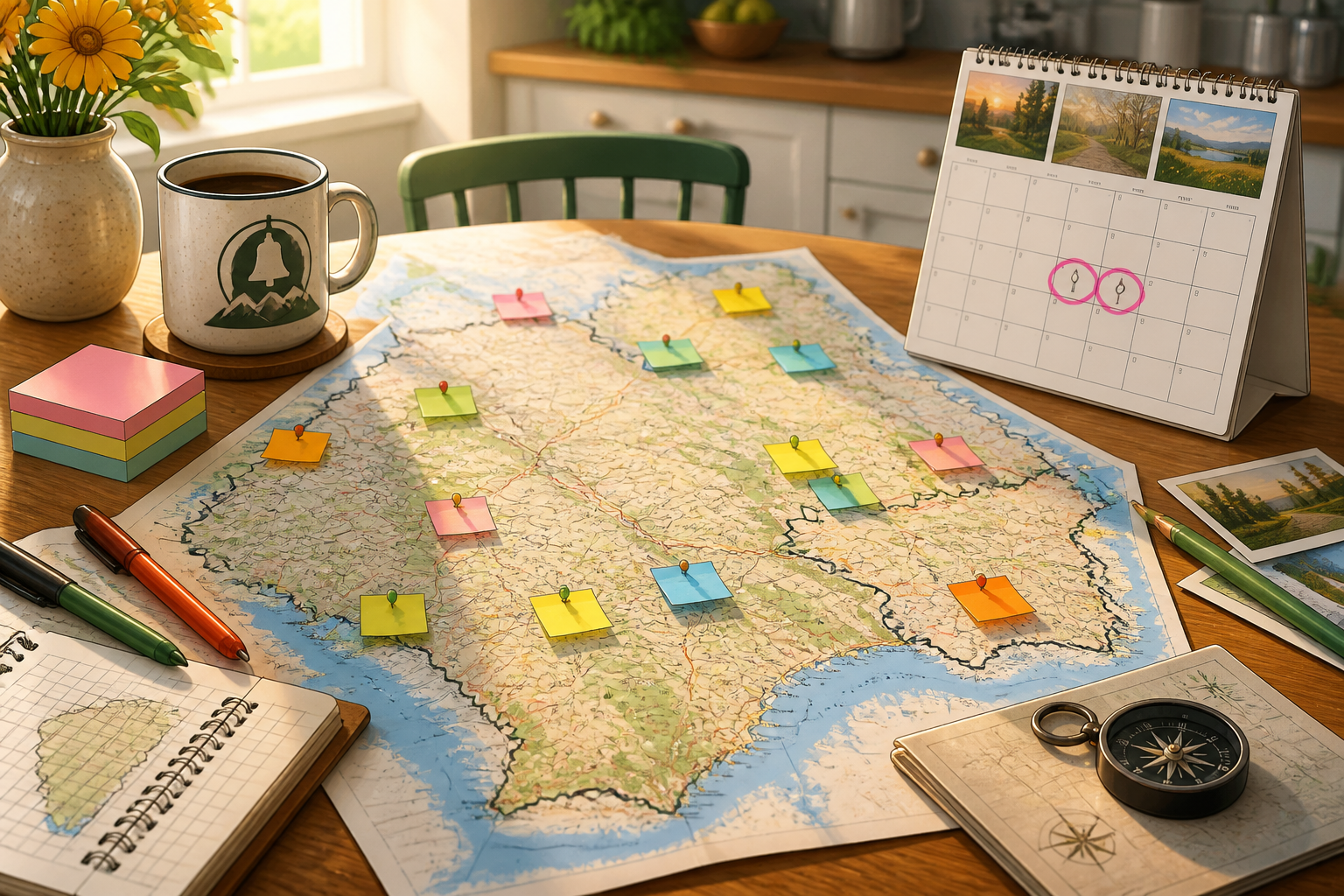
Pick a single county (or administrative area) that fits a weekend drive: smallish and bell-dense is ideal. Choose Saturday–Sunday or Friday evening–Sunday to give you two full days. Record the exact dates on your planning sheet — these are the dates your bell-summons will occur, not suggestions.
- 02
Assemble your bell-source dossier
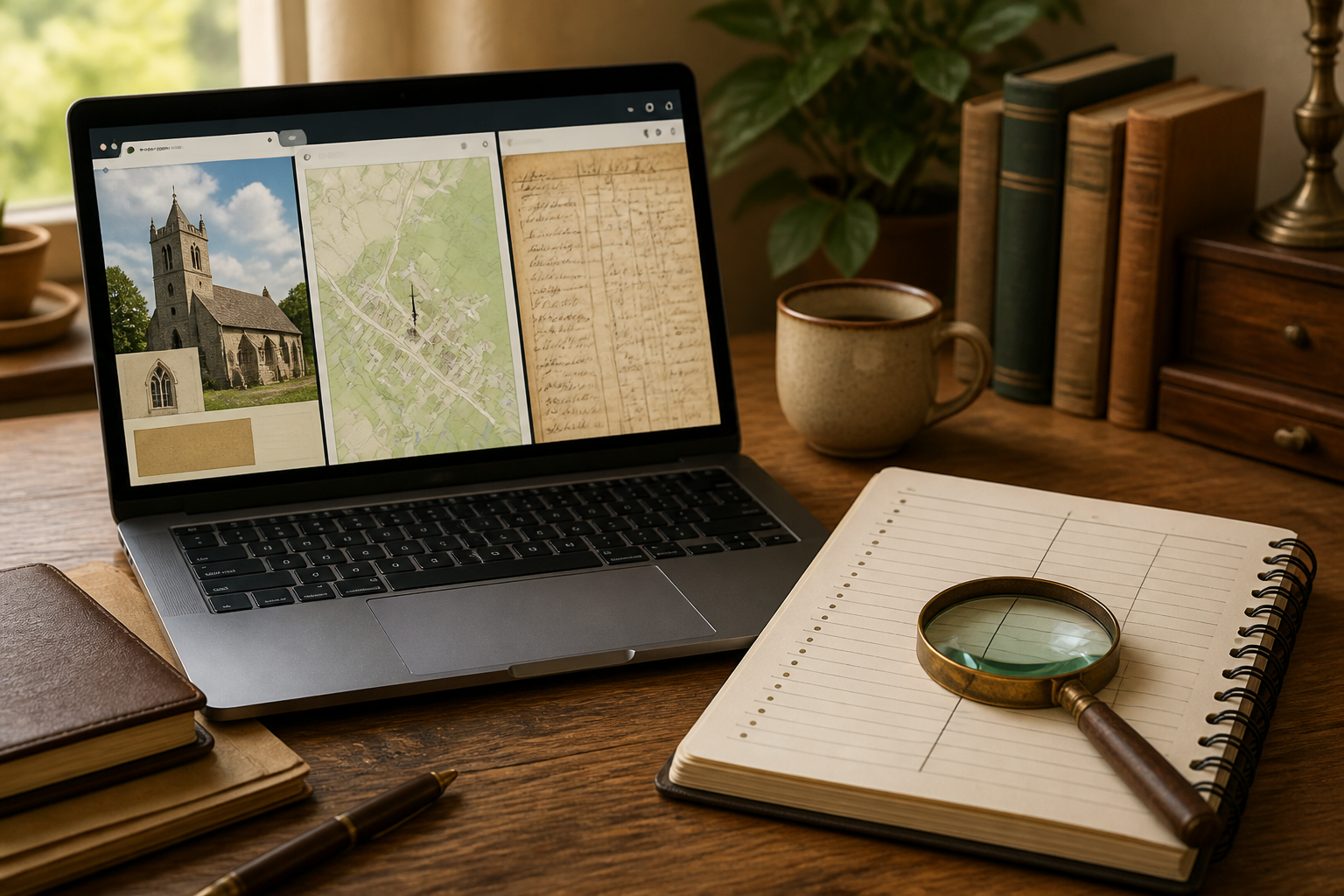
Collect every possible source that lists village clocktowers: parish websites, local diocesan pages, local history sites, OpenStreetMap, national bell registers and your county’s historical environment records. Make one master list with tower name and a link or citation for each entry; you’ll prune impossible targets later but start generous.
- 03
Create a bell-log template (spreadsheet + pocket booklet)
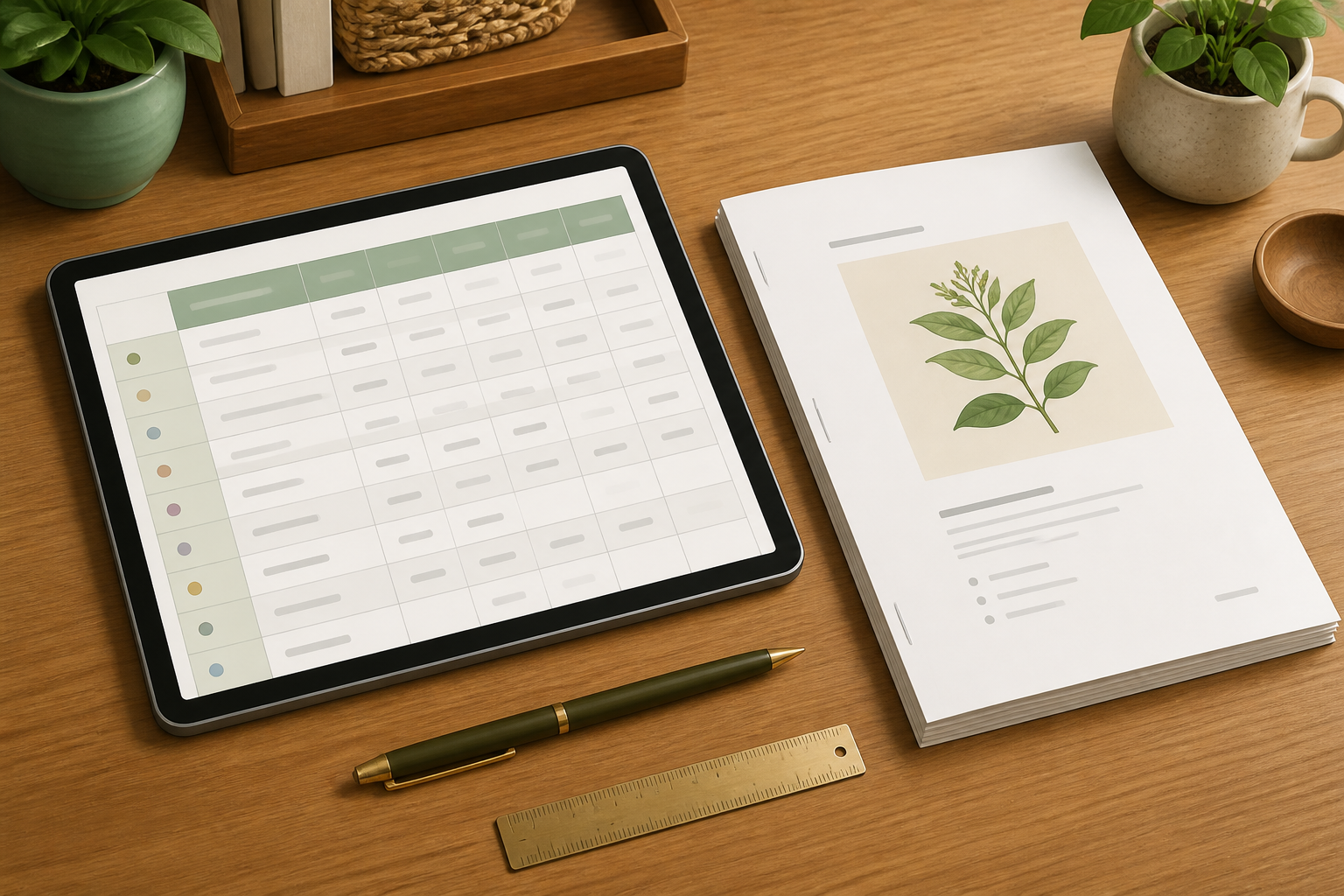
Make a spreadsheet with columns: Tower Name, Lat/Long, Postal Town, Expected Chime Pattern (hourly/chimes only for service), Contact (parish email/phone), Access Notes, Arrival Window, Result, and Audio Filename. Print a pocket-sized booklet version of one page per tower for your car so you can tick boxes without scrolling.
- 04
Estimate chime schedules and flag likely exceptions
Assume most village clocks chime on the hour; still, flag exceptions: towers that ring only for services, funeral peals, or special events. Mark these with a red 'verify' flag in your log. Where possible, email or call parish contacts to confirm which hours the clock will strike over your chosen weekend — a short polite message gets answers quickly.

- 05
Pin everything to a map base
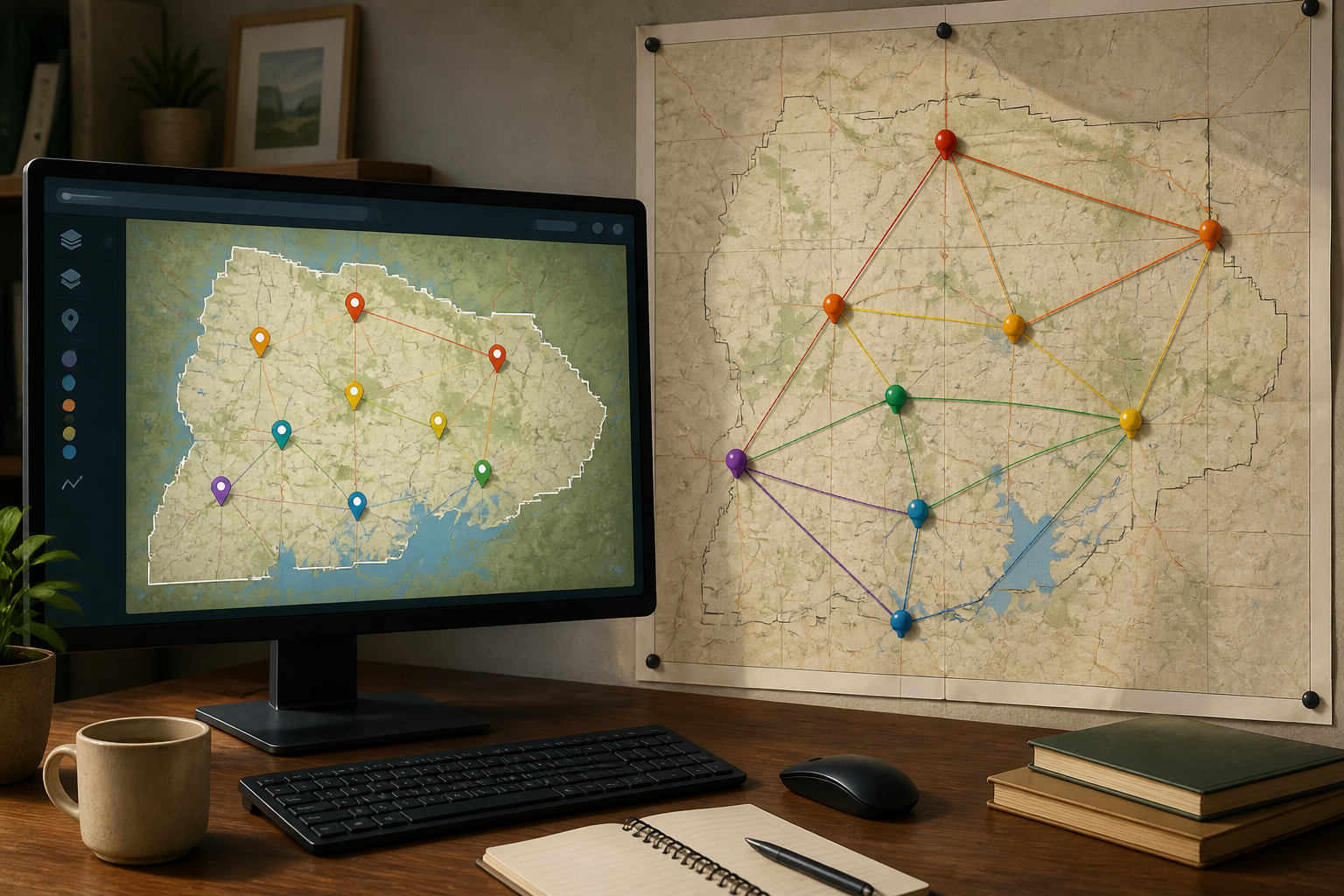
Open Google My Maps, an offline OS map app or paper map. Drop pins for every target using lat/long. Attach the bell-log row to each pin or write the same info on the paper edition. Use colors: green = confirmed hourly, amber = probable, red = needs permission. Export or print a county-sized map with pins clearly visible.
- 06
Design arrival windows and compute travel legs
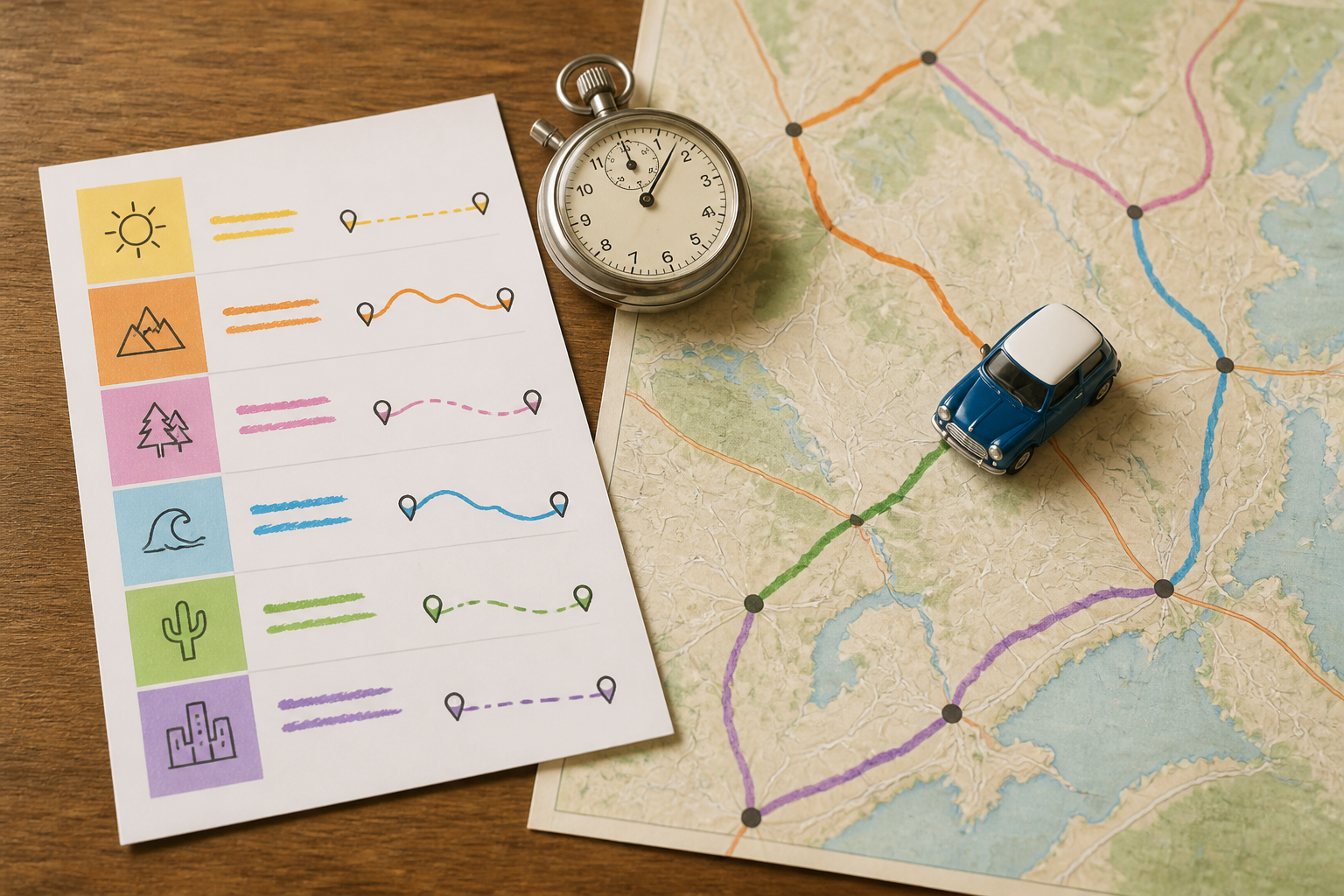
For each pin, compute the arrival window: target to be in place 2 minutes before the hour for a punctual peal, with a planned departure time 30–90 seconds after recording. For driving legs, use navigation to get realistic times and then add a rural buffer: +30% for single-track lanes, +10% for A-roads. Create a timed itinerary: tower A 09:00–09:03, drive 12 min (+buffer) to tower B, arrive by 09:30 etc.
- 07
Handle permissions and the 'legally listen' checklist
Respect property and services: remain on public footpaths or churchyards where permitted, don’t enter towers or locked gates without explicit permission, and avoid noisy behavior during services. For towers that need access (e.g., to reach the recommended listening spot), call the parish and request permission or an escort. Log any towers you can only hear from public land as 'public-listen' entries.

- 08
Assemble your car kit
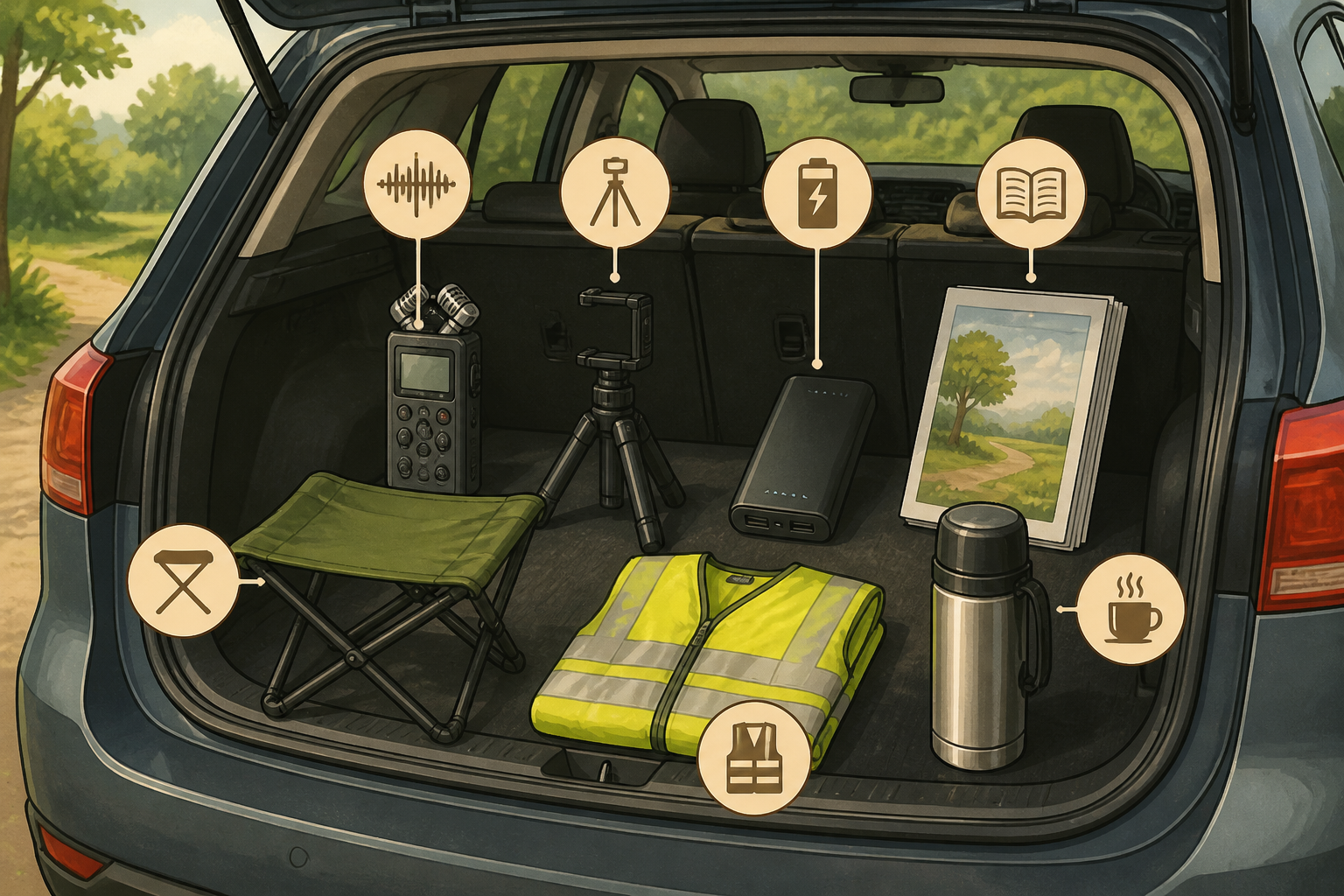
Pack: primary recorder (or smartphone), backup recorder, spare batteries/power bank, car charger, tripod or phone clamp, printed bell-booklet, high-visibility vest, torch, paper OS map, snacks and full tank of fuel. Also bring a small foldable stool if you plan to wait at a vantage point. Stow items so you can exit the car in under a minute.
- 09
Calibrate on a short trial run
On the Friday evening or the morning of the first day, visit one medium-distance tower from your list to test audio levels, walking approach times and how long you actually need after the chime to get a clean recording. Adjust microphone gain and your file-naming template (e.g., 'County_Tower_HHMM_01.wav'). Update buffers and the itinerary where needed.

- 10
Execute the route with ritual precision
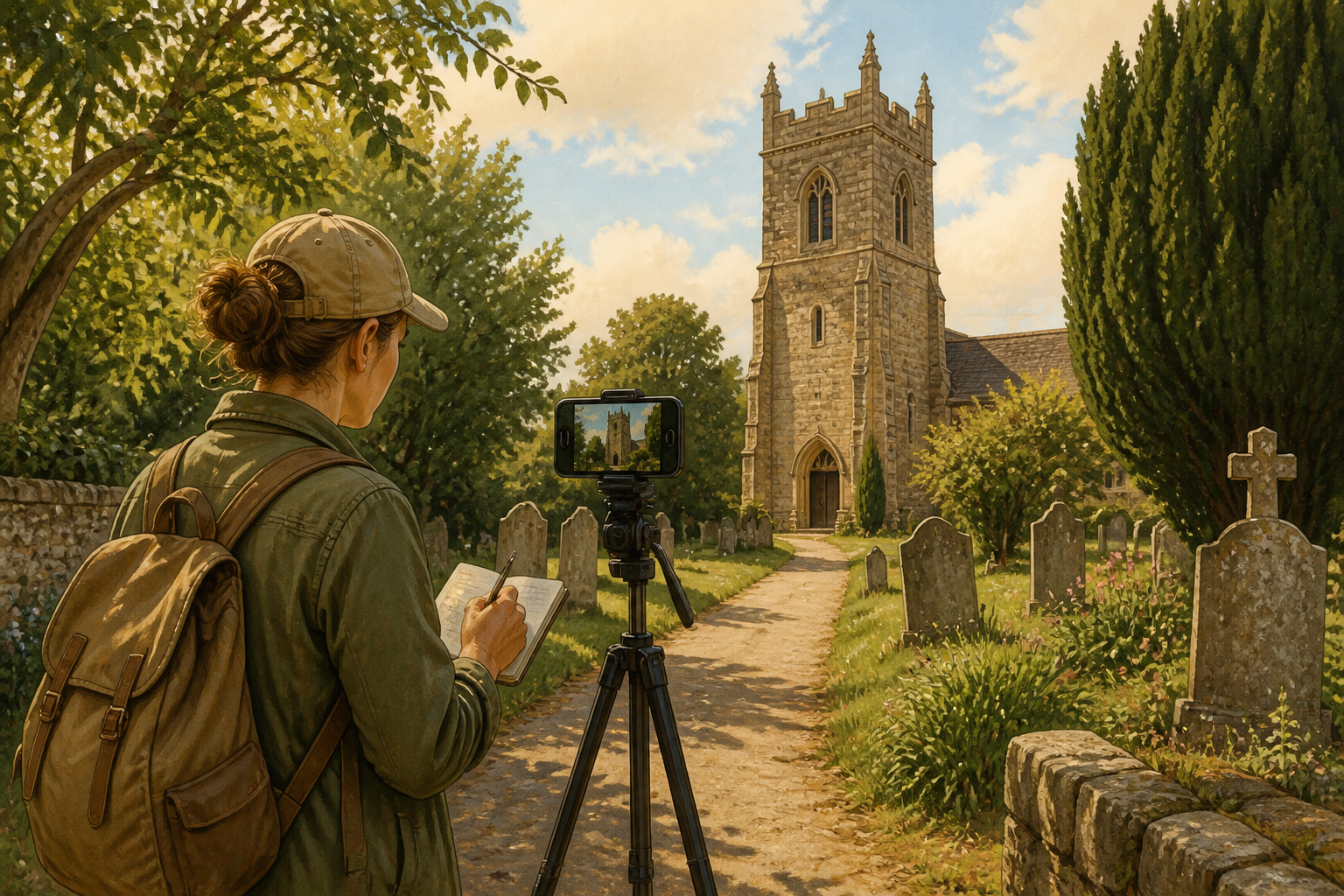
On the day, follow your timed itinerary. Arrive 2 minutes before the hour, find the best public vantage, start recording 10 seconds before the expected chime, and record for at least 20–30 seconds after to capture decay. Photograph the tower and the vantage point, jot a quick note in your bell-booklet (weather, obstacles, curious onlookers). Name and back up each audio file immediately to a backup device or cloud.
- 11
Deal with silence, services or surprise peals
If a tower is silent, make a note and check with the parish contact later; a recorded silence is still evidence. If a service or private ringing makes access inappropriate, step back and record from the public road and mark the log as 'public-listen'. If you miss a ring by seconds, decide: wait for an ad hoc re-peal (rare) or mark the tower for a possible quick return. Keep your schedule flexible but keep calm—this is a weekend of controlled obsession, not chaos.

- 12
Compile the map and assemble your smug audio evidence
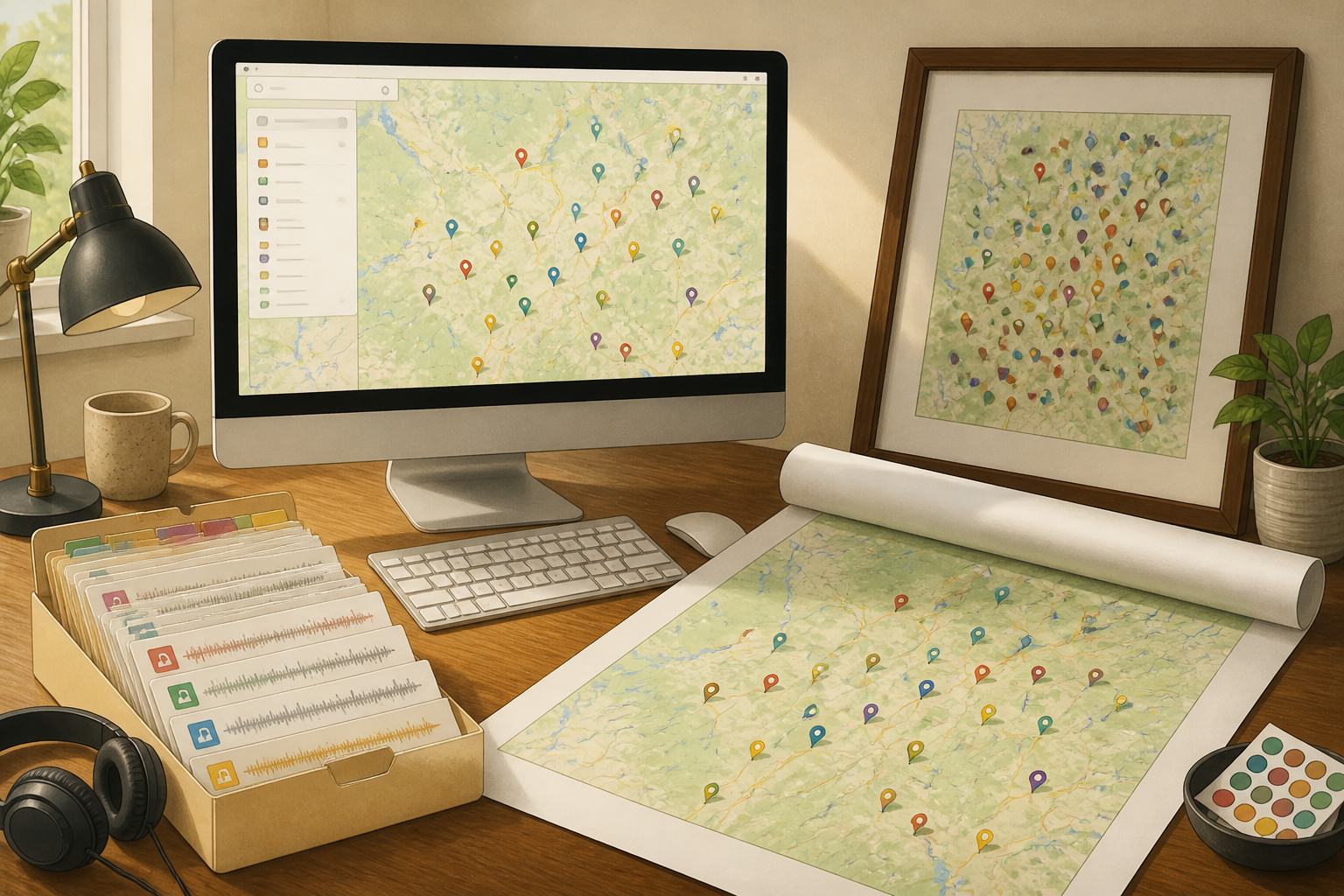
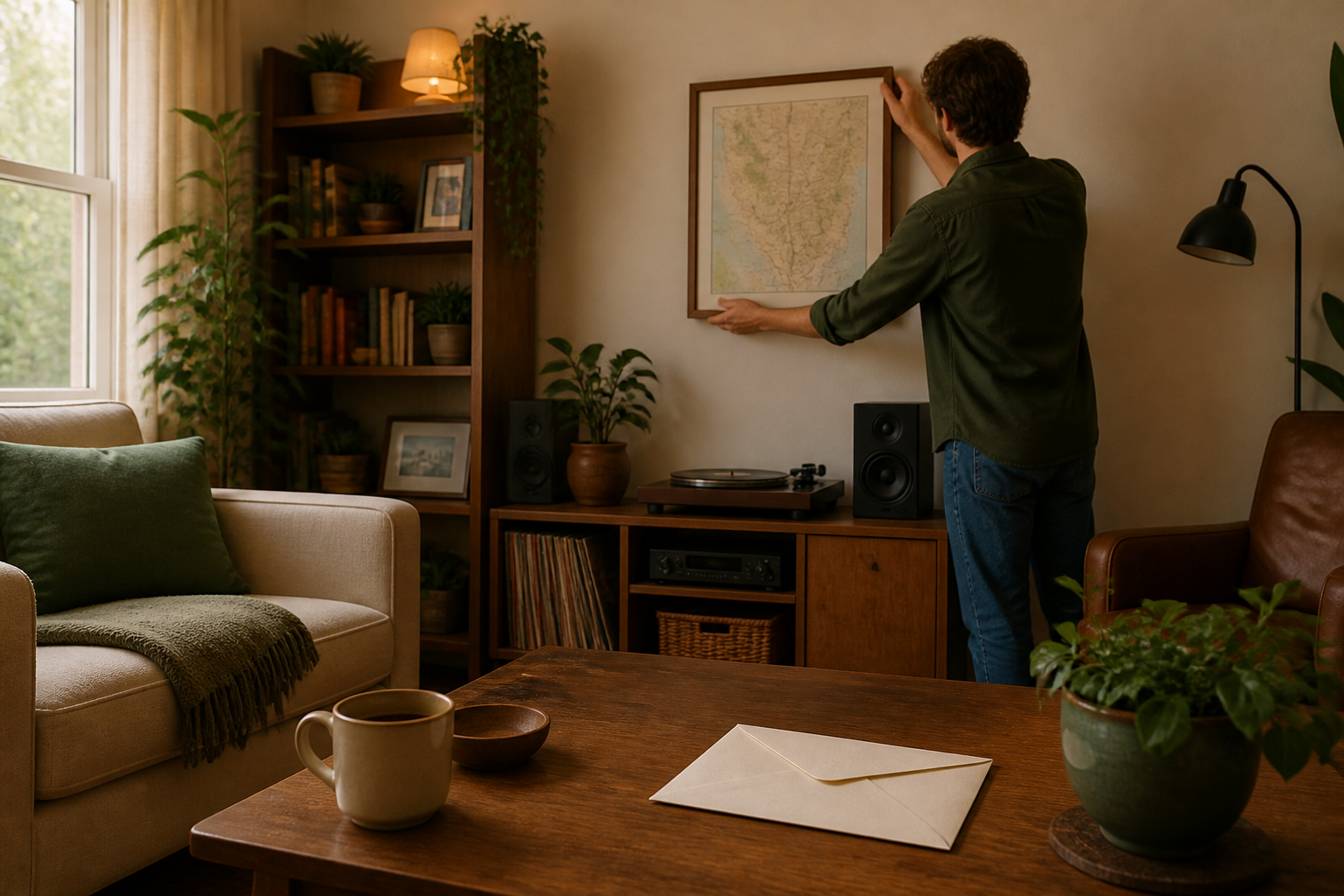
After the weekend, update your map: color pins green for successfully heard, amber for partial/public-only, red for silent/unconfirmed. Create a folder of audio clips named by tower and time, and use any simple audio editor to trim each clip to the chime plus a few seconds of decay. Combine highlights into a single montage if you want a dramatic listening experience. Print a county-sized poster map showing the route and triumph markers—frame it for display.
- 13
Deliver the final ritual and share responsibly
Celebrate by playing your montage at home while holding the framed county map and reading your bell-log aloud. If you plan to share recordings publicly, respect any parish requests and avoid using recordings for commercial purposes without permission. Optionally send a polite thank-you note and a copy of your map to local parishes — a gesture of ridiculous civic charm completes the enterprise.
If this was useful
Try one of these next

Out & About How-to
How to host a silent-disco picnic on a National Trust common without upsetting the daffodils
A 6–10 step kit and etiquette: choose lightweight headphones, curate a three-track loop, lay a leave-no-trace picnic, post polite signage and dance politely. Outcome: you dance; the daffodils remain unbothered.
Read article
Out & About Listicle
11 tea rooms ranked by how fast they deliver scandal (cream-first conspiracies annotated)
We scored eleven tearooms on three absolutely decisive metrics: how fast the staff will get a whispered urgent note to another table, where you can sit to overhear crimes disguised as cake orders, and how willing the servers are to tolerate being roped into clandestine message passing. Our editorial judgement is knowingly ridiculous: speed beats dignity, angle beats ambience, and every entry includes a coded phrase, the optimal scone placement for secrecy, and one absurd distraction that reliably commandeers a kettle.
Read article
Out & About Deep Dive
Fifty-year picnic: planning a weekend so sensible even a Capricorn feels dramatic
A travel deep-dive with itinerary templates, durable picnic staples, packing architecture, ceremonial toasts and two maps showing the perfect bench-for-life to stage a solemn, sensible weekend. This is a plan for a weekend that behaves like a will: modest, well-ordered, slightly theatrical and destined to be remembered as a document of taste for decades.
Read article
Out & About Listicle
8 pocket‑sized weekend props ranked by how little they invite follow‑up questions
Eight tactile props (an envelope of sand, a commuter delay card, a suspiciously sunburned map) with staging tips and one‑line backstories to end interrogation fast when you mysteriously missed Friday afternoon.
Read article